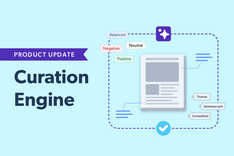
A new AI capability that delivers analysis-ready Media Intelligence. More than just a product launch, this is a shift in how communications teams monitor, understand and act on media coverage.
AHIP is the national association whose members provide health care coverage, services, and solutions to hundreds of millions of Americans every day. We are committed to market-based solutions and public-private partnerships that make health care better and to help create a space where coverage is more affordable and accessible for everyone. Source
The Washington Examiner editorial board is the latest to weigh in on egregious provider-driven abuse of the No Surprises Act. "A modest reform meant to shield patients from surprise medical bills has become a multibillion-dollar windfall for hospitals, doctors, lawyers, and arbitrators. Patients pay the price through higher insurance premiums," they write.
Medicare Advantage (MA) delivers superior value for the more than 35 million seniors and people with disabilities who choose it over fee-for-service Medicare (FFS). A new peer-reviewed study shows that MA’s positive impact extends even further, helping lower costs for FFS Medicare.
Starting July 1, 2026, through December 31, 2027, the Centers for Medicare & Medicaid Services (CMS) is launching the Medicare GLP-1 Bridge which will give certain eligible Medicare Part D beneficiaries access to three GLP-1 weight-loss medications — Wegovy®, Zepbound® (KwikPen® only), and Foundayo® — for a flat $50 monthly copayment. Who Is Eligible?
Yet another investigative report is pulling back the curtain on growing abuse of the No Surprises Act by out-of-network providers and IDR middlemen who flood the law’s arbitration system with ineligible claims and extract outrageous overpayments to maximize their own profits at Americans' expense.
New government data shows U.S. healthcare spending reached a record $5.7 trillion in 2025 — rising 7.3% in just one year and continuing a trend of healthcare costs growing faster than the broader economy. By the numbers: Hospital spending — already the single largest category of healthcare spending — climbed 8.2% to $1.8 trillion last year. Spending on physician and clinical services rose 6.2% to $1.2 trillion. Prescription drug spending jumped more than 11% to $518.7 billion.
Amid growing bipartisan consensus on tackling the root causes of higher healthcare costs, a new blog from Families USA underscores a key point of alignment: reining in hospitals’ anti-competitive behavior and ever-higher prices that are “crushing Americans.” "When Families USA and the right-leaning Paragon Institute agree on something, Congress should take notice.
Recent polls show that rising healthcare costs are a top concern for Americans across the political spectrum and voters strongly support common-sense policy solutions to address the root causes driving the healthcare affordability crisis.
Experts across the political spectrum agree that high and rising hospital prices are a key factor driving the healthcare affordability crisis. The latest example? A new report by White House economists finds Americans would pay billions of dollars less for healthcare if policymakers put a stop to some of the anti-competitive practices hospital systems use to maximize their own profits at Americans’ expense.
Medicaid managed care covers more than three quarters of the nation’s Medicaid beneficiaries – and it does so by pairing accountability with better access to care. Medicaid managed care organizations (MCOs) meet the needs of the Americans they cover and their government partners by improving quality of care and reducing administrative burdens and expenditures for states.
Yet another news report highlights the growing abuse of the No Surprises Act by some private equity-backed providers and IDR middlemen who flood the law’s arbitration system with ineligible claims and extract outrageous overpayments to maximize their own profits at Americans' expense.