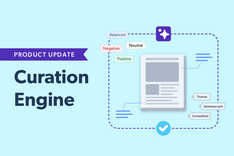
A new AI capability that delivers analysis-ready Media Intelligence. More than just a product launch, this is a shift in how communications teams monitor, understand and act on media coverage.
Codename: Jimmy is an independent publication launched in March 2024 by Ian McEwan. If you subscribe today, you'll get full access to the website as well as email newsletters about new content when it's available.
1. Introduction The existence of AI tools has caused a jump in the ever-shifting speed-rigor equilibrium we all use to evaluate projects, and our intuition needs to follow that jump. In this article we'll argue that the purpose of project documentation has subtly changed; it is no longer just a tedious overhead, but a bottleneck in the primary way to communicate with modern tools.
By Ian McEwan — Apr 12, 2024 Every so often, the DCQE (Delayed Choice Quantum Eraser) makes the rounds on various internet places. There are many good explanations of how it works and why it DOES NOT require weird explanations, like time travel. However, these often seem to miss or gloss over a couple of important points about the Copenhagen Interpretation, which I'd like to talk about here.
"Why are LLMs so good at summarization tasks?" The deep dive on using compression ideas as a bridge is a little longer than I wanted it to be. So, in keeping with the theme, I asked GPT-4o for an editorial one-page version.
By Ian McEwan — Oct 23, 2024 Ghost has its ActivityPub integration in (private) beta! I'll be re-publishing a few things using it, but since it's in beta, please be aware that replies, comments, boosts, and even whole articles may disappear or reappear in strange, sci-fi, consternation-inducing ways. This is going to be fun! Previous Next
If you are reading this, you probably know how to multiply two matrices together, but if you haven’t taken a Linear Algebra course, you might not realize that that is just one way to do it. Without a Numerical Analysis course, you might not know how useful these different methods are.
Hi, my name's Ian McEwan. Welcome to my little corner of the internet where I hope you will find interesting articles on various topics that I've worked on over time. I'm an applied mathematician, which means I love getting into the details of why algorithms work and proving things about them while at least attempting to care about their practical applications.
By Ian McEwan in HaRQ — Apr 10, 2024 At a high level, the specification or requirements for a project can often be distilled into a single question of the form “How do I get X, without Y, ignoring Z”. In the real world, ignoring Z always comes back to bite your butt, and “without” is usually more of a suggested “minimize”, but considering the necessities imposed by such a question can be the mother of interesting often inventive solutions.
Diagrams are amazing—whether it’s a signal flow diagram, UML, or an electronics schematic. There’s something special about creating a concise, elegant, and high-information-density representation of a system.
Yes, but my solution nearly breaks my own rules about Euler integration, and the contrived ways ray marching figures out which surface is intersected creates quite a mess. Consequently doing more than one bounce for each reflection or refraction really hurts performance. Shader Toy is kind'a awesome.
This blog is made possible partly thanks to a modern large language model, but not in the way you might think. Let me explain: I'm dyslexic. Okay, that's an understatement. I'm horrendously, depressingly, appallingly dyslexic, sometimes to the point of incomprehensibility.