
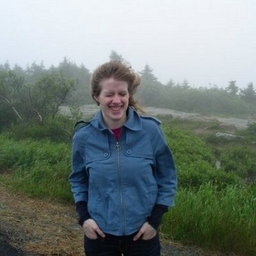
Andrea Thompson
Verified
As seen in:
Scientific American,
Apple Podcasts,
Medium,
MSN,
MSN Ireland,
MSN UK,
HuffPost,
Nature,
The Guardian,
Yahoo Canada,
Yahoo News Malaysia
and
Covers:
drought, extreme weather, tornadoes, hurricanes, climate change, floods
Associate Editor, Sustainability at @sciam. Formerly of @ClimateCentral & @LiveScience. andrea.thompson@sciam.com. she/her
Interview
What was your first job as a journalist?
My first job as a journalist was as a staff writer for Live Science. I covered pretty much anything and everything related to science.
Have you ever used a typewriter?
Yup, a looong time ago.
How is social media changing news?
It makes it travel so much faster, which is good in some ways, but bad when it spreads misinformation.
Who's your favorite fictional journalist?
I had to go to Wikipedia for help with this one. I did love me some Murphy Brown back in the day.
What does it mean to be a journalist?
So existential! I'd say it means conveying the truth as best we know it.
What's the funniest news-related #hashtag you've seen?
Oh goodness, I have no idea. I can't really recall specific hashtags.
How do you prefer to be pitched on stories?
Short, sweet and to the point. I don't have time to read through an essay.
What tools and software do you use to do your job?
Pretty bare bones -- a MacBook Air and Microsoft Word. Occasionally some rudimentary Photoshop.
What's your favorite social network?
Probably Twitter. It's a great way to see what people are talking about and has a snarky edge.
Who do you wish followed you?
The weather geek in me would be pretty excited if Jim Cantore followed me.
Why did you become a journalist?
To show and tell people how freaking cool science can be and how important it is to our daily lives, whether we realize it or not.
Did you work for your high school newspaper? If so, what did you do there?
No, but I was the copy editor for my high school yearbook.
What story are you most proud of writing or working on?
A tough one. Probably Live Science's series on what could happen to various aspects of the planet when we reach 11 billion people.
What advice can you offer to aspiring journalists?
Find your niche. What can you cover better than anyone else?
When's the best time to pitch you?
Morning earlier in the week.
Would you like to take the Muck Rack Interview?
Create a Muck Rack profile.