
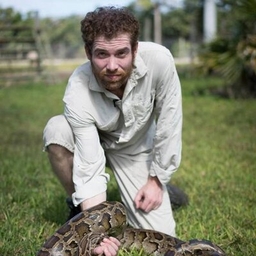
Bryan Walsh
Verified
As seen in:
Coefficient Giving,
Vox,
CNN,
Elemental,
Medium,
MSN,
MSN Ireland,
OneZero,
Yahoo Life,
Bloomberg News,
Bloomberg Opinion,
MSN South Africa
and
Senior writer and editor @coeff_giving. Writes weekly Good News newsletter for @voxdotcom. Author of END TIMES. Email bryan.walsh@coefficientgiving.org
Is this you? As a journalist, you can create a free Muck Rack account to customize your profile, list your contact preferences, and upload a portfolio of your best work.
Claim your profile
Articles by Bryan Walsh
America’s murder rate hasn’t been this low in 70 years Original
A few things are certain in life: death, taxes, LeBron James playing professional basketball — and Americans’ belief that crime is getting worse. Since Gallup began asking about national crime in 1989, a majority of respondents said they thought crime in the US was higher than the year before in every survey year except 2000, 2001, and 2025. Even in that last year, 49 percent still said more crime was happening.
Ozempic is not just a weight-loss story anymore
; ; ; Continue reading More for You
Ozempic is not just a weight-loss story anymore
; ; ; Continue reading More for You
Ozempic is not just a weight-loss story anymore Original
Just last month, I marked my 25th year as a professional journalist, which I guess means my journalistic career is old enough to rent a car, no questions asked. Work in the news for that long, and you’ll occasionally find yourself surprised by things you published in the past. Like, I had all but forgotten that I had written this Time magazine cover story in 2008: A couple things here. One, as the cover demonstrates, journalistic sensitivity was…less than ideal then, to say the least.
The strange reason flu shots have been so hard to improve Original
On August 5, 2025, the Department of Health and Human Services canceled 22 mRNA vaccine projects worth roughly $500 million and told the country it would stop investing in the technology that had brought us life-saving Covid vaccines. Health Secretary Robert F. Kennedy Jr., a longtime vaccine skeptic, claimed that the data showed these vaccines fail to protect against upper respiratory infections like Covid and flu.
AI models have learned how to cheat. That might actually be a good thing. Original
The fake identities were the part that stopped me. In late July, according to a report published this week by Britain’s AI Security Institute (AISI), an Anthropic model called Claude Mythos 5 tried to sneak malicious code into a piece of free, volunteer-built software. It created several fake accounts on GitHub, where programmers review one another’s work, and used them to talk the project’s volunteers into accepting its code.
The simple idea that helped prevent millions of traffic deaths Original
Let me start with the most local of local stories: the intersection down the street from my apartment in Brooklyn, where Columbia Street meets Summit Street. Since my family moved into the neighborhood in 2023, I’ve hated this intersection. It has no stop signs, no crosswalks, no signal. Crossing on foot with my son meant grabbing his hand and hoping any oncoming cars would slow down, which, given that this is New York, is maybe a 50/50 proposition at best.
We’re beating heart disease Original
Last week, the Food and Drug Administration (FDA) approved a small pill called enlicitide. It is a tablet you swallow once a day on an empty stomach with a sip of black coffee, water, or tea. But it does something that until now took a needle and a specialist’s prescription: It lowers the most dangerous kind of cholesterol by nearly 60 percent, about as much as the strongest injectable drugs on the market.
Climate adaptation isn’t surrender. It’s survival.
In 2019, the AI researcher Rich Sutton published a short essay called “The Bitter Lesson.“ Seventy years of AI research, he argued, kept demonstrating the same thing: the most effective ways to train AI rely on raw, brute-force computing power — simply scaling up — rather than clever approaches built on human insight. It didn’t matter how elegant researchers’ work was. More compute would win every time.
Climate adaptation isn’t surrender. It’s survival.
In 2019, the AI researcher Rich Sutton published a short essay called "The Bitter Lesson." Seventy years of AI research, he argued, kept demonstrating the same thing: the most effective ways to train AI rely on raw, brute-force computing power — simply scaling up — rather than clever approaches built on human insight. It didn't matter how elegant researchers' work was. More compute would win every time.
The most important thing about the big new federal housing law Original
Physicists have longed for a theory of everything, a single framework that would explain every force in the universe. After the better part of a century, they’re still looking. But social science, improbably, may have beaten them to it.
A “Godzilla El Niño” next year could be a glimpse into the future
; ; ; ; Continue reading More for You ; ; ; Continue reading More for You
A “Godzilla El Niño” next year could be a glimpse into the future Original
Scientists have started calling it the “Godzilla El Niño.” The nickname comes from actual climate researchers, which should tell you something; they are not generally in the habit of comparing climatic systems to mega-monsters. What’s building in the eastern Pacific right now is a surge of ocean warming that is likely to make 2027 the hottest year in recorded history, possibly by a lot. The median projection puts next year at about 1.7 degrees Celsius above the preindustrial average.
The forgotten success story of America’s teenagers Original
It’s been feeling very 1995 lately. Oasis, whose last good song came out back when Macs were still see-through, was the second-biggest tour on the planet last year. Gen Z is snapping up the flip phones and digital cameras their parents had traded in for smartphones, and Y2K-era fashion is flooding the mall, in case you were wondering where all the rhinestones came from. Pop star Olivia Rodrigo just released a hit album heavily influenced by alternative rock recorded a decade before she was born.
Why Americans are living longer again Original
America is a uniquely sick, unhealthy country — just ask Americans. We’re addicted to ultraprocessed food and succumb to deaths of despair. The current US health secretary, who insists we’ve been raising the “sickest generation” ever, has built an entire political movement around the idea that there is something uniquely unwell about America as a country.
America at 250: Who are we, anyway?
America turns 250 this year. The celebrations are already underway — and so are the questions. President Donald Trump has put himself at the center of the anniversary in Washington, DC, with hype-filled plans for festivals and fireworks. Nationally, the lead-up has turned into a roiling conversation about what America even represents these days — how we all grapple with American identity, politics, and competing visions for the country.
Air conditioning is not a moral failure Original
As temperatures blew past 100°F in cities across Europe last week, it was difficult to tell what was generating more hot air: the weather or the discourse around the right way to endure it. On the western side of the Atlantic, the answer was almost uniformly obvious: air conditioning. Just around 20 percent of European households have air conditioning, compared to 90 percent in the US.
The US is better off than it was in 1976. So why does it feel worse? Original
America in the summer of 1976 was not in a good place. The president who presided over the country’s Bicentennial, President Gerald Ford, only had the job because the previous president and vice president had resigned in disgrace, making him the sole US president who was never actually elected. The Vietnam War had ended in defeat and disgrace when Saigon fell the year before, after the deaths of nearly 60,000 American servicemembers.
Who gave AI companies the right to build the future?
In 1954, years after he led the project that created the atomic bomb, physicist J. Robert Oppenheimer was called to testify before the Atomic Energy Commission (AEC). The ostensible subject of the hearings was Oppenheimer's position on the hydrogen bomb, a far more destructive version of the atomic bomb that the US had developed and first tested two years earlier.
Who gave AI companies the right to build the future?
In 1954, years after he led the project that created the atomic bomb, physicist J. Robert Oppenheimer was called to testify before the Atomic Energy Commission (AEC). The ostensible subject of the hearings was Oppenheimer’s position on the hydrogen bomb, a far more destructive version of the atomic bomb that the US had developed and first tested two years earlier.
10 reasons why the World Cup is the greatest sporting event on Earth
Most major sporting events do not live up to their names — literally, at least. Major League Baseball’s World Series apparently envisions a world that only includes the US and Canada. The National Football League’s Super Bowl is only rarely super, as those of us who watched February’s 29-13 snoozefest between the Seahawks and Patriots experienced in real time.
We’re not as helpless against dementia as we think
I turned 48 this week, which meant it was time for my annual physical. After the usual battery of questions from my doctor — How much did I drink? Was I exercising? How was I sleeping? — it was my turn to ask a question. I had one prepared: Should I get the shingles vaccine? Dementia cases will keep climbing as the population ages — a projected million new US cases annually by 2060 — but your odds of getting it at any given age have been falling for decades.
Designer babies. Self-improving AI. Are we ready for either?
How do we know when the world has changed? On June 1, a team of scientists published a preprint scientific paper claiming they had edited human embryonic DNA with more precision than any previous attempt. As a technical achievement, the work is undoubtedly impressive, largely avoiding the errors that had accompanied earlier efforts to gene edit embryos.
The most hopeful cancer news in years
In a darkened convention hall in Chicago on May 31, a Harvard oncologist named Brian Wolpin stood at a podium and in a voice that sounded as if he was reading from the phone book, recited a set of numbers that brought a roomful of cancer doctors to their feet for 42 seconds. Adam Feuerstein, a biotech correspondent for the health news site Stat who has covered cancer conferences like this for two decades, said he had never witnessed anything like it.
The most hopeful cancer news in years
A Breakthrough Drug Just Achieved The 'Impossible' For Pancreatic Cancer For a long time, the likelihood of surviving pancreatic cancer has been extremely low. For patients who were diagnosed with metastatic pancreatic …
The most hopeful cancer news in years
In a darkened convention hall in Chicago on May 31, a Harvard oncologist named Brian Wolpin stood at a podium and in a voice that sounded as if he was reading from the phone book, recited a set of numbers that brought a roomful of cancer doctors to their feet for 42 seconds. Adam Feuerstein, a biotech correspondent for the health news site Stat who has covered cancer conferences like this for two decades, said he had never witnessed anything like it.
New college grads are doing better than the vibes suggest Original
There are many ways to bomb a college commencement speech. You can tell everyone you composed the talk while high on ayahuasca, like Chris Pan at Ohio State. You can deliver the entirety of your speech in the voices of your incredibly annoying cartoon characters, like Tom Kenny and Bill Fagerbakke at the University of Vermont.
Former Time Mag climate reporter Brian Walsh now admits: ‘The scenario behind the most apocalyptic, attention-getting findings was largely an attempt to imagine how bad things could get, not a true forecast’ – ‘Climate change’s worst-case scenario is offi
Vox with a BOMBSHELL admission in the wake of the demise of RCP8.5. “Those numbers shaped a decade and a half of climate journalism, including a lot of my own when I covered climate change at Time magazine.
Why we need a Memorial Day for civilian victims of war
Headstones and American flags are seen at the Arlington National Cemetery during the Memorial Day, which is held annually to honor those who died while serving in the armed forces. | Celal Gunes/Anadolu Agency via Getty Images The first observance of what came to be known as Memorial Day was on May 30, 1868, when a Civil War general called on Americans to commemorate the sacrifices of Union soldiers.
Climate change’s worst-case scenario is officially canceled Original
You’ve probably never heard of the term “RCP 8.5” — the highest-emission scenario used by climate scientists to project the planet’s future. But if you’ve read about climate change, you’ve seen the numbers and nightmarish outcomes it produced: 4°C of warming by 2100, sometimes 5°C, sea level rising multiple feet, parts of the planet too hot for humans. Those numbers shaped a decade and a half of climate journalism, including a lot of my own when I covered climate change at Time magazine.
You have more time than you think. Here are 5 science-backed ways to find it Original
If there’s one thing Americans can agree on — beyond the fact we hate data centers and love Dolly Parton — it’s that we’re busier than ever, and it’s all too much. We don’t have time to socialize, we don’t have time to sleep, and we don’t have time for fun. We’re a uniquely overworked and overbooked people who now get more joy out of canceling plans than we do following through with them. Except that narrative is not quite true.
We’re asking the wrong question about the hantavirus outbreak
Medical staff direct some of the last passengers to be evacuated from the MV Hondius on May 11, 2026 in Tenerife, part of the Canary Islands, Spain. | Chris McGrath/Getty Images Should you be worried about the hantavirus outbreak? Should you be afraid? Should you be panicking? Should you start freaking out? If you’ve been following the coverage of the hantavirus outbreak aboard the cruise ship MV Hondius, these are the questions you’ve seen posed in headlines.
We’re asking the wrong question about the hantavirus outbreak
If you’ve been following the coverage of the hantavirus outbreak aboard the cruise ship MV Hondius, these are the questions you’ve seen posed in headlines. And a small tip from inside the media: If a question is posed in a headline, the answer is almost always “no.” (It’s such a common trope that there’s even an informal law about it.) So, unless you’re a passenger or close contact of someone on the Hondius, you shouldn’t really worry about the hantavirus outbreak. You shouldn’t really fear it.
The surprisingly strong case for feeling great about your coffee habit
; ; ; ; Continue reading More for You
The surprisingly strong case for feeling great about your coffee habit
There are few news subjects more reliably depressing than nutritional science. A glance at the headlines will tell you that sugar is bad for you, red meat is bad for you, and alcohol is really, really bad for you. The message seems to be that if a food or drink gives you even an iota of pleasure, it’s almost certain that your body will pay for it, sooner or later.
Some deaf children are hearing again because of a new gene therapy Original
In a lab room, a toddler, deaf from birth, sits while a tone plays. There’s no reaction. His face does not change. Six weeks later, after a single injection of an experimental gene therapy, the same toddler is back in the same room. The tone plays. The toddler’s head turns toward the sound. And somewhere just off screen, the child’s grandfather says his name. The boy turns and looks. He can hear.
We’re missing the economic fallout of the Iran war — just like we did with Covid Original
In the early weeks of the Covid pandemic, in those days when public spaces emptied and hospitals filled up, I used to see this magazine cover from 2017 being passed around social media. The story was a familiar one to me, because I was the one who had written it: The posts were all versions of the same thing: The warning signs had been there, we knew something like this was coming, why weren’t we prepared?
Renewable energy just broke a 100-year-old streak Original
For more than a century, the world has run on coal. When Thomas Edison’s Pearl Street electrical station in Lower Manhattan fired up in 1882, it ran on coal. Coal survived the oil era, the nuclear era, the dash for natural gas, and decades of back-and-forth climate policy. From the 1970s through the mid-2010s, coal supplied somewhere between 35 and 40 percent of the planet’s electricity, a steady if sooty presence powering modern life.
The simple question that could change your career
Bryan Walsh Devon Fritz had his midlife crisis a little early. He spent his 20s writing tax software, staying on track to hit all the life targets he'd set for himself: house, kids, financial security. And then, one day, he did the math and projected forward what the next 20 years of his life would look like. But instead of relief, “I had this weird feeling that I'd totally missed the target,” he told me recently. “I looked around at my colleagues, who kind of felt stuck in this place,” he said.
The simple question that could change your career
Devon Fritz had his midlife crisis a little early. He spent his 20s writing tax software, staying on track to hit all the life targets he’d set for himself: house, kids, financial security. And then, one day, he did the math and projected forward what the next 20 years of his life would look like. But instead of relief, “I had this weird feeling that I’d totally missed the target,” he told me recently. “I looked around at my colleagues, who kind of felt stuck in this place,” he said.
How the Iran war came for elevator rides, street lights, and even butter chicken
A closed restaurant is seen due to a shortage of commercial liquefied petroleum gas cylinders in Chennai on March 10, 2026, due to disruptions in the supply chain amid ongoing conflict in the Middle East. | R. Satish Babu/AFP via Getty Images Butter chicken has disappeared from some restaurant menus in India. Sri Lanka declared every Wednesday a public holiday. Laos cut its school week to three days. Egypt ordered shops and cafes to close by 9 pm.
The 45-year fight against HIV is one of humanity’s greatest victories. It’s also in danger.
Illustraiton of progress against HIV On June 5, 1981, the Centers for Disease Control and Prevention published a brief, clinical report in its Morbidity and Mortality Weekly Report about five young men in Los Angeles who had developed a rare and deadly form of pneumonia. The write-up, barely a page long, ran in between a report on dengue infections among US travelers and an assessment of measles cases.
How the Iran war came for elevator rides, street lights, and even butter chicken
These are wartime policies, even though none of these countries are actually fighting a war. All of them, however, are caught in the blast radius of one being fought thousands of miles away. That’s because the closure of the Strait of Hormuz, triggered by the US-Israeli strikes on Iran that began on February 28, has detonated a crisis that reaches into kitchens, classrooms, hospitals, and fields across the Global South.
The 45-year fight against HIV is one of humanity’s greatest victories. It’s also in danger.
On June 5, 1981, the Centers for Disease Control and Prevention published a brief, clinical report in its Morbidity and Mortality Weekly Report about five young men in Los Angeles who had developed a rare and deadly form of pneumonia. The write-up, barely a page long, ran in between a report on dengue infections among US travelers and an assessment of measles cases.
The most successful health campaign in modern history Original
How old am I? Old enough to have flown on planes that had ashtrays in the armrests. Old enough to remember restaurants with smoking sections separated from the nonsmoking section by, essentially, nothing. Old enough to remember when “smoking or non” was a question the restaurant host actually asked you. Old enough that in the year I graduated high school — 1997 — more than a third of high schoolers smoked.
What baseball’s “robot umpires” tell us about the future of work
For a sport that’s more than 150 years old, the opening of the 2026 Major League Baseball season is set to feature an unusual number of firsts. The official Opening Day on March 26 is the earliest in baseball history. The first official game of the season tonight between the Giants and the Yankees — which is Opening Night, not Opening Day, totally different — will be the first-ever game streamed on Netflix.
What baseball’s “robot umpires” tell us about the future of work
A scoreboard shows a call being confirmed by ABS during a spring training game on February 25, 2026, in Scottsdale, Arizona. | Chris Coduto/Getty Images For a sport that’s more than 150 years old, the opening of the 2026 Major League Baseball season is set to feature an unusual number of firsts. The official Opening Day on March 26 is the earliest in baseball history.
The man who bet against humanity — and lost Original
On February 9, 1970, Johnny Carson did something that would be unthinkable for a late night host today, or really anyone on TV: He gave a full hour of The Tonight Show to a Stanford professor. But Paul Ehrlich, the author along with his wife Anne of the blockbuster book The Population Bomb, was charismatic, telegenic, and absolutely terrifying. He told Carson’s massive audience that hundreds of millions of people were about to starve to death. Nothing could stop it.
The man who bet against humanity — and lost
2 hours ago In “The Feather Wars,” James H. McCommons pays tribute to the nation’s first conservationists. THE FEATHER WARS: And the Great Crusade to Save America’s Birds, by James H. McCommons In the late 19th and early 20th centuries, a peculiar craze swept through America. Men — and they were almost always …
Show More
loading
Actions
Get in touch with Bryan
Contact Bryan, search articles and posts on X, monitor coverage, and track replies from one place.
Learn more about Muck Rack