
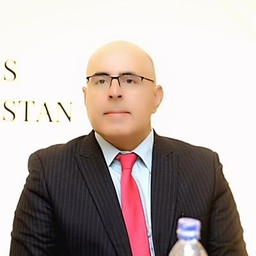
Jan Achakzai
Covers:
terrorism, taliban
CT Minister for Information and Public Relations, Government of Balochistan, Pakistan |Reader, Writer, and geopolitical Analyst |
Articles by Jan Achakzai
Afghanistan, safe haven for TTP, threatens Pakistan and regional security
As the sun rose over the bustling streets of Islamabad, a sense of unease hung in the air. The recent 33rd report by the Analytical and Sanctions Monitoring Team of United Nations Security Council (UNSC) had painted a concerning picture. Afghanistan was emerging as a new breeding ground for terrorism, and TTP was receiving growing support from Afghan Taliban and Al-Qaeda.
Can Iran gas pipeline light the way for Pakistan?
For years, Pakistanis have grappled with power outages that disrupt their daily lives and cripple businesses. The economic engine sputters, and growth stagnates. In this frustrating scenario, the proposed Iran-Pakistan (IP) gas pipeline emerges as a beacon of hope, promising reliable and affordable energy. But a major hurdle stands in the way: US sanctions on Iran. While Pakistan should explore alternative energy sources, it also needs to fight for a waiver to build the IP pipeline.
A looming abyss: How Afghanistan threatens global security
The images of the aftermath in Moscow - the blood staining the cobblestones outside the concert hall, the faces etched with shock and grief - are a stark reminder of the brutal reality of terrorism. ISIS-K, the Afghan branch of the Islamic State, has claimed responsibility, a chilling confirmation of the fears many held. This isn’t just about a name.
Iran’s shadowy influence in Balochistan: A precarious balancing act for Pakistan
To contain further fears of instability in the region, Pakistan and Iran have agreed to “de-escalate” tensions after an exchange of missile and drone attacks last week, Islamabad said. Pakistan’s Foreign Minister Jalil Abbas Jilani and the foreign minister of Iran, Hossein Amir-Abdollahian, spoke via phone last Friday, Pakistan’s foreign ministry said in a statement. Nestled along Iran’s southern border, Balochistan sits at the center of a complex geopolitical game.
Chaman protest: Beyond basic rights, tackling the informal economy’s grip
The ongoing sit-in protest in Chaman (locally called Parlat) is not simply about the rights of unemployed youth, trade concerns or village divisions in the border region. As an Achakzai with a deep understanding of local dynamics, I see a different truth: this protest is about the survival of powerful vested interests deeply entrenched in the informal economy.
The missing persons issue
Whenever the state of Pakistan makes efforts to promote peace and stability, anti-national elements and vested interest groups immediately become active and start playing a negative role. It is significant that Sarfraz Bangulzai, the most wanted terrorist and former BNA commander, along with 70 associates, surrendered to the state. His predecessor, Gulzar Imam Shambay, has already been mainstreamed.
Caretaker govt’s decisions put Pakistan on path of stability, development and peace
The caretaker government made decisions that were not based on populism, electoral considerations, or any other extraneous factors. These decisions had been pending for decades, and previous governments lacked the political will to act. Let us begin with the issue of illegal immigrants. Nearly 1.7 million illegal immigrants were living in Pakistan. Many of them were involved in terrorism and crime – including being associated with the TTP in some ways.
Balochistan: A new hub for B2B trade, FDI
Balochistan, the largest province of Pakistan, holds immense potential to become a thriving hub for Business-to-Business (B2B) trade. With its abundant natural resources, including minerals, oil and gas, as well as its strategic location providing access to the Middle East, Central Asia and South Asia, Balochistan has all the ingredients for success. However, despite these advantages, the province has remained underdeveloped due to a lack of investment in infrastructure and industry.
Is TTP’s ‘jihadi’ narrative challenged by Afghan Taliban?
The Tehreek-i-Taliban Pakistan (TTP) has been waging terrorist attacks within Pakistan while operating from sanctuaries in neighbouring Afghanistan. However, the group now seems to be facing increased pressure as the reigning Afghan Taliban regime has disavowed the TTP’s justification for “jihad” against the Pakistani state.
Imran’s corruption conviction to help Pakistani society heal
The conviction of former Prime Minister Imran Khan for corruption could signal the end of Pakistan’s long-running populist and polarising politics. After a trial court found Khan guilty of misappropriating official goods while serving as prime minister from 2018 to 2022, his first photo with the FIA officers appeared online.
Dear Pakistani citizens: open letter
Dear fellow Pakistanis, I hope this message finds you well. As a concerned Pakistani, I am writing to address the current state of our economy and the steps being taken to uplift Pakistan from its debt burden and achieve real progress. I am pleased to inform you that the government and the Army have joined forces to launch various projects in sectors such as agriculture, IT, mining, energy and more through the SIFC initiative.
Fallen from grace, Imran struggles
Imran Khan is currently in the process of rehabilitating himself after facing initial pressure following the events of May 9. He is no longer apologetic about the actions of the perpetrators on that day and is openly defending party's actions, which he refers to as a reaction in front of military installations. Despite the pressure, Imran's party (PTI) has not been completely liquidated.
Making the new investment policy meaningful
The new investment policy offers a range of advantageous aspects that can greatly benefit foreign investors who want to invest in Pakistan. One notable advantage is the elimination of a minimum investment requirement, making it easier for smaller international companies to invest in Pakistan. Furthermore, the policy opens up all sectors in the country to foreign investment, except for casinos, alcohol, arms and ammunition, explosives, atomic energy, currency and mining.
Now fix governance to prevent IK-like projects
Is Pakistan prepared to reform its political system now that its economy is back on track and it has obtained significant respite through an agreement with the IMF? Following the liquidation of post-May 9 PTI, our two-party system stands reinstated, and we are currently grappling with the structural challenges that have hindered the growth and progress of our political system. The two political dynasties will now have another opportunity to reform and enhance the system in the upcoming elections.
SIFC attempts to reopen Pakistan for business
The Shehbaz Sharif government has taken a significant step towards improving the country’s economic solvency by establishing the Special Investment Facilitation Council (SIFC) with technical assistance from Pakistan Army including the security agencies like the ISI. Army Chief Gen Syed Asim Munir in particular will be part of the Apex Body of the SIFC. The SIFC aims to streamline the process for foreign direct investment (FDI) by routing it through a one-window operation under one roof.
After the IMF, let the sky fall
Following the IMF’s rejection of Pakistan’s budget 2023/24, it is crucial for the country to plan for the next six months and develop homegrown economic solutions. However, it is important to note the IMF’s rejection is merely a formality to avoid completing 9th Review and shift the blame onto Pakistan. Despite this setback, it presents an enormous opportunity for Pakistan to break free from disastrous economic conditions of the IMF.
SWOT appraisal of Shehbaz Sharif government
Prime Minister Shehbaz Sharif’s government is facing several critical challenges that threaten its stability and effectiveness. These challenges can be categorised into five main fault lines. Firstly, Pakistan’s economy is in a state of flux. The country is grappling with high inflation, a widening trade deficit and a depreciating currency and reserves. These economic challenges are putting immense pressure on the government to deliver tangible results.
Imran’s populist slogans radicalising youth
Imran Khan has been accused of radicalising young people in Pakistan for political purposes. His speeches and the use of organised disinformation campaigns by PTI have had a severe impact on the youth of the country. According to a 2019 Pew Research Centre study, 72pc of Pakistani youth believe using violence against civilians is acceptable to further political objectives. This is a significant increase from the 58pc who held the same view in 2013.
Imran’s Altaf moment approaching fast
Imran Khan's Altaf moment is rapidly approaching as evident dissension within the PTI, which had previously appeared unconcerned by regular courts, is being brought on by the threat of punishment under the special standing courts or army courts. The accused who committed vandalism on May 9 have apologised to the country and the Pakistan Army for destroying national symbols. Additionally, they have criticised the senior leadership for allegedly giving orders to go on a rampage.
How Pakistan’s state symbols attacked on May 9
During his speech at Zaman Park in Lahore on May 13, following his release on bail through IHC, PTI Chairman Imran Khan took about 20 minutes to emphasise that his fight was nonviolent and that he had always been against it. However, he misreported even the events of May 9. On May 9, the ISPR designated it as Black Day. In a single week, on May 8, 10, and 12, Imran Khan and his party forced the Army to issue three press releases.
Bilawal’s Indian visit successful, momentous
The participation of Pakistan’s Foreign Minister Bilawal Bhutto in the Shanghai Cooperation Organisation (SCO) conference in India was a momentous occasion. It marked the first visit of a Pakistan Foreign Minister to India in twelve years and elevated Pakistan’s standing on the global stage. However, one political party at home, the PTI, criticised the visit on petty political grounds. Bilawal Bhutto’s speech at the conference was received as a comprehensive and noteworthy statement.
Pakistan’s anti-business environment is a barrier to FDI
In Pakistan’s gloomy political climate, it is uncommon to hear good news, but we have two pieces of excellent news that you do not want to miss. First, China is considering investing $58 billion in a huge rail project to link Kashgar and Gwadar. The region will be affected significantly by this project. If permitted, it will link up with the Arabian Sea, where a lot of sea traffic happens, and the largest factory in the world.
Constitutional crisis may get worse
The upcoming week is of utmost importance, as there is a looming possibility that the constitutional crisis situation in the country may rapidly deteriorate, potentially necessitating intervention from the powers that be. In such a scenario, the relevant constitutional provision or law outlines the formation of an emergency and interim government that may be in place for up to a year to stabilise the economy and conduct national elections.
Pakistan faces a region in flux
Pakistan’s focus on domestic issues has left the surrounding region in a state of uncertainty. Of particular concern is India’s monitoring of the recent Chinese-brokered deal between Iran and Saudi Arabia to leverage its potential benefits. The regional press offers insight into India’s response. According to The Diplomat, a foreign policy focused digital platform, India’s reaction to the Iran-Saudi Arabia rapprochement has been subdued, which some experts find unsettling.
Pakistan faces a region in flux
Pakistan's focus on domestic issues has left the surrounding region in a state of uncertainty. Of particular concern is India's monitoring of the recent Chinese-brokered deal between Iran and Saudi Arabia to leverage its potential benefits. The regional press offers insight into India's response. According to The Diplomat, a foreign policy focused digital platform, India's reaction to the Iran-Saudi Arabia rapprochement has been subdued, which some experts find unsettling.
Pakistan must rise from ashes like a phoenix
As the country faces a multitude of crises — economic, political, and judicial, it seems no one in the elite class is willing to take responsibility for this sorry state of affairs. Pakistan was once a region of enormous wealth and power, ruled by an elite few with seemingly limitless resources at their disposal. Unfortunately, the country’s elite has since lost its way, resulting in a growing divide between those at the top and the masses.
PTI seeking international support to sanction Pakistan
The PTI is currently engaged in a global diplomatic campaign against the government, but it faces significant challenges in its efforts to gain support from key partners. However, recent developments suggest the PTI is making some headway in its efforts to garner international support. Imran Khan's sister, Aleema Khan, recently met with members and the Speaker of the American House of Representatives, Kevin McCarthy, resulting in statements of support from some US senators.
Pakistan does not fully utilise deep seas business
The country is currently embroiled in a cat-and-mouse game with opposition leader, Imran Khan, who seems to have gained the upper hand in his battle with state institutions. However, there are other pressing issues that the country must address, such as expanding domestic opportunities for earning foreign exchange. One such business that could help achieve this goal is the development of the shipping industry.
On homegrown solar technologies, Pakistan’s energy security rests
After Sri Lanka’s default and the Ukraine crisis, it has become difficult to find dollars to pay for expensive oil, gas and coal. This has made it impractical for vested interest groups to continue generating electricity through imported oil and coal in the country. Due to this, these exclusive organisations have suggested using solar power as a substitute to sell it to Wapda.
On homegrown solar technologies, Pakistan’s energy security rests
After Sri Lanka’s default and the Ukraine crisis, it has become difficult to find dollars to pay for expensive oil, gas and coal. This has made it impractical for vested interest groups to continue generating electricity through imported oil and coal in the country. Due to this, these exclusive organisations have suggested using solar power as a substitute to sell it to Wapda.
India’s alarming expansion in Afghanistan
The burgeoning relationship between the Taliban and India is sure to raise eyebrows in the region, particularly in China and Pakistan, who have heavily invested in Afghanistan’s peace, security and economic development. For the region as a whole, which has legitimate interests in Afghanistan, this move is likely to have significant ramifications. In mid-2022, India reopened its embassy in Kabul, and Delhi is now looking to further increase its diplomatic influence in Afghanistan.
Game-changing digital census to resolve political disputes
The federal government is taking a major step towards accurate development and planning of the country by conducting a digital census. This census will provide comprehensive information about the types of population units in the country, reflecting the geographical distribution of families, groups and regions across the country. The digital census is set to revolutionise the way political polemics are settled.
Intersection of digital media and hybrid warfare: How to prepare?
Non-military tactics are becoming increasingly commonplace in today's conflicts. Cyberattacks, information operations and the strategic use of financial resources to influence political outcomes all play a key role in many countries' diplomatic and security strategies. As the world continues to evolve, nations must also adapt their strategies in order to remain competitive and secure.
Youth - enormous opportunity or ultimate battlefield for Pakistan
Youth engagement and problem-solving are critical issues for all communities, especially since young people are the future of our society. With the youth population now constituting 70pc of the population in Pakistan, it is essential that parents, educators, policy-makers and politicians take responsibility to ensure that young people are given the opportunity to actively participate in their communities.
Mohammed Bin Zayed: a visionary leader
Pakistan is looking forward to two-day visit to Islamabad by President of United Arab Emirates Sheikh Mohammed bin Zayed Al Nahyan. The potential announcement by the President to increase the country's foreign reserves, new investments and possible mediation between India and Pakistan are all highly anticipated. This visit could be a watershed moment for the country. It could bring much-needed economic relief and potentially break the ice on long-standing issues between India and Pakistan.
A week of discomfiture for Imran
In the course of just one week, Imran Khan experienced a series of dramatic events: he lost the Karachi LB polls, brought down his own two governments, had resignations of 70 Members of the National Assembly accepted, with the threat of disqualification in two legal cases becoming even more pronounced. Khan has been on a downward trajectory since its poor performance in the Karachi local bodies elections.
House of Sharif divided?
Amidst the political turmoil in Punjab, the PMLN is facing waves of criticism and backlash for its perceived lack of direction in the recently successful confidence move of outgoing Chief Minister Pervaiz Illahi. The PMLN is now under immense pressure to provide a clear direction and strategy for the upcoming elections. As such, the PMLN Chief Organiser, Maryam Nawaz, has been given the responsibility of preparing for the upcoming elections.
Pakistan is resolute in curbing TTP peril in Afghanistan
The United States’ endorsement of Pakistan’s right to protect its citizens from the Tehreek-e-Taliban Pakistan (TTP) and action against their hideouts in Afghanistan is in line with international law. Last week, the country’s highest security and foreign policy forum sent an unequivocal message to the Afghan Taliban regime, warning that Pakistan would not allow its neighbours to provide sanctuaries and facilitate terrorists.
Karachi’s political landscape and rise of MQM
As the country’s politics gets increasingly focused on Punjab and the Centre, the political landscape in Karachi is also undergoing a dramatic transformation. This time, it is the MQM that is set to make a powerful comeback. All factions of the MQM have decided to join forces, creating a picture that has never been seen before and illustrating that Karachi politics is about to become a major talking point.
Karachi faces a deadly contraband problem
Karachi is one of the most densely populated cities in the world, yet for many it has become the go-to place for criminals to obtain goods that are deemed illegal in many places. From stolen goods to arms, drugs and contraband, Karachi is fast becoming a hub for illegal trade of goods, making it a persistent issue in the city and one that law-enforcement officers are finding increasingly hard to tackle.
Terrorism: Take the fight to the enemy
The explosion in Johar Town in Lahore has left Indian footprints. This is not the last incident for which India is blamed. Dehli is deeply involved in terrorism in Balochistan. Security forces in the province have been attacked five times in the last few days. There have not been many casualties luckily. In Ketch, Balochistan, 13 people were killed last year in a major attack on our soldiers. Still, these incidents show the importance of looking at the bigger picture of terrorism.
How Nawaz Sharif has revived his political fortune
PMLN’s supremo Nawaz Sharif has become Pakistan’s most relevant politician. He has managed to raise his graph not by magic, but by exploiting the failures and mistakes of the PTI government and the tensions in civil-military relations that eventually led to the fall of Imran Khan’s government. Over the past four years, Nawaz Sharif has emerged from a political and moral low after the Panama verdict to become one of the most prominent political figures.
Blunders behind Imran govt’s downfall
Since Qamar Javed Bajwa has retired as army chief, we should take a look at the factors that caused him to fall out with the Imran government. Following this fallout, the army chief Bajwa-led establishment decided in February 2022 that the institution should become apolitical. This policy is most likely to continue under the new leadership.
Reko Diq: deal to reform Balochistan’s mining sector
It is expected Barrick Gold’s lawyers will be able to get $9 billion penalty against Pakistan quashed by December 15. In addition, $4 billion will be invested in Reko Diq project by that date. This has been stated by the counsel for a Canadian copper and mining company before the Supreme Court. He noted Reko Diq deal of $4.297 billion was the single largest investment in Pakistan’s history. This project is a game changer in large-scale mining expansion in Pakistan.
Polarisation endangers Pakistan’s polity
The political landscape in Pakistan is fraught with polarisation and fracturing at an unprecedented scale. The populist politics of PTI Chairman Imran Khan has amplified voices of extreme dissent, thus setting off a motion of delegitimising institutions and undermining their leadership. Worse, my-way-or the high-way-trend in his political rhetoric has weakened what amounts to democratic institutions and undermined democracy itself. 1) No election results are acceptable anymore.
Mainstream parties ready to counter Imran’s narrative
The top leaders of PMLN and PPP have vowed to work for democracy in Pakistan after a strong propaganda narrative of PTI against what it believes is dynastic politics. Recently, PPP’s Chairman Bilawal Bhutto Zardari led a high-level party delegation, including Shareen Rehman, to London and held successful talks with PMLN supremo Nawaz Sharif and Ishaq Dar. Bilawal Bhutto Zardari and Nawaz Sharif significantly agreed on the contour of the Charter of Democracy Part 2.
It’s Imran’s Waterloo moment
Following his aggressive, disproportionate and overreaching campaign, PTI Chairman Imran Khan further deteriorated his relations with the key stakeholder, Pakistan’s Establishment. He also failed to translate his steam into his political objective, i.e. immediate elections. Imran Khan started his political campaign as opposition leader after his ouster (in a no-confidence motion) and set himself a realistic goal of new elections.
Diplomatic recognition still eludes Afghan Taliban
The Taliban continue to elude international recognition as they just marked the first anniversary of taking over Kabul after the withdrawal of US-led forces. With Pakistan facing triple challenges of a) severe floods, b) political bickering and c) economic revival, a peep through the Afghan window is warranted. At first glance, the Taliban suffer from lack of cohesion, particularly among the top leadership.
Imran ratchets up rants
Instead of changing the course to avoid collision, former prime minister and PTI Chairman Imran Khan has intensified his campaign of targeting the establishment. His upward ratchet in rhetoric is at a level that he has now turned every public meeting into a nearly anti-establishment rally. He openly calls names from Mir Jaffar and Mir Sadiq to Mr X and Mr Y. His personality type suggests he does not believe in reconciliation and coexistence with other political forces and power centres.
India to undermine Afghanistan’s participation in CPEC
As Pakistan is internally focused on its political situation and economic revival, less attention is being paid to what India is doing to undermine Islamabad’s vital interest. The proposition has to be consumed in the context of the recent Indian reaction to China and Pakistan’s common resolve to extend CPEC/BRI towards Afghanistan.
Show More
loading
Actions
Is this you?
As a journalist, you can create a free Muck Rack account to customize your profile, list your contact preferences, and upload a portfolio of your best work.Get in touch with Jan
Contact Jan, search articles and posts on X, monitor coverage, and track replies from one place.
Learn more about Muck Rack