
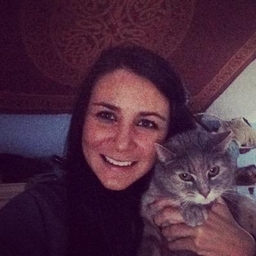
Kayla DeVault de Wendt
Covers:
Climate change, Indigenous rights, Sovereignty, Extractive Industry, Appalachia, Remediation, Superfund, Environmental policy, jurisdiction, treaties, cultural rights, just transition
Shawnee/Anishinaabe
Interview
What was your first job as a journalist?
Writing satire for The Athenian at my engineering school. A friend stumbled across my travel blog, got a kick out of it, and offered to pay.
Have you ever used a typewriter?
I grew up strictly using my mom's and my grandma's typewriters. I still used it after college as I didn't have access to a working printer.
How is social media changing news?
It enables stories that don't get covered to be accessible & in the original context, but I've still seen it censored & manipulated in feeds.
What does it mean to be a journalist?
To me, it is challenging people to understand concepts they didn't understand before they read your piece - cultural as well as scientific.
What's the funniest news-related #hashtag you've seen?
Sadly, most of the news I work in doesn't have funny hashtags. On the contrary, they're meant to draw attention to unspoken issues.
How do you prefer to be pitched on stories?
I love when someone approaches me to write because I feel uncomfortable with the pitching process. Feels boastful. I do it anyway.
What tools and software do you use to do your job?
I love Google Docx, and that is about it. Except when I'm illustrating my VideoScribe educational episodes for YouTube. I keep it simple.
What's your favorite social network?
I do not like social media.
Who do you wish followed you?
People who ordinarily don't care about what I have to say. Maybe, with time, they'll start to understand.
Why did you become a journalist?
The people writing the stories are not representative of the people in the stories or of the perspective of the marginalized.
Did you work for your high school newspaper? If so, what did you do there?
No, I grew up in a highly illiterate community where most of my classmates failed math because they couldn't read the long-form questions.
What story are you most proud of writing or working on?
I did a piece that highlighted my professor's work in Indigenous Housing with Yes! magazine. I talked re:my thesis topic by centering others.
What advice can you offer to aspiring journalists?
Don't compromise too much. If an editor is completely changing your story, the redacted version probably won't benefit anyone.
When's the best time to pitch you?
I'm always excited to write, if that's what you mean.
What's the best pitch you ever got?
I think the more exciting pitch I landed was my opinion piece in the Phoenix paper as I wasn't expecting them to publish something like that.
What's your favorite drink?
Uncontaminated water, preferably well.
When you're not at a computer, where are you most likely to be?
Growing food for the local Native program I manage, illustrating, camping or climbing, tending animals, playing hockey/music, dancing, etc.
What's the most common misperception about your beat?
There's nothing intrinsic about being Indigenous that makes that identity synonymous with environmentalist. That stereotype needs to go away.
Would you like to take the Muck Rack Interview?
Create a Muck Rack profile.