
We did not have a procession on Corpus Christi when I was growing up. It’s not because we didn’t believe in the Real Presence. In fact, some of my most powerful childhood memories are from the Holy Thursday procession. The incense. The chant. The parish jammed into a tiny chapel for adoration. Another very vivid memory was the first time I attended Eucharistic Adoration. One of our young associates, with the permission of our pastor, added a holy hour after our Sunday night youth Mass.
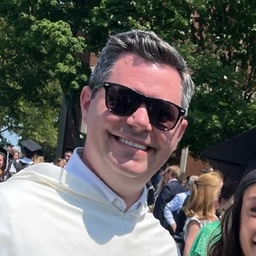
Patrick Briscoe
Rome
As seen in:
Aleteia,
National Catholic Reporter,
The Free Press,
The Boston Pilot,
Our Sunday Visitor,
Global Sisters Report,
Catholic Register,
Catholic Review,
Catholic Standard,
OSV News
and
Covers:
Religion, Opinion, World
🐶 Friar & Priest, @Dominicanfriars🎙️Host, @Godsplaining📍Rome, Italy
Articles by Patrick Briscoe
A Higher Calling: Bioethical and Christian Perspectives on Medical Drone Delivery in Developing Nations
This review discusses the emerging technology of medical drone delivery and the associated logistical, bioethical, and Christian worldview considerations. Utilization of drones for delivering medical supplies, though a groundbreaking advancement enhancing medical accessibility and timeliness, raises significant bioethical concerns rooted in principles like beneficence, non-maleficence, autonomy, justice, and explicability.
The Climb to Ash Wednesday
Being from northern Indiana, I’ve never lived on a hill. In fact, when I was younger, I often wondered why people bothered to build houses on hills. There were, after all, plenty of flat places that seemed to my 6- or 7-year-old mind much more amenable to construction. When I first began ministry, I lived on a hill in Providence, Rhode Island. Truth be told, I didn’t think much of it, because as a parish priest I had a car. But now I live on a hill in Rome, and I’m keenly aware of it.
Discovering the Eucharist at Bethlehem
“The world into which Jesus was born was harsh, cruel, violent, and unstable,” writes acclaimed British journalist and historian Paul Johnson at the beginning of his biography “Jesus.” Augustus Caesar (Ovtavian) had been named imperator (commander) by the Roman Senate in 27 B.C. During his rule, the spread of the empire vastly increased trade and Roman influence. Virgil, Rome’s great poet, died just 15 years before Christ was born.
Discovering the Eucharist at Bethlehem
(OSV News) -- "The world into which Jesus was born was harsh, cruel, violent, and unstable," writes acclaimed British journalist and historian Paul Johnson at the beginning of his biography "Jesus." Augustus Caesar (Ovtavian) had been named imperator (commander) by the Roman Senate in 27 B.C. During his rule, the spread of the empire vastly increased trade and Roman influence. Virgil, Rome's great poet, died just 15 years before Christ was born.
Holiness Is Forged in Revolution
When Pope Leo XIII penned Rerum Novarum in 1891, the world was caught in the gears of the Industrial Revolution. The smoke of factories darkened Europe’s skies, and the dignity of workers was too often trampled under the march of machines. Leo XIII saw clearly that the upheavals of industry were not principally economic but moral. This was a spiritual, not technological crisis.
Oremus pro invicem
The saints remind us that holiness is not reserved for a few, but is the calling of every baptized soul.
Angels in spiritual combat
St. Carlo Acutis knew that holiness means entering into a battle. He once said, “After the holy Eucharist, the holy Rosary is the most powerful weapon for fighting the devil and the shortest ladder for climbing into heaven.” He understood that the strength to resist temptation comes from Christ himself. Carlo was not naïve about evil. He saw how sin distorts lives, how addiction to technology or pleasure can enslave us and how Satan tries to separate us from God.
'Infinity is our homeland'
Her mother, Liliana, placed her hope in heaven. While a secretary at her office began praying to Blessed Carlo Acutis, Liliana herself made a pilgrimage to his tomb in Assisi on July 8, leaving a letter with her desperate plea for her daughter’s life. That same day, doctors informed her that Valeria had begun to breathe on her own. By the next day, she was moving and regaining speech. Ten days later, scans showed that the brain hemorrhage had disappeared.
Father Kress: It’s been a great gift. As men, we can easily focus on work and responsibilities. This assignment has drawn the Rosary out of the background of my day and put it into the forefront of my life. It has helped me to entrust my vocation more deeply to Our Lady and rely on her intercession and protection in a new way. Our Sunday Visitor: The Rosary has been at the heart of Dominican spirituality for centuries. How do you see the Order’s charism continuing to bring the devotion to life today?
From weakness to witness
His mother, Luciana, had prayed for years. Then she heard about a parish prayer service dedicated to Carlo’s intercession. Before attending, she made a novena and explained to her son that they could ask Carlo to pray for his healing. At the service, Mattheus touched a picture of Carlo and whispered, “I wish I could stop vomiting so much.” In that instant, healing began. On the way home, he announced he was cured.
A funeral that felt like heaven
Carlo’s mother, Antonia, remembers that many who gathered at his funeral felt as though they were not at a funeral, but at a celebration. True, there were tears. Yet a light seemed to shine through the grief, as if heaven itself were making its presence known. When the priest spoke the final words of dismissal (“Go forth, the Mass has ended”), the bells of the church began to ring out at precisely noon.
From sorrow to eternal hope
Carlo’s parents hoped for a miracle until the very end. Instead, God asked them to walk the road of Calvary, to stand beneath the cross of their son and to surrender him into heaven’s embrace. His mother writes of the searing pain of loss — yet also of the strength that came from faith. The conviction that Carlo’s life was not ended but transformed, that he was closer than ever in Christ, sustained them in their grief.
Suffering completed in Christ
Carlo’s witness reminds us that suffering, when united with Christ, can be transformed into love. It does not make the pain disappear, but it gives it a purpose. His offering shows a maturity beyond his years: he knew that the Mystical Body of Christ depends on hidden sacrifices, on souls willing to bear their trials for others. This act of surrender echoes St. Paul’s words to the Colossians, that our sufferings can be “completed” in Christ for the sake of his Church.
Inspired by St. Padre Pio
For Padre Pio, the nearness of the angel was not a pious idea but a lived experience. Letters tell of how his guardian angel helped him translate correspondence from people all over the world, from languages he had never studied. His spiritual director testified, “Padre Pio does not speak Greek or French. His guardian angel explains everything to him and he answers appropriately.” Carlo, captivated by the supernatural friendship Padre Pio enjoyed, also fostered a devotion to the angels.
Light that draws others to Christ
One of the most moving witnesses to Carlo’s sanctity is Rajesh, an Indian man who worked for the Acutis family. Rajesh was a Hindu priest from the Brahmin caste before he came to Milan as a house servant. Through daily life with Carlo — sharing meals, seeing his purity of heart and being embraced as a true friend — Rajesh encountered something utterly new. Rajesh accompanied Carlo on his way to and from school.
Holiness is forged in revolution
When Pope Leo XIII penned “Rerum Novarum” in 1891, the world was caught in the gears of the Industrial Revolution. The smoke of factories darkened Europe’s skies, and the dignity of workers was too often trampled under the march of machines. Leo XIII saw clearly that the upheavals of industry were not principally economic but moral. This was a spiritual, not technological crisis.
Defending life with courage
Carlo’s courage did not come from books or arguments alone. His convictions were formed in silence, in prayer and in his deep friendship with Jesus and Mary. He had the docility of one who listened to the Holy Spirit. This gave him both clarity and serenity. He defended life not with anger, but with respect and even humor, ensuring his message could be heard without alienating those who disagreed. This consistency extended to all areas of his life. He valued purity, temperance and self-control.
Guided on the path to holiness
Reading the lives of the saints deepened his trust in the angels. He loved to hear how the saints were aided by these invisible friends, and he imitated their devotion. Carlo’s own guardian angel once gave him an interior reminder that he never forgot: “Not love for oneself, but the glory of God.” For Carlo, this sentence cut to the heart of the Christian life. Pride and selfishness turn us inward, away from God. But if we let our hearts be lifted toward God’s glory, we are set free to love.
From dinner table discussions in his own family’s home to protests in the streets of Turin, Frassati bore witness that sanctity is not an abstraction. He showed that young people could live the Gospel fully amid the noise and smoke of industrial modernity. Now, more than a century later, we stand at the cusp of another revolution: the revolution of the algorithm.
In the footsteps of St. Francis
Carlo often told his parents that true discipleship requires humility, that we must recognize we are “nothing” before God. Yet he was also clear that humility is not just politeness or kindness. It is the hard work of surrendering our pride. “We all are likely to fall short,” he once admitted, “because as soon as someone says something we don’t like, we instantly grow angry.” Carlo recognized humility as one of the most difficult virtues to acquire, and Francis inspired him to strive for it.
Love without delay
Carlo himself had a sense that he would die young. Yet this conviction did not make him fearful or passive. Instead, it filled him with urgency. He did not waste his youth but poured it out for God. His days were full — teaching catechism, serving the poor in soup kitchens, encouraging kids in his parish youth group. In between, he played soccer, saxophone and video games, watched detective shows, and even made funny films starring his cats and dogs.
Holiness is forged in revolution
4 From dinner table discussions in his own family’s home to protests in the streets of Turin, Frassati bore witness that sanctity is not an abstraction. He showed that young people could live the Gospel fully amid the noise and smoke of industrial modernity. Now, more than a century later, we stand at the cusp of another revolution: the revolution of the algorithm.
At Tor Vergata, the Wisdom of John Paul II, Leo XIV Intertwine
The sun set warm and golden over Tor Vergata University in the late summer of 2000. A crowd of more than 2 million young people pressed close to the barricades set up in that giant field outside of Rome. Flags snapped in the wind, chants rose from every corner of the world, and then – he came. John Paul II, the old Polish pope with trembling hands and blazing eyes, stood before the youth of the world. He was visibly tired, his body worn from decades of suffering and service.
Live time well in God
He often warned that “every minute that passes in vain is a missed opportunity to become more holy.” Time, therefore, is too precious to squander on what is displeasing to God. This conviction gave urgency to his daily choices. It is why he filled his life with prayer, service and joy instead of wasting hours in distraction or sin. Carlo believed that God created time for us not as a burden, but as a space where we can encounter him.
Friends on the road to heaven
Carlo was also shaped by his love of “The Little Prince.” He often repeated the fox’s line: “It is the time you have wasted for your rose that makes your rose so important.” For Carlo, this meant that time spent with friends is what makes them special and unique. Yet he went further: that time only becomes truly meaningful when it is centered on God. Without love for God, time risks becoming shallow or self-serving. With God, time shared becomes transformative, strengthening both souls in faith.
Suffering united to Christ is never wasted
Carlo Acutis’ mother, Antonia, once shared a powerful dream she had a few months before his death. In the dream, she saw a bleeding lamb, left to die, while a voice in Arabic spoke the words “sacrifice” and “victim.” Though she did not understand the language, she later discovered the meaning, and she became convinced that this dream foretold Carlo’s final agony.
Carrying the cross in every trial
He says, “Our frenetic pace of life has made us forget that each of us must climb Golgotha sooner or later. Our journey on this earth is marked from the beginning: We are all invited to take up our cross and climb Golgotha.” Carlo did not mean this in a gloomy way. For him, the cross was not only suffering, but also the path of love. He knew that Christ had already carried the weight of the cross for us, and that every cross we bear is united to His.
Guarding purity in a digital world
Carlo lived with integrity in a culture that often encouraged the opposite. He chose modesty in how he lived and Christian honesty in how he used the internet. He understood that purity was not repression but freedom — the freedom to love God wholeheartedly. One classmate of Carlo’s, a girl, recalls, “I always remember Carlo as having an angelic quality.
True friendship reflects divine love
“I remember Carlo well. He was always so kind, good-hearted, and well-mannered,” writes a homeless person who knew Carlo from the steps of his parish church in Milan. “Every once in a while he would give me some money, which I believe came from his allowance. There aren’t too many kids around like Carlo these days.” Carlo was known as a loyal and encouraging friend. He especially supported classmates who were struggling with illness or hardship.
Faith that sees and serves
Carlo recognized Christ in the poor. He volunteered at soup kitchens, gave food and clothing to those in need and treated the homeless with dignity and friendship. For him, service was not an obligation but an expression of his love for Jesus. He once said, “To always be close to Jesus, that is my life plan.” Carlo knew that closeness to Christ meant closeness to those who suffer, for the Lord identifies himself with “the least of these” (Mt 25:40).
Holiness begins in the home
Carlo’s first mission field was his own family. Though his parents were not practicing the Faith, Carlo’s quiet devotion became a spark that reignited theirs. His mother later testified that it was her son who led her back to God. By his prayer, example and gentle encouragement, Carlo became a missionary in his own household. Charity truly begins at home. Sometimes it is hardest to be a witness to those closest to us. They know our flaws, our weaknesses and our inconsistencies.
Hidden victory in humility
This humility reflects the heart of Christ, who “humbled himself, becoming obedient to death” (Phil 2:8). For Carlo, humiliation became a chance to imitate Jesus. He knew that faith was not about popularity but fidelity. His strength was not in asserting himself but in letting Christ shine through him. Carlo writes, “In order to promote this development, which allows the kernel to become a stalk and grain, we need to practice two virtues: humility and simplicity.
Joy in looking toward God
Joy is not the same as shallow cheerfulness. Carlo’s joy was rooted in Christ. He knew that Jesus was alive in the Eucharist, that heaven was his destiny and that nothing — not even suffering — could rob him of that truth. For him, sadness was a temptation, not a final state. He liked to say that “sadness is looking at ourselves; happiness is looking toward God.” This is a lesson for us, too. It is easy to let discouragement, complaints or negativity shape our outlook.
Eternal gifts over temporary trends
Carlo didn’t let himself be swallowed up by consumerism. He saw clearly that many young people, while longing to be different, end up imitating the crowd — chasing after what the market tells them to desire. As Pope Francis explains, this trap keeps us from “bringing forth the gifts the Lord has given” and offering the world the originality God placed in each of us. Carlo refused to waste his life on things that fade.
A weapon against sin
Carlo had a strong devotion to Mary, especially under the title of Our Lady of Pompeii. He loved to pray the Rosary, calling it his “shortest ladder to heaven.” For him, Mary was a real mother who never abandoned her children. Nicola Gori, Carlo’s postulator, writes, “He once remarked to his parents, ‘Our Lady is the only lady in my life!’ and he never missed ‘the most important appointment of the day,’ which was his recitation of the Rosary.” Through Mary, Carlo learned purity, courage and trust.
Silence in space for God
This habit of silence prepared Carlo for everything. In silence, he learned to listen. He discovered God’s will, found peace in trial and grew in love. His patience and serenity, even in suffering, flowed from this life of prayer. Our world trains us to avoid silence. We reach for our phones or fill our time with constant activity. Carlo shows us that silence is not something to fear but to embrace. It is in stillness that God speaks.
Friendship found with Christ
This is the essence of holiness — friendship with Jesus. Carlo did not see Christ as an abstract figure or distant idea. Jesus was the most important presence in his life. That relationship gave him the strength to forgive, to be kind and to endure illness without despair. It is easy to think of saints as extraordinary people who did great deeds. But Carlo’s example shows that sainthood begins with spending time with Jesus and allowing him to change us.
Highway to heaven
Monsignor Poma, Carlo’s pastor recalls, “This was the root of his attraction to Communion in the Eucharist: with his body having been given, and his blood having been poured out … the little things that vie for young people’s attention end up being such a disappointment; but when the Lord knocks on the door, we know he is ready to give us a taste of the harmony of the goodness of the world to come.
The simple faith of a child
His example became a light to his parents. His mother, who had been away from the faith, began to rediscover God through Carlo’s innocence and devotion. The family’s journey back to Catholic life began not with a lecture or program, but with the simple faith of a child. Antonia, Carlo’s mother, would later write, “The grieving Mary has been a kind of connecting thread in my life.
A restless heart: Finding joy with bestselling author Peter Kreeft
In that climate of spiritual hunger, truth has become newly attractive. Kreeft has long championed the use of beauty to evangelize — a strategy famously deployed by Bishop Robert Barron — but he also sees the direct proclamation of truth as powerful, especially for a generation starved for clarity. “Nature abhors a vacuum,” he said. “The absence of truth makes truth more attractive.” What led Kreeft to Rome? “Scripture,” he said simply.
Originality in holiness with Carlo Acutis
Carlo knew that each person is made in God’s image and likeness. From the moment of our creation, God has a unique plan for our lives — no two people are alike. This means each of us is called to a path of holiness that cannot be copied, borrowed or faked. Carlo saw how tempting it is to become “photocopies.” We can try to blend into the world, to mimic others, to chase after trends, or to build an identity out of what society values. But he believed that holiness is the real originality.
Antonia Acutis shares her son's story and her own
“COVID slowed the whole Church,” she told me, her cadence soft but urgent. “And now other practical matters slow it further. But God has his own calendar. Carlo never hurried; he trusted. We must do the same.” Part of that timetable, she believes, is the growing friendship between Carlo’s witness and the Church in the United States. “Carlo loved America,” she recalled. “He felt a real bond with the energy here, the creativity in your Catholic youth.
Water that quenches every flame
Sirach also reminds us not to pry into mysteries beyond our strength. To “seek not what is too sublime” is not a command against curiosity or wonder, but an invitation to humility and trust. God reveals what we need when we need it. To demand knowledge on our own terms is to risk confusion or pride. Instead, we are called to live one day at a time, receiving the graces of the present moment.
A life structured in God
Such tranquility frees the heart from distraction and anxiety so that it can be filled with love of God. It is not the absence of activity but the harmony of prayer and work, of fidelity and trust. Paul tells us that part of this peace is “minding your own affairs.” That means refusing the temptation to meddle in the lives of others or to compare ourselves with them.
Choose truth over compromise
St. John Chrysostom, preaching on this passage, noted Herod’s enslavement to his passions. So great was his attachment to pleasure and power that he handed over his kingdom for the dancing of Herodias’s daughter, and eventually, in weakness, consented to John’s death. Chrysostom’s sharp words remain a warning: it is all too easy, even today, to know the truth but to allow our passions to rule us, giving away our integrity for fleeting pleasures.
Finding truth and beauty in God
These words summarize Augustine’s lifelong search for truth and beauty. For years he sought satisfaction in created things, dazzled by what God had made but blind to the Creator himself. Only when grace broke through did Augustine realize that God had always been pursuing him, waiting within, calling him home. St. Paul’s prayer in today’s reading — that God direct our way and strengthen our hearts in holiness — matches the testimony of Augustine’s life. Conversion is not self-directed.
Seeds of faith and peace
But Monica was more than a mother who prayed. Augustine himself tells us in his “Confessions” that she was a peacemaker. When others vented to her in anger, she never repeated their words in ways that would deepen division. Instead, she spoke only what might lead to reconciliation. Her gift was not to stir up discord but to sow peace. That spirit of patient love and steadfast faith made her intercession for Augustine all the more powerful.
Held in divine presence
St. Thomas Aquinas reflects on this mystery in the “Summa Theologiae.” He explains that God is present in all things in three ways: by his power, since all things are subject to him; by his presence, since nothing is hidden from his sight; and by his essence, since he sustains all things in being. For Aquinas, God does not simply observe us from the outside, as we know one another, but also knows us from within. His knowledge is immediate and complete. This means God is never far from us.
Trust the God who chose us
Paul begins where every disciple should: with gratitude. “We give thanks to God always for all of you.” Thanksgiving is the Christian’s first posture. Before achievements or struggles, before petitions or confessions, we begin by acknowledging God’s goodness and the gift of one another. Next, Paul points to the three theological virtues — faith, hope and love. But notice how concrete he makes them.
Show More
loading
Actions
Is this you?
As a journalist, you can create a free Muck Rack account to customize your profile, list your contact preferences, and upload a portfolio of your best work.Get in touch with Patrick
Contact Patrick, search articles and posts on X, monitor coverage, and track replies from one place.
Learn more about Muck Rack