
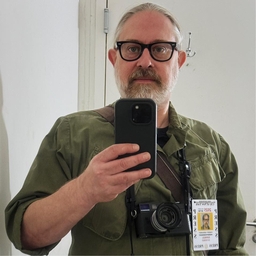
Robert Gerhardt
Verified
(He/Him)
As seen in:
HuffPost,
Issuu,
The Guardian,
Süddeutsche Zeitung,
Flipboard,
The Diplomat Magazine,
The Express Tribune,
Hong Kong Free Press,
EIN News,
The Trace
and
Covers:
Photography, Photojournalism, Press Freedom, Civil Rights, Social Justice
Photojournalist | Journalist, Blind Magazine | Freelance Arts Writer, New York Amsterdam News | Freelance Contributor, The Trace | Member FCC HK | Member NPPA
Articles by Robert Gerhardt
How Palestinian Journalists and Photojournalists in Gaza Became the Only Witnesses to Their Own War
Since the surprise Hamas attack in Israel on October 7, 2023 and the start of the War in Gaza, the territory has faced widespread and systematic destruction. Hospitals have been targeted, cultural heritage sites have been damaged, and whole neighborhoods of civilian housing have been reduced to piles of rubble. The civilian death toll stands at more than 70,000.
‘New City, Old Blues’ bears witness to a changing city
Photo illustration by AmNews; Photos © Andre Wagner; Stuffedbox NG & Oscar Portan via Pexels.com New York City has always been a place that has attracted photographers from every corner of the world. Gordon Parks, Robert Frank, W. Eugene Smith, Lisette Model, and Walker Evans all moved here to pursue photography. The city, with its energy, movement, and constantly changing surroundings, is a draw for those trying to capture the city in all its forms.
New book revisits Gordon Parks’ groundbreaking photography in ‘A Harlem Family’
Gordon Parks “The Fontenelles at the Poverty Board,” Harlem, New York, 1967. Courtesy of and copyright the Gordon Parks Foundation) Gordon Parks Credit: Public Domain photo During its heyday, LIFE magazine reached roughly one out of every three Americans. Over its run, the magazine commissioned more than 10 million photographs in 120,000 stories, according to their archive. The photo stories that LIFE published brought the world into the homes of readers in a very intimate and powerful way.
Steve Schapiro’s Jazz Years: Before Baldwin, Before the Movement
Among my collections photography books in my New York City apartment, one of my treasures is a large format limited edition of James Baldwin’s The Fire Next Time with photographs by Steve Schapiro that was published in 2017. Schapiro had followed Baldwin for LIFE magazine, and his work documenting the Civil Rights Movement was published widely and is in numerous museum collections. Schapiro’s photographs of Baldwin and the Civil Rights Movement have always struck me.
When Ukrainian Women Soldiers Document their War
“I could never have imagined that at 17 I would witness a full-scale war, that at 19 I would begin documenting it, and that every year I would hear about the deaths of people I once knew and photographed,” photographer Marlia Taran tells. At just 22 years old, the young woman has seen more than most people will see in a lifetime.
The Center for Photography at Woodstock’s First Upstate Photography Biennial
Morgan Gwenwald’s series “The Revolution Will Not be Televised” was originally her BFA thesis project, where she photographed fellow members of a lesbian feminist collective as she taught them how to shoot rifles in the nearby woods against the backdrop of the 1970s liberation movements. But in the end, the work was rejected by the program, and she turned away from the art world, but did not stop photographing.
‘Lisette Model: The Jazz Pictures’: A trove of jazz photo treasures finally sees the light
Louis Armstrong and Velma Middleton, Basin Street East, New York City, ca. 1954-56 © Lisette Model Foundation, courtesy of Eakins Press Foundation/Lisette Model fonds, National Gallery of Canada Library and Archives This new book presents nearly 200 beautifully printed photographs and tells the story of the largely unknown jazz photographs that Model made over a decade in the 1950s but that were only recently rediscovered. Photographer Lisette Model has a life story that has stuck for many years.
Photog’s decade’s-long career is love letter to urban spaces and community
BMX bike-jumping at Mullaly Skateboard Park; Bronx, 1995; named after John Mullaly, 19th-century journalist known for racist views. Park renamed Reverend T. Wendell Foster Park in September 2022 to honor first Black representative from the Bronx on New York City Council in response to community efforts. (© Martha Cooper) The Bronx Documentary Center is presenting a comprehensive survey of Martha Cooper’s nearly six-decade career of documenting urban spaces, community life, and creative expression.
LA’s Getty Museum presents ‘Photography and the Black Arts Movement’
Ethel Sharrieff in Chicago, 1963, Gordon Parks (American, 1912–2006). Gelatin silver print National Gallery of Art, Washington, DC. Corcoran Collection (The Gordon Parks Collection), 2015.19.4631. (© Gordon Parks Foundation) Uniting around the Civil Rights Movement, writers, musicians, and visual artists explored how their work could celebrate Black culture and promote dignity, hope, and freedom.
Devin Allen, Baltimore cœur à vif
« Traversez Baltimore, mais allez au fond des choses. Ne vous arrêtez pas aux beaux quartiers vantés dans les publicités de “Visit Baltimore” et les sites touristiques, parce que ce n’est pas ça, le fond des choses », écrit D. Watkins dans son essai pour Baltimore, le nouveau livre du photographe Devin Allen. « Prenez la direction de l’ouest. Continuez, bien au-delà des grands stades et des tours du centre-ville.
Devin Allen’s Raw Baltimore
“Take a ride through Baltimore, but go deep. Please don’t stop at the pretty neighborhoods advertised on ‘Visit Baltimore’ commercials and vacation sites, because that’s not deep,” D. Watkins writes in his essay in photographer Devin Allen’s new book Baltimore. “Head west. Keep going, way past the huge stadiums and the tall buildings that make up downtown. Keep going west, toward the sea of concrete that holds a collection of those collapsed houses that flash on news reports about the city’s crime.
Bearing Witness: Sudanese Photographers Document a Forgotten War
Dubbed ‘The Forgotten Crisis’ by TIME magazine, the conflict in Sudan is one of the largest humanitarian crisis known to date. More than 12.7 million people, or nearly one-third of the population of Sudan, have been forced to flee from their homes according to a report from OXFAM. The lives claimed by fighting and famine are equally staggering. Yet much of the world is either unaware of what is happening or turns a blind eye.
L’Ukraine, avant et après la rupture — Blind Magazine
« Ce projet retrace la lutte entre forces démocratiques et autoritaires, où la promesse de liberté se heurte sans cesse à l’attraction de la domination », écrit Robin Hinsch. « Il s’attarde sur ces seuils fragiles entre ouverture et contrôle, espoir et peur. En son cœur se pose la question des futurs encore imaginables à l’ombre de ce conflit. » Robin Hinsch est attiré pour la première fois par l’Ukraine après la lecture d’un article dans le magazine allemand Der Spiegel.
Ukraine, Before and After the Break — Blind Magazine
“This project traces the struggle between democratic and autocratic forces, where the promise of freedom constantly collides with the pull of domination,” photographer Robin Hinsch writes. “It lingers on the fragile thresholds between openness and control, hope and fear. At its core lies the question of what futures can still be imagined in the shadow of this conflict.” Robin Hinsch was first drawn to Ukraine after reading an article in German magazine Der Spiegel.
In Light and Shadow : une histoire photographique de l’Amérique autochtone — Blind Magazine
L’année 2020 marquait le 400ᵉ anniversaire de l’arrivée du Mayflower dans le Massachusetts, événement associé à l’installation des Pèlerins dans le Nouveau Monde. Mais ce Nouveau Monde n’était pas vide, et ils n’étaient pas seuls. Ce qui allait devenir les États-Unis était déjà habité par de nombreux peuples autochtones, dont l’histoire et les points de vue ont souvent été éclipsés, voire minimisés, dès l’arrivée de ceux venus d’outre-Atlantique. Cet anniversaire a cependant fait naître une idée.
In Light and Shadow: A Photographic History from Indigenous America — Blind Magazine
2020 marked the 400th anniversary of the arrival of the Mayflower in Massachusetts, bringing the Pilgrims to the New World. But the New World was not empty, and they were not alone. What would eventually be called America was home to many groups of Indigenous Americans, whose history and perspectives have often been overshadowed, or downplayed, starting with those who came from across the sea. But with the anniversary also came an idea.
Quarante ans de photojournalisme chez Reuters, au cœur de l’actualité — Blind Magazine
« Travailler comme éditeur photo pour une agence comme Reuters, c’est avoir une place au premier rang des plus grands événements mondiaux au moment même où ils se déroulent », explique Rickey Rogers, Global Editor chez Reuters Pictures. « C’est un privilège, mais aussi une immense responsabilité que de travailler avec des photographes. » Reuters a été fondée à Londres en 1851, avec pour mission de présenter au monde les informations qui comptent.
In the Moment: 40 Years of Reuters Photojournalism — Blind Magazine
“Working as a picture editor for an agency like Reuters is like having a front-row seat to the biggest news stories as they unfold around the world,” tells Rickey Rogers the Global Editor of Reuters Pictures. “It’s a privilege, but also a huge responsibility to work with photographers.” Reuters was first founded in London in 1851, with the mission to present to the world the news that matters. But it did not originally have its own branded photo agency.
« Black Photojournalism » : l’Amérique noire racontée par ceux qui l’ont vécue — Blind Magazine
Lorsqu’en 1945, la Second Guerre mondiale se termine, les militaires afro-américains rentrent chez eux. Ils ont combattu à l’étranger contre le fascisme et l’impérialisme, pour la démocratie. Mais le pays qui les accueille est celui où ils ne disposent pas des mêmes droits que les soldats blancs avec lesquels ils ont servi. Dans le même temps, le paysage médiatique évolue. Pour la première fois, des récits noirs sont racontés par des journalistes noirs, accompagnés de photographes noirs.
Black America as Told by Those Who Lived It — Blind Magazine
At the end of World War II, Black service members returned home from overseas where they had fought against fascism and imperialism and for democracy. But the country they returned to was one where they did not have equal rights to those of the white soldiers they had fought with. At the same time, the media landscape was also growing, allowing for Black stories told by Black journalists with Black photojournalists supplying the photographs.
Now on view: “Seydou Keïta: A Tactile Lens” at the Brooklyn Museum
New York Amsterdam News | November 06, 2025 A new exhibition at the Brooklyn Museum is the most expansive North American exhibition of the Malian photographer Seydou Keïta's work, who documented the vibrant cosmopolitanism of Bamako during a critical time in West African History. When you make your way up to the 4th floor of the Brooklyn Museum to see their new exhibition of the photographs of Malian photographer Seydou Keïta's work.
Afghanistan: It Can Never Be the Same
Photojournalist Lorenzo Tugnoli was in Afghanistan between 2019-2023, a pivotal time of transition and upheaval. Subscribe for ads-free reading Rather than traditional reportage, Italian photojournalist Lorenzo Tugnoli’s new book of photographs of Afghanistan form a reflective journey that aims to question how visual representations can shape external perceptions. “The first few months after the Taliban returned to Kabul were truly unique.
Afghanistan: It Can Never Be the Same - Tribune Content Agency
Rather than traditional reportage, Italian photojournalist Lorenzo Tugnoli’s new book of photographs of Afghanistan form a reflective journey that aims to question how visual representations can shape external perceptions. “The first few months after the Taliban returned to Kabul were truly unique. The war was over: there were no more U.S. bombings, no more night raids, and no more explosive devices planted along the main roads by the Taliban.
Now on view: “Seydou Keïta: A Tactile Lens” at the Brooklyn Museum
(©Timothy Doyan photos) A new exhibition at the Brooklyn Museum is the most expansive North American exhibition of the Malian photographer Seydou Keïta’s work, who documented the vibrant cosmopolitanism of Bamako during a critical time in West African History.
Ed Kashi, 45 ans à raconter le monde en images — Blind Magazine
« Je l’ai reçu exactement quand nous sommes arrivés ici », raconte le photographe depuis une maison à Clarksville, dans le Mississippi, où il séjourne avec son épouse, la documentariste Julie Winokur. « Honnêtement, je n’ai pas pu le regarder tout de suite. Je l’ai déballé, et c’était comme quand votre enfant vient au monde et que vous dites : “Bon, tout va bien, il a dix doigts et dix orteils.” Puis je l’ai reposé.
Ed Kashi: Looking Back While Moving Forward — Blind Magazine
“I received it exactly when we got here” photographer Ed Kashi tells about getting a copy of his new book while staying in a house in Clarksville, Mississippi. The photographer is currently in the south of the United States working on a separate multiyear book project with his wife, Julie Winokur. “Honestly, I couldn’t look at it at first. I pulled it out of the wrap, and it was like when your kid comes and you say ‘Okay, great. It has 10 toes and 10 fingers.’ Then I put it down.
‘Temples of Hope, Rituals of Survival: Gordon Parks and Black Religious Life’ now on view at Howard U.
A new exhibition on view at Howard University explores an underexamined chapter of famed photographer Gordon Parks’ documentation of religion in Black communities during the 20th Century. Coinciding with this, a supplemental exhibition showcases Howard University students’ response to Parks’ legacy. Our journalism is only possible with support from you, our readers. The news mainstream media just doesn’t cover.
See the Statistics on Gun Violence in Your Area
The Trace On Wednesday, President Donald Trump named his next target for National Guard deployment: San Francisco. In a meeting at the White House, Trump called the city “a mess” and said he would be encouraging his administration to consider it for federal intervention. The comments came after a number of tech billionaires expressed support for sending troops to crack down on crime in San Francisco. But there’s a familiar problem with that line of reasoning. Crime in San Francisco is down.
These Neighborhood Groups Are Fighting to Rewrite Brownsville’s Legacy of Violence
The Trace I first met Gene Krell in February of 2020, when I was photographing the Black Lives Matter movement in New York City. Krell was a native of Brownsville, a residential neighborhood on the east side of Brooklyn, and talked about the neighborhood’s history — how it had changed from a Jewish community to being predominantly Black as he was growing up in the late 1950s and early 60s.
‘Temples of Hope, Rituals of Survival: Gordon Parks and Black Religious Life’ now on view at Howard U.
Photos from “Temples of Hope, Rituals of Survival: Gordon Parks and Black Religious Life” now on view at Howard University. Credit: (©Jada Simone, courtesy of Howard University) Gordon Parks is one of those photographers who really does not need much of an introduction. His work documenting Black life throughout the United States is legendary, making him one of the most famous Black photographers in history, if not in photography in general.
New book is a visual love letter to local record stores
A-1 Record Shop, 439 East 6th Street, East Village, Manhattan When I was in college in the mid to late 1990s, when I would be home for school breaks at my parents’ house in the suburbs of Philadelphia, I worked here and there at a small, independent music shop known as Rock Palace. It wasn’t a big store, mainly dealing with new and used CDs in those days. If you’ve ever seen the movie “High Fidelity,” you understand the vibe of the place, though we weren’t nearly as funny, and had longer hair.
Ces Américains qui rêvent d’une autre société — Blind Magazine
Lorsque Donald Trump est descendu de son escalator doré à la Trump Tower, le 16 juin 2015, pour annoncer sa candidature à la présidence des États-Unis, peu de gens ont pris la mesure de ce moment. En 10 ans, l’Amérique a été transformée de presque toutes les manières possibles. L’ombre de Trump semble planer sur tout et a divisé le pays en deux blocs presque irréconciliables. Mais il existe encore des femmes et des hommes qui résistent à cette vague, chacun à leur façon.
This Short Life: Dreams of a Different Society — Blind Magazine
When Donald Trump rode down his golden escalator in Trump Tower on June 16, 2015, to announce his candidacy for President of the United States, very few people realized the magnitude of the moment. In the decade since, America has been transformed in almost every way possible. Trump’s influence, or shadow, seems to hang over everything, and in the process, it has divided America almost in two. But there are still those who stand up against the rising tide in their own ways.
Stephen Shames, une vie dédiée à la photographie — Blind Magazine
« Le grand avantage d’être photojournaliste, c’est que votre appareil photo est un ticket pour aller partout », explique Stephen Shames. « J’essaie de transmettre une émotion pure dans mes images, de passer derrière la scène, de trouver un angle différent pour révéler ce qui se cache sous la surface. Avoir une vision distincte permet d’être plus poétique. Faites confiance à votre regard. Laissez-le vous guider.
Stephen Shames: A Lifetime in Photography — Blind Magazine
“The great thing about being a photojournalist is your camera is a ticket to go anywhere,” says photographer Stephen Shames. “I try to convey pure emotion in my pictures, to get behind the scenes, to find a different angle so my pictures reveal what is beneath the surface. Having a distinct vision allows a photographer to be more poetic. Trust your vision. Go where it takes you.” Stephen Shames has seen a lot in his more than a five-decade career.
Looking back at House’s Barbershop
Enter the code sent to your email. Sign in by entering the code we sent to , or clicking the magic link in the email.
Robert Gerhardt Archives
Robert Gerhardt Robert Gerhardt is a documentary photographer, journalist, and freelance writer based in Brooklyn, New York. His photographs have been published both nationally and internationally in outlets including GQ Japan, The Guardian, The Diplomat, The Hong Kong Free Press, Blind Magazine, The Huffington Post, Suddeutsche Zeitung, Haaretz, and The New York Times.
Queer happened here: 100 years of NYC's landmark LGBTQ+ places
New York Amsterdam News | June 26, 2025 Queer history can be found throughout New York City, although much has gone unmarked, obscured, or forgotten over the decades. The Stonewall Inn may be the most famous because of the Stonewall Riots in 1969 that started the fight for LGBTQ+ rights, but it was not the first space for the queer community, and it was not the only one.
Drôle d'entreprise : photographie et humour — Blind Magazine
« Funny Business : Photography and humour »(Drôle d’affaire : photographie et humour)présente 70 photographies qui illustrent les mécanismes de l’humour photographique, tout en examinant les raisons pour lesquelles les artistes l’ont utilisé comme stratégie dans leur travail. Les photographies proviennent principalement de la collection du Center for Creative Photography (CCP) de l’Université de l’Arizona à Tucson, avec laquelle le Phoenix Art Museum entretient un partenariat unique.
Funny Business: Photography and Humor — Blind Magazine
“Funny Business: Photography and Humor”presents 70 photographs that showcase the mechanics of photographic humor, while examining the reasons for which artists have employed it as a strategy in their work. The photographs have mainly been drawn from the collection of the Center for Creative Photography (CCP) at the University of Arizona in Tucson, with whom the Phoenix Art Museum has a unique partnership.
Funny Business: Photography and Humor
17 hours ago John Singer Sargent and the scandalous Madame X portrait that set the Gilded Age alight John Singer Sargent was the most in-demand portrait artist of his generation, though his career was not without controversy.
Queer happened here: 100 years of NYC’s landmark LGBTQ+ places
Queer history can be found throughout New York City, although much has gone unmarked, obscured, or forgotten over the decades. The Stonewall Inn may be the most famous because of the Stonewall Riots in 1969 that started the fight for LGBTQ+ rights, but it was not the first space for the queer community, and it was not the only one. Author Marc Zinaman explores this hidden history in “Queer Happened Here: 100 Years of NYC’s Landmark LGBTQ+ Places,” published by Prestel.
Consuelo Kanaga: Catch the Spirit
Consuelo Kanaga was “way ahead of her time,” recalled her photographer friend Dorothea Lange in the 1960s. The comment is recounted by curator Drew Sawyer in his essay for the catalogue for “Consuelo Kanaga: Catch the Spirit,” currently on view at the Brooklyn Museum through August 3. For six decades, Kanaga photographed everything from still life and celebrity portraits to urgent social issues tackling urban poverty, labor rights, racial terror, and inequality.
Photog Jamel Shabazz discusses new exhibit at Bronx Documentary Center
Jamel Shabazz can be seen as a quintessential Brooklyn, or rather New York, photographer. Over his 50-year career, his work has spanned street photography, documentary work, and fashion photography. His photo albums, collecting all of his work, are iconic in their own right and they all bear his unmistakable style and eye.
The Return of Larry Clark — Blind Magazine
Larry Clark was born in 1943 in Tulsa, Oklahoma, where he came into photography at an early age. His mother was a baby photographer, and he started working in the business from the age of 13. But the innocence would not last. In 1962, Clark was 16 when he and his friends started shooting Valo, a drug store nasal inhaler that contained a large amount of amphetamine. He left Oklahoma to study photography and then served two years in the Vietnam war. But then he came back to Tulsa.
The Costs of School Shootings in America — Blind Magazine
“When I first received a news alert that there had been a shooting at an elementary school in Uvalde – a town less than 90 miles from where I grew up – I was stunned. Although mass shootings are frequent, it’s easy to feel removed from tragedy when it happens in far away, unfamiliar places. My false sense of security was ripped away after gunman launched an attack in a classroom so close to my home,” photographer Callaghan O’Hare said. “I drove to Uvalde hours after finding out about the shooting.
Center for Photography at Woodstock Opens Renovated Kingston Headquarters — Blind Magazine
Situated 90 miles North of New York City, the Center for Photography at Woodstock (CPW), was first founded in 1977 by then-photographer Howard Greenberg and Michael Feinberg. Originally situated within the town of Woodstock, New York, over nearly 50 years the CPW established a distinguished record as an organization that connected photographers with engaging exhibitions, learning and printing facilities, lectures and panels, and a photography library and collection.
Losing The South Korean Youth — Blind Magazine
“Over the past few decades, South Korea has become a more competitive society, with the current times overlapping against its cultural and ethnic background. As a result, South Korea has the highest youth suicide rate among developed countries and the lowest birth rate in the world. Some young people jokingly refer to their country as ‘Hell Korea’,” photographer Yang Seung-Woo writes in TFW Korea. In the book, Yang portrays numerous young people from South Korea.
Richard Sharum: The Spine of America — Blind Magazine
“This term, flyover country, was one I’d heard my entire life but had never really thought about when it came to the condescension it implied. I felt that this part of our country had been ignored politically, socially and culturally for decades, with its obscurity creating a subtle but consequential vacuum that had implicitly added fuel to our national divisions.
Show More
loading
Actions
Get in touch with Robert
Contact Robert, search articles and posts on X, monitor coverage, and track replies from one place.
Learn more about Muck Rack