
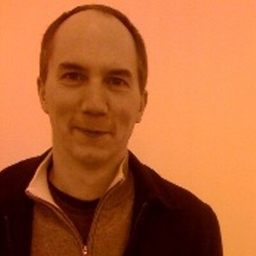
Alan Burdick
Verified
As seen in:
The New York Times,
LinkedIn,
Medium,
The New York Times en Español,
UOL,
El País,
The Guardian,
InfoMoney,
South China Morning Post,
The New Yorker,
El Tiempo
and
Editor w/ @NYTScience, former editor & staff writer @NewYorker. Author,"Why Time Flies: A Mostly Scientific Investigation." Future futurist, minor planet #9291.
Is this you? As a journalist, you can create a free Muck Rack account to customize your profile, list your contact preferences, and upload a portfolio of your best work.
Claim your profile
Articles by Alan Burdick
It’s Docktober. Do You Know Where the Sea Slugs Are?
Perhaps you own a dock, or have sat on one by a bay, or spread out on one in the sun, or dived from one and swam around it. This much you know: It’s even better with company. Family, friends, friends of friends — the more the merrier. The same holds true underwater. The belowdecks of coastal docks, especially floating docks, often harbor rich, colorful “biofouling” communities: forests of sponges, sea mosses, seaweeds, sea slugs, sea stars and other marine organisms.
It’s Docktober. Do You Know Where the Sea Slugs Are?
Science|It’s Docktober. Do You Know Where the Sea Slugs Are? https://www.nytimes.com/2026/10/27/science/docktober-nudibranchs.html You have a preview view of this article while we are checking your access. When we have confirmed access, the full article content will load. Perhaps you own a dock, or have sat on one by a bay, or spread out on one in the sun, or dived from one and swam around it. This much you know: It’s even better with company.
How to Cash In on Autumn’s Fallen Leaves
You have a preview view of this article while we are checking your access. When we have confirmed access, the full article content will load. How to Cash In on Autumn’s Fallen Leaves To homeowners, fallen leaves look like work. To nature, they’re an investment, with tremendous value on the secondary market as invertebrate real estate. Credit...Simon Bailly Alan Burdick is a science editor at The Times.
E Pluribus Algae: Why Green Pond Scum Is as American as Red, White and Blue
(Science Times) ; (Essay) I went to the Reflecting Pool because, as a certain American naturalist once said of a different pond, I wished to "live deliberately" and "see if I could not learn what it had to teach." I doubted that it had much left to say. The Reflecting Pool, the half-mile-long, knee-deep mirror of water that runs to the foot of the Lincoln Memorial, has become our nation's latest national metaphor.
E Pluribus Algae: Why Green Pond Scum Is as American as Red, White and Blue
I went to the Reflecting Pool because, as a certain American naturalist once said of a different pond, I wished to “live deliberately” and “see if I could not learn what it had to teach.” I doubted that it had much left to say. The Reflecting Pool, the half-mile-long, knee-deep mirror of water that runs to the foot of the Lincoln Memorial, has become our nation’s latest national metaphor.
E Pluribus Algae: Why Green Pond Scum Is as American as Red, White and Blue
Mites Live on Your Face, And They're Starting to Merge With Humans If you are reading this, you are probably not alone. Most people on Earth are habitats for mites that spend the majority of their brief lives …
La quête scientifique du terrain parfait pour la Coupe du monde
Au moment de vous installer pour regarder le plus grand événement sportif du monde — 39 jours, 48 équipes, 104 matchs et plus de 1200 paires de pieds cramponnés qui martèlent le sol —, ayez une pensée pour le gazon. La FIFA, l’instance internationale qui régit le soccer, exige que chaque match de la Coupe du monde soit disputé sur une pelouse naturelle et vivante.
The Scientific Quest for a Perfect World Cup Field
EDITORS NOTE: ART ADV: With photos.); (With: SOC-CUP-BRAZIL, SOC-CUP-U.S. As you settle in to watch the world's biggest sporting event -- 39 days, 48 teams, 104 matches and more than 1,200 pairs of pounding, cleated feet -- spare a blessing for the grass. FIFA, the international ruling body of soccer, mandates that every World Cup match be played on natural, living turf.
The Secrets of a Soccer-Turf Master Original
Imagine the world’s best soccer field: blade-perfect natural grass, fit for the likes of Lionel Messi and Vinicius Jr. and capable of withstanding nearly 40 days and 40 nights of top-level wear and tear. Now imagine creating 16 such fields, for 16 stadiums each with its own climate: in Toronto; in Guadalajara; indoors and air-conditioned; outdoors in pouring rain or the blazing sun; some with artificial turf already in place.
The Secrets of a Soccer-Turf Master
Imagine the world's best soccer field: blade-perfect natural grass, fit for the likes of Lionel Messi and Vinicius Jr. and capable of withstanding nearly 40 days and 40 nights of top-level wear and tear. Now imagine creating 16 such fields, for 16 stadiums, each with its own climate: in Toronto; in Guadalajara; indoors and air-conditioned; outdoors in pouring rain or the blazing sun; some with artificial turf already in place.
The scientific quest for a perfect World Cup field
As you settle in to watch the world’s biggest sporting event — 39 days, 48 teams, 104 matches and more than 1,200 pairs of pounding, cleated feet — spare a blessing for the grass. FIFA, the international ruling body of soccer, mandates that every World Cup match be played on natural, living turf. Moreover, the playing experience, including the bounce and movement of the ball and the player “feel,” must be consistent from venue to venue.
Do cultivo ao quique: a precisão científica dos gramados da Copa do Mundo
Ao se acomodar para assistir ao maior evento esportivo do mundo — 39 dias, 48 seleções, 104 partidas e mais de 1.200 pares de chuteiras batendo forte no chão — vale a pena reservar uma bênção para a grama. A Fifa, entidade máxima do futebol, determina que todas as partidas da Copa do Mundo sejam disputadas em gramado natural e vivo.
The Scientific Quest for a Perfect World Cup Pitch
You have a preview view of this article while we are checking your access. When we have confirmed access, the full article content will load. As you settle in to watch the world’s biggest sporting event — 39 days, 48 teams, 104 matches and more than 1,200 pairs of pounding, cleated feet — spare a blessing for the grass. FIFA, the international ruling body of soccer, mandates that every World Cup match be played on natural, living turf.
The Scientific Quest for a Perfect World Cup Field
As you settle in to watch the world's biggest sporting event -- 39 days, 48 teams, 104 matches and more than 1,200 pairs of pounding, cleated feet -- spare a blessing for the grass. FIFA, the international ruling body of soccer, mandates that every World Cup match be played on natural, living turf. Moreover, the playing experience, including the bounce and movement of the ball and the player "feel," must be consistent from venue to venue.
Meet the scientist who is the 'World champion of fungus'
On Jan 13, the Tyler Prize for Environmental Achievement, sometimes described as the "green Nobel Prize”, was awarded to Toby Kiers, an evolutionary biologist at Vrije University Amsterdam who has spent the past three decades studying the workings and significance of the soil’s circulatory system.
World Champion of Fungus
Alan Burdick interviews an evolutionary biologist who has spent the past three decades studying the soil’s circulatory system Alan Burdick Published 02.02.26, 11:09 AM Evolutionary biologist Toby Kiers collects soil samples at the foot of a 3,500-year-old conifer in Chile. nytns/tomas munta The Tyler Prize for Environmental Achievement, sometimes described as the “green Nobel Prize”, was awarded last month to Toby Kiers, an evolutionary biologist at Vrije University Amsterdam in the Netherlands.
Toby Kiers, World Champion of Fungus
(A Conversation With) ; (Science Times) kAm%96 %J=6C !C:K6 7@C t?G:C@?>6?E2= p49:6G6>6?E[ D@>6E:>6D 56D4C:365 2D E96 Q8C66? }@36= !C:K6[Q H2D 2H2C565 =2DE H66< E@ %@3J z:6CD[ 2? 6G@=FE:@?2CJ 3:@=@8:DE 2E 'C:;6 &?:G6CD:EJ p>DE6C52> H9@ 92D DA6?E E96 A2DE E9C66 564256D DEF5J:?8 E96 H@C<:?8D 2?5 D:8?:7:42?46 @7 E96 D@:=VD 4:C4F=2E@CJ DJDE6>]k^Am kAm{2DE J62C[ z:6CD H@?
Toby Kiers, World Champion of Fungus
(A Conversation With) kAm%F6D52J[ E96 %J=6C !C:K6 7@C t?G:C@?>6?E2= p49:6G6>6?E[ D@>6E:>6D 56D4C:365 2D E96 Q8C66? }@36= !C:K6[Q H2D 2H2C565 E@ %@3J z:6CD[ 2? 6G@=FE:@?2CJ 3:@=@8:DE 2E 'C:;6 &?:G6CD:EJ p>DE6C52> H9@ 92D DA6?E E96 A2DE E9C66 564256D DEF5J:?8 E96 H@C<:?8D 2?5 D:8?:7:42?46 @7 E96 D@:=VD 4:C4F=2E@CJ DJDE6>]k^Am kAm{2DE J62C[ z:6CD H@? 2 |24pCE9FC Q86?:FDQ 2H2C5[ 2D H6== 2D E96 r=:>2E6 qC62<E9C@F89 pH2C5[ D92C:?8 :E H:E9 v:F=:2?2 uFC4:[ 2 7F?8: 4@?D6CG2E:@?:DE[ 2?5 |6C=:?
Toby Kiers, World Champion of Mycorrhizal Fungus
You have a preview view of this article while we are checking your access. When we have confirmed access, the full article content will load.
What is wiped out by federal research cuts
By most metrics, 2025 has been the worst year for the American scientific enterprise in modern history. Since January, the Trump administration has made deep cuts to the nation’s science funding, including more than $1 billion in grants to the National Science Foundation, which sponsors much of the basic research at universities and federal laboratories, and $4.5 billion to the National Institutes of Health.
A Crushing Year for Science in America Original
By most metrics, 2025 has been the worst year for the American scientific enterprise in modern history. Since January, the Trump administration has made deep cuts to the nation’s science funding, including more than $1 billion in grants to the National Science Foundation, which sponsors much of the basic research at universities and federal laboratories, and $4.5 billion to the National Institutes of Health.
Has Your Scientific Work Been Cut? We Want to Hear.
You have a preview view of this article while we are checking your access. When we have confirmed access, the full article content will load. By most metrics, 2025 has been the worst year for the American scientific enterprise in modern history.
Has Your Scientific Work Been Cut? We Want to Hear.
By most metrics, 2025 has been the worst year for the American scientific enterprise in modern history. Since January, the Trump administration has made deep cuts to the nation’s science funding, including more than $1 billion in grants to the National Science Foundation, which sponsors much of the basic research at universities and federal laboratories, and $4.5 billion to the National Institutes of Health.
A voyage to bring Norway's lighthouses into the 21st century
(Science Times) If ever there was a beacon of hope, it is the lighthouse -- “immovable, immortal, eminent,” as novelist (and son of a lighthouse designer) Robert Louis Stevenson put it. The oldest lighthouse still in use, built in Galicia by the Romans, dates to A.D. 100. “I can think of no other edifice constructed by man as altruistic as a lighthouse,” George Bernard Shaw once wrote.
A Voyage to Bring Norway’s Lighthouses Into the 21st Century
A Voyage to Bring Norway’s Lighthouses Into the 21st Century More than 2,000 navigational beacons, big and small, oversee the nation’s 60,000-mile-long coast. Now they need an upgrade. Aug. 3, 2025, 3:00 a.m. ET If ever there was a beacon of hope, it is the lighthouse — “immovable, immortal, eminent,” as the novelist (and son of a lighthouse designer) Robert Louis Stevenson put it. The oldest lighthouse still in use, built in Galicia by the Romans, dates to A.D. 100.
Mother of inventions
Science seldom works in straight lines. Sometimes it’s “applied” to solve specific problems: Let’s put people on the moon; we need a COVID-19 vaccine. Much of the time it’s “basic,” aimed at understanding, say, cell division or the physics of cloud formation, with the hope that — somehow, someday — the knowledge will prove useful. Basic science is applied science that hasn’t been applied yet. That’s the premise on which the United States, since World War II, has invested heavily in science.
Nine Federally Funded Scientific Breakthroughs That Changed Everything
Your email address will not be published. Save my name, email, and website in this browser for the next time I comment.
9 Federally Funded Scientific Breakthroughs That Changed Everything
Now Arizona Rep. Juan Ciscomani and other rank-and-file Republicans are facing a tough choice: resist Donald Trump’s efforts to gut Democrats’ climate law or incur the wrath of constituents who could lose billions in investments and thousands of new jobs. CASA GRANDE, Arizona — An Arizona Republican’s …
Nine Federally Funded Scientific Breakthroughs That Changed Everything
The U.S. is slashing funding for scientific research, after decades of deep investment. Here's some of what those taxpayer dollars created. Credit Credit... Science seldom works in straight lines. Sometimes it's "applied" to solve specific problems: Let's put people on the moon; we need a Covid vaccine. Much of the time it's "basic," aimed at understanding, say, cell division or the physics of cloud formation, with the hope that - somehow, someday - the knowledge will prove useful.
Trump vs. Science Original
We explain the administration's cuts to research. Late yesterday, Sethuraman Panchanathan, whom President Trump hired to run the National Science Foundation five years ago, has quit. He didn't say why, but it was clear enough: Last weekend, Trump cut more than 400 active research awards from the N.S.F., and he is pressing Congress to halve the agency's $9 billion budget.
Stand Up for Science Rally Sees Mix of Science, Politics and Anxiety
In Washington, many protesters declined to share their names publicly, for similar reasons.
Stand Up for Science Rally Sees Mix of Science, Politics and Anxiety Original
Shortly before noon on Friday, Dr. Francis Collins, the former director of the National Institutes of Health, stood on the steps below the Lincoln Memorial tuning his acoustic guitar - a "very sweet" Huss & Dalton, he said, with a double-helix of DNA winding down the neck in pearl inlay. The nation's anxious scientists could use a song.
Science, Politics and Anxiety Mix at Rally Under Lincoln Memorial
10 hours ago Director of Groundbreaking UFO Doc Says What He Learned Left Him 'Rattled': 'Things Could Get Really Bad, Really Fast' By his own calculation, Dan Farah watched Steven Spielberg’s Close Encounters of the Third Kind and E.T. The Extra-Terrestrial close to "a thousand times" before he turned 15.
A Shift in the World of Science
Technology observers have grown increasingly vocal in recent years about the threat that artificial intelligence poses to the human variety. A.I. models can write and talk like us, draw and paint like us, crush us at chess and Go. They express an unnerving simulacrum of creativity, not least where the truth is concerned. A.I. is coming for science, too, as this week's Nobel Prizes seemed keen to demonstrate.
The Sex Lives of Cicadas, Revealed Original
After years underground, periodical cicadas - insects of the genus Magicicada - are emerging by the trillions across more than a dozen states to molt, sing, court and mate. A casual human listener could mistake their collective chorus for the sound of a U.F.O. landing: But to the individual cicada, what's underway is a courtship ritual as intimate and intricate as a tango. The stakes are high; the potential missteps are many.
A Cicada’s Guide to Periodical Romance
You have a preview view of this article while we are checking your access. When we have confirmed access, the full article content will load. The moment has arrived. After years underground, periodical cicadas — insects of the genus Magicicada — are emerging by the trillions across more than a dozen states to molt, sing, court and mate.
La historia que tiene por contarnos un bosque de hayas en Rumania
La historia del Bosque de las Historias Inmortales comienza en el 2019, cuando Elena-Mirela Cojocaru, la esposa de Ion Cojocaru, Alcalde de Nucsoara, una aldea en Rumania, murió de cáncer. El mismo Cojocaru pronto enfermó de un mal cardiaco; como remedio, su médico le dijo que caminara por el campo, 6 mil o más pasos al día. Nucsoara y sus mil 200 habitantes residen en las laderas de los Cárpatos, hogar de aproximadamente dos tercios del bosque virgen que queda en Europa.
Small moth with yellowish coif named after Donald Trump
A small moth with a yellowish-white coif of scales has been named after US President-elect Donald Trump, in honour of the former reality TV show host and real estate magnate’s signature hairdo. The new species, dubbed Neopalpa donaldtrumpi, lives in a habitat that spans southern California and Mexico’s Baja California and was named by evolutionary biologist Vazrick Nazari in an article published in the scientific journal ZooKeys.
Our Plan to Attract a Flock of Birders
https://www.nytimes.com/2023/06/21/insider/public-birding-project.html Times Insider In its first-ever citizen science project, The Times is encouraging readers to go birding and help researchers gather data on the avian world. By Alan Burdick and Elaine Chen Alan Burdick is an editor on the Science desk, and Elaine Chen is the deputy director of event programming at The Times. Published June 21, 2023Updated June 23, 2023 We would not count ourselves as birders.
The News Is Bad - So Take Care of Yourselves
The News Is Bad – So Take Care of Yourselves By Georgia Wright Conditions are ripe for a perfect storm of doomerism this week, and it’s up to us to prepare accordingly. The cause du jour? On Monday, the U.N. International Panel for Climate Change, or IPCC, is slated to release yet another earth-shaking report. It's the first of three such reports in the next year that will collectively make up the panel’s sixth major climate assessment since the ‘90s.
Can the Olympics Take the Heat?
Science Times Plus: squirrel acrobats, gecko navigators, hair thieves and other natural overachievers in the Friday edition of Science Times. Credit...Pauline Jennings/PolyPEDAL Lab, UC Berkeley Aug. 6, 2021, 2:19 p.m. ET Maybe every athlete went into the Tokyo Olympics secretly worried that they hadn’t prepared sufficiently for the challenge. I know I did. Would my performance be affected by the 13-hour time difference?
Measuring the Cost of Racial Abuse in Soccer
Science Times Plus, fluorescent flying squirrels, aging golfers and more feats of athleticism in the Friday edition of the Science Times Newsletter.
How to Make Summer Last (Almost) Forever
Science Times But first the bad news: It’s already half over. Plus, typeface puzzles, the “Dragon Man” skull and more in the Friday edition of the Science Times Newsletter. Credit...Gent Shkullaku/Agence France-Presse — Getty Images June 25, 2021, 1:44 p.m. ET Summer in the Northern Hemisphere officially began on June 20, the day of the year with the most hours of sunlight, when Earth’s axis is at its maximum tilt — 23.5 degrees — toward our local star.
On the Pointless of Pointy Shoes
Science Times Archaeological advice on post-pandemic footwear. Plus: brittle stars in a “weirdo box,” a possible Viking ransom and more in the Friday edition of the Science Times newsletter. Mid- to late-medieval footwear left a legacy of bunions in England, according to a recent study.Credit...
Where the Grass is Greener, Except When It’s ‘Nonfunctional Turf’
Science Times Plus, mammoths in Vegas, watermelon snow, Miami’s looming sea wall and more in the Friday edition of the Science Times newsletter. Researchers simulated living on Mars at the Mars Desert Research Station in Hanksville, Utah, in 2019.Credit...Jim West/Alamy Published June 11, 2021Updated June 13, 2021 If you’re looking for a sign of the End Times, here’s one: Las Vegas, the city where seemingly anything and everything is condoned, has made grass — the ornamental kind — illegal.
Why A.I. Should Be Afraid of Us
Science Times Because benevolent bots are suckers. Plus, racism in medical journals, the sperm-count “crisis” and more in the Friday edition of the Science Times newsletter. Credit...Niranjan Shrestha/Associated Press June 5, 2021, 8:00 a.m. ET Artificial intelligence is gradually catching up to ours.
Reading Dan Frank, Book Editor and ‘Champion of the Unexampled’
Science Times Alan Lightman, Janna Levin and others recall the editor who shaped their work and a literary genre. Plus, more reading recommendations in the Friday edition of the Science Times newsletter. Dan Frank was the invisible guiding hand to a constellation of literary science writers, helping to define and expand the genre. Credit...NASA Goddard May 28, 2021 Summer is basically here, and now is the moment to find a book to fall into.
So You Want to End the Conversation?
Science Times So do most people, a recent study found. Plus: amblypigids, a company called Covid and other staff recommendations in the weekend edition of the Science Times newsletter. Credit...Scott McIntyre for The New York Times May 23, 2021, 9:00 a.m. ET With vaccination spreading across the United States, social life has begun to bend toward a semblance of normalcy: dinner parties, restaurants, spontaneous encounters with strangers, friends and colleagues on the street or in the office.
Show More
loading
Actions
Get in touch with Alan
Contact Alan, search articles and posts on X, monitor coverage, and track replies from one place.
Learn more about Muck Rack