
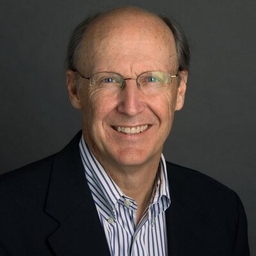
Senior Editorial Advisor, George W. Bush Institute @thebushcenter
Is this you? As a journalist, you can create a free Muck Rack account to customize your profile, list your contact preferences, and upload a portfolio of your best work.
Claim your profile
Articles by William Mckenzie
Tom Luce: Citizen, Public Servant
Thomas W. Luce III, the Dallas attorney who passed away on July 25, was an institutionalist. He believed in them. He created them. Many of them, too. Here’s a list of just some of the institutions the reformer founded: Just for the Kids, the National Math and Science Initiative, the Meadows Mental Health Policy Institute, the National Center for Education Accountability, and Texas 2036.
Sustaining Local Journalism Strengthens Our Democracy
Here are three headlines from the latest study of the number of journalists serving communities across the country. They come from the 2026 Local Journalism Index compiled by Muck Rack and Rebuild Local News. (Acknowledgement: I serve on Rebuild’s advisory board but was not involved with this study.) *The number of local journalists in the United States per 100,000 residents has declined from an average of 40 per 100,000 in 2002 to 7.8 per 100,000 in 2026.
Building a $1 Billion News Industry: An Interview with Sarabeth Berman, CEO of the American Journalism Project
Below is the transcript of the interview between Bill McKenzie, Senior Editorial Advisor at the George W. Bush Institute, and Sarabeth Berman, CEO of the American Journalism Project Bill McKenzie: The American Journalism Project started in 2019 as a way to strengthen local journalism. AJP, as it is known, has since become the nationwide leader in nonprofit journalism models. The organization helps fund existing news sites, launches new ones, and works with local philanthropies.
News Literacy is a Must-Have Job Skill
Let’s start with these two sets of numbers: *66% of employers told an August 2025 American Association of Colleges & Universities (AAC&U) survey they consider it “very important” for college graduates to know how to think critically. *By contrast, 40% of employers said graduates are “very well prepared” to think critically. As you will notice, there’s a 26% gap in those numbers.
Loneliness in Local Media Deserts: An Interview with George Washington University Professor Danny Hayes
Below is the transcript of the interview between Bill McKenzie, Senior Editorial Advisor at the George W. Bush Institute, and Danny Hayes, Professor of Political Science at George Washington University Bill McKenzie Danny Hayes is a political science professor at George Washington University, where he recently authored a study on the connection between loneliness and a decline in local news.
The Tulsa Flyer: The power of networks
You can catch a glimpse into one version of local journalism’s future on the second floor of the University of Tulsa’s downtown arts center. There, in a long, narrow glassed-in corridor, a row of about two dozen reporters and editors sits or stands behind their desks, typing away on computers, peering into screens, or talking into headsets. Some all at once. At first, the scene may not look so different from a larger newsroom of a major metropolitan newspaper.
Journalism’s Challenges in the Horn of Africa
Unparalleled Partnerships with Africa Zineb Haddaji is a journalist from the East African nation of Djibouti. Like many journalists in the Horn of Africa, she has had to flee her nation to report independently about her country. Now a Hubert H. Humphrey Fellow at Arizona State University’s Walter Cronkite School of Journalism, Haddaji is learning how to become a content creator.
As America celebrates its 250th birthday, pluralism remains a big deal
We’ve been exploring this strange idea called pluralism—something many smart people reference as the “lifeblood” of democracy. The more we listened to them, the more we agreed. We define pluralism as people of varying beliefs and backgrounds respecting one another as equal citizens in a democracy. Without that commitment to one another, the civil disagreement needed to hash out issues and find common ground can’t exist.
Pivotal points in journalism in postwar America
As we celebrate America’s 250th anniversary this year, journalism’s role in our country between 1950 and 2000 is worth recalling and emphasizing. The postwar era was full of hope and anxiety; innovation and decline; war and peace; growth and inequality. The media contributed to America’s evolution in the volatile, fascinating postwar era in at least four significant ways. Two are likely familiar while the other pair rode beneath the political surface.
Journalism explainer: Pivotal points, 1950-2000
As we celebrate America’s 250th anniversary this year, journalism’s role in our country between 1950 and 2000 is worth recalling and emphasizing. The postwar era was full of hope and anxiety; innovation and decline; war and peace; growth and inequality. The media contributed to America’s evolution in the volatile, fascinating postwar era in at least four significant ways. Two are likely familiar while the other pair rode beneath the political surface.
Citizens Lose Without Access to Reliable Information
Accurate information is considered the lifeblood of a democracy for a good reason. Knowing what’s happening in our world, nation, or community is essential to making informed decisions about elected leaders, public expenditures on roads and bridges, and the conduct of adversaries around the world, among other topics. We need a free flow of accurate information right down to how our favorite teams are doing — or not doing.
Losing foreign bureaus impedes the flow of reliable information
Read The most worrying aspect of The Washington Post’s decision this week to scrap bureaus or sharply reduce the number of its reporters in the Mideast, India, Ukraine, China, and Turkey is the potential impact of the cutbacks on our democracy. Reliable information about the world, and the United States’ role in it, is essential to the functioning of a nation like ours. How else will American citizens be able to make informed decisions about our communities, states, nation, and, yes, world?
Journalism's partisan origins: What we can learn from the past of a critical American institution | George W. Bush Presidential Center
Read In 1797, political opponents physically beat Benjamin Franklin Bache, grandson of Benjamin Franklin, and, a year later, ransacked the office of his newspaper. The trigger was the publisher’s deriding of George Washington for what he considered the then-president’s monarchial tendencies. The nation had been “debouched by George Washington,” Bauche wrote in The Aurora, his Philadelphia publication. Infuriated, Federalists opposed to his paper took up arms.
As America turns 250, History matters
Read My daughter gave me David McCullough’s History Matters for Christmas. A fairly short posthumous collection of the late historian’s observations, essays, and speeches, the easy read reminds us why studying and understanding history in all its elements is crucial — a point worth remembering as we embark this year upon America’s 250th anniversary. By all, I mean history in the full range of its splendor and tribulation.
Innovation and entrepreneurship sustain local journalism
Jeremy Halbreich jokingly remarks that the media company he leads — AIM Media Management — will do anything that is legal to grow the organization’s readers and subscribers. The longtime media executive is serious, though, about applying an entrepreneurial approach to the newspapers his organization owns through its subsidiaries in Texas, Indiana, West Virginia, and Ohio. “We need other means of revenue to offset organic print decline,” he says of the newspaper industry in general.
Searching for Reliable Information in Africa
James Okong’o is a digital investigative journalist for Agence France-Presse (AFP) in Nairobi, Kenya. The 2025 Harvard University Nieman Fellow’s work focuses on fact-checking information, which he did during elections in Kenya in 2022. He also writes about the flow of disinformation across Africa.
Journalism Explainer: The Role of Opinion Journalism
Read One certainty about today’s news environment is information flows rapidly and constantly around the clock. No more 24-hour news cycle. A moment-by-moment cycle characterizes the digital age. Yet what does all the reporting incessantly coming to us over our phones and tablets, through radio and television, and via the printed word mean? How should we interpret events, think about them, or take action? That’s where opinion journalism enters the equation.
Russia’s role in journalism in Africa
Philip Obaji Jr. is a Nigeria-based correspondent for The Daily Beast, where he has reported extensively on Russian paramilitaries in Central and West Africa seeking access to minerals to support Russia’s efforts in Ukraine. He also has chronicled Russian paramilitaries’ attacks on refugee camps and mining villages, as well as chronicling human rights abuses and human trafficking in sub-Saharan Africa.
Explainer: Journalism Then — And Now | George W. Bush Presidential Center
Read I recently picked up a collection of speeches that were published in “The Press and the Public Interest” in 1968, a book given to me in the 1980s by Morris Schnapper, a mentor who founded Public Affairs Press. The speeches within were a compilation of talks that newspaper publishers and editors, often legendary ones, had delivered at the William Allen White Foundation’s annual event.
How Sycamore Media is Surviving in Eastern Iowa
DeWitt, Iowa, is home to nearly 5,500 people, almost 45% of whom are age 45 or older. The residents may grow corn, hay, and soybeans while raising cattle and hogs on the abundant farmland surrounding the community. They may work in one of the town’s 16 manufacturing operations, the largest of which produces glass that is shipped around the world. Or they may operate one of DeWitt’s small businesses, such as the popular Urban Eats restaurant on the city’s main downtown corridor.
Strengthening Trust in the Media – Journalism Lessons with Martin Baron | George W. Bush Presidential Center
What are some of the most important factors in strengthening trust in the media? The first thing is that we in the media, and I still think of myself as a journalist, need to cover all of our community and all of our country. We need to reflect people’s lives separate from politics. Their struggles, their aspirations, their expectations. And people have to see themselves reflected fairly, fully, sensitively, and comprehensively in our coverage.
Practicing Pluralism: What We Can Learn from Rural Schools
On any given Wednesday, all the high school students from the 370-person junior and senior high school in Union City, Indiana, break into teams to address one aspect of their hometown’s needs. One group of students heads out to work on improving their city’s park and playground. Another serves in an animal shelter. A third visits elderly residents in a nursing home. The students may operate in teams, but those we spoke with last fall consider Workforce Wednesday one big project.
Chuck Todd — Local Journalism and the State of News in 2025 | George W. Bush Presidential Center
Listen Chuck Todd is an Emmy award-winning journalist while NBC’s Chief Political Analyst and former moderator for Meet the Press, which he stepped away from in September 2023.
Mississippi case highlights challenges for local journalism
Local journalism’s challenges were put on full display last month when a Mississippi state judge placed a restraining order on the Clarksdale Press Register’s publication of an editorial criticizing the mayor of Clarksdale, Mississippi, and its City Council. The city had sued the paper for defamation, and, after the judge’s order, the editorial disappeared from the Press Register’s digital site.
Rena Pederson -- A Trailblazer in Journalism
Listen The Strategerist Podcast Rena Pederson is a true trailblazer in journalism. During her storied career, she interviewed five U.S. presidents and countless history makers including Margaret Thatcher and Fidel Castro. Texas Monthly described her as one of the most powerful women in Texas during her time serving as vice president and editorial page editor at The Dallas Morning News. Rena has left the newsroom, but her love of words continues in her next chapter.
Keep on guard for disinformation after Election Day
“One of my gravest concerns is that the level of misinformation, disinformation that may come from our adversaries after the polls close could actually be as significant as anything that happens up to closing of the polls that night.” Senator Mark Warner, the Virginia Democrat who chairs the Senate Intelligence Committee, offered that assessment during a recent hearing. He is not alone.
Mexico’s new leader should honor pledge to strengthen press freedoms
Claudia Sheinbaum hails from her predecessor’s political party and stands committed to many of his policies. But Mexico’s new president can distinguish herself in at least one way from former President Andrés Manuel López Obrador: strengthen freedom of the press in her country. Sheinbaum, who took office on Oct. 1, signed a Reporters Without Borders pledge before the election to defend journalism.
What’s working in local journalism? More than you may think
Print journalism’s financial model has faced a body blow, a digital revolution has impacted all fields of journalism, and too many community-based news operations have withered away. But what in local journalism should hearten us? What should encourage us if we believe in informed citizens being a cornerstone of our democracy?
Five things to know about global disinformation in 2024
Back in January, I wrote about several trends to follow this year in the ongoing effort to combat disinformation. Nine months later, what do we know about campaigns around the world to sow dissension and efforts to stop them? Here’s a quick look at several intentional efforts to undermine societies through spreading lies and falsehoods, often through governments or organizations and individuals affiliated with those governments.
Uncovering bright spots in our democracy
Pluralism Maybe we aren’t as divided as we think, even if it seems at times as if polarization may win. Organizations and individuals around the country are breaking down barriers, creating greater understanding, or simply taking common actions to improve their communities. Here are more examples to go with these that I spotlighted in January and these that I wrote about in the Dallas Morning News.
Penelope Muse Abernathy -- The State of Local News
Listen The Strategerist Podcast Penelope Muse Abernathy is a visiting professor at Northwestern University and a former senior executive at The New York Times and Wall Street Journal. She specializes in researching local journalism and is the author of two books and five reports, including The State of Local News.
News organizations should mirror our communities – here's how they can | George W. Bush Presidential Center
Pluralism: Media Pluralism Not long after George Floyd’s murder in 2020, the New York Times faced a revolt of sorts. The newspaper’s opinion pages published a column from Republican Senator Tom Cotton of Arkansas, who argued authorities should send in troops to protect individuals and businesses from rioters. The Times had also run pieces representing the opposite point of view, and Cotton’s essay went through the opinion section’s normal editing processes.
Media pluralism glossary of terms
Pluralism: Media Pluralism Pluralism: Tolerance for individuals or groups who have different backgrounds, views, or beliefs. Pluralism provides space for them to express views and practice their beliefs without reprisal – even when they conflict with others. Media pluralism: The practice of incorporating a variety of views, experiences, and backgrounds in a news organization to avoid a singular culture and groupthink.
Newspaper endorsements help build community
Penelope Muse Abernathy has spent much of the last decade studying the decline in local journalism in her roles at the University of North Carolina and Northwestern University. But the longtime journalist experienced this reality in a more personal way during a recent election in her rural North Carolina community. Try as she might, she could find no information about two people running for county commissioner in a four-person race, no reporting about them or their views – just word-of-mouth.
Brenda Ewing Snitzer -- Bush Institute Trailblazer Citation Recipient for The Stewpot
Listen The Strategerist Podcast The Stewpot is a ministry that serves those in poverty or experiencing homelessness in Dallas. The organization was founded nearly 50 years ago and provides resources for basic survival needs as well as opportunities for the people they serve to start a new life. The organization was awarded the 2024 George W. Bush Institute Trailblazer Citation for its work to inspire change and enrich the quality of life in North Texas.
Entertainment or journalism?
A tension has existed within American journalism going back to the earliest days of our republic: Should journalists primarily focus on facts and information? Or are they performers of some kind who are selling a product to their audiences? Here’s a quick summary of what I mean: In our early days, partisans owned presses that catered to the like-minded. Then, in the late 1800s, “yellow journalism” took hold as publishers used the sensational and titillating to sell newspapers.
we should be encouraged by local journalism
Not all is lost in local journalism, even though than half of American counties have no local news source or only one outlet, often a weekly newspaper. Here are two encouraging signs: First, Lookout Santa Cruz, City Bureau, and the Invisible Institute won Pulitzer Prizes this month. The former for breaking news reporting on devastating floods and mudslides in its California coastal town.
McKenzie: Running for president is one thing, organizing a presidency is another
(Michael Hogue) A long slog exists between now and the November election, so journalists have ample time to explore in-depth the realities of being president. Headline news and phone alerts will keep us informed about the latest from President Joe Biden, former President Donald Trump, and any unexpected developments. But what do we know about the nature of the position? What goes into being an effective president?
Information order impacts global and domestic stability
The information order’s impact on political stability is one of the more important relationships to understand in global and domestic politics. And by information order, I mean the constellation of sources through which people receive news. Today, those sources range from traditional media like print, television, and radio to social media like Facebook, Instagram, X, and TikTok to government-controlled information operations in places like Russia, China, and North Korea.
Chuck Salter -- News Literacy Project
Listen The Strategerist Podcast Chuck Salter is the president and CEO of the News Literacy Project, an organization that’s on a mission to create better informed, more engaged, and more empowered individuals — and ultimately a stronger democracy. He joined host Andrew Kaufmann and the George W.
Americans accept people of other faiths, but there’s room to grow
(RNS) — The abundant conflicts around the globe are evidence that one of the world’s most pressing needs is developing respect in societies for differing points of views. Think about oppression of the Uyghurs in China and the Rohingya in Burma, long-standing tensions throughout the Mideast and fierce debates within our own country over religious identity.
Is there a path to a healthy debate in the public sphere? Look locally
(Michael Hogue) As the United States suffers from a bout with polarization, we Americans ultimately need to create some kind of common narrative out of our diverse democracy. I don’t know whether that will happen this year, by our nation’s 250th anniversary in 2026, or by the 2028 elections. But this much is clear: Some of the essential factors that will allow us to forge an identity out of our differences already exist and are clear.
Making space for different faiths is important in a strong democracy
This essay was originally drafted weeks in advance of Hamas’ attack on Israel. While our focus in this series remains an exploration of American pluralism, we realized this topic of religion, as well as domestic debates surrounding Israel and Palestine, connect our commentary to these current events, even if unplanned. As such, we wanted to address a few points at the outset.
Look to points of light for solutions to divisions
At times, it may seem like we are drowning in conflict and division. But what if interesting and innovative projects are occurring in our states that allow communities and thus our nation to function as “one out of many” – which is the essence of a pluralistic society? What if these thousand points of light are a major part of the solutions that our country needs? Here are a few examples of organizations and individuals that are “practicing pluralism,” often away from the national spotlight.
Trust in the media is at stake in 2024. Listening to citizens will help
(Michael Hogue) At a time when Americans’ faith in the mainstream media is in decline, the role of the press will be particularly important to watch this election year. Will an accurate and reliable flow of information come our way, or will debates over skewed coverage swamp the next 11 months? This election year is starting on the heels of a talker-of-a-piece by former New York Times editorial page editor James Bennet.
Expanding broadband can help combat disinformation | George W. Bush Presidential Center
The term “news deserts” has earned a place in today’s media lexicon, thanks to studies that show more than 200 counties across the country lack a community newspaper, local digital site, public radio station, or ethnic publication. Now, though, we have another phenomenon to fret over: double deserts.
The Best Way to Teach Reading Is Proven — What Mississippi, Colorado Get Right | George W. Bush Presidential Center
This is the second piece in a two-part series that tracks Texas’ attempts to adopt the science of reading over 25 years. The lessons learned in this series are relevant to the many states who have adopted — or are attempting to adopt — the science of reading in schools. Read the first piece here. Texas lawmakers passed a measure at the end of their regular 2023 session that helped move the state forward in its effort to improve reading outcomes.
What Texas’ Tumultuous History with Literacy Means for Its Children’s Future Original
Support The 74's year-end campaign. Make a tax-exempt donation now. This is the first piece in a two-part series that tracks Texas’ attempts to adopt the science of reading over 25 years. The lessons learned in this series are relevant to the many states who have adopted — or are attempting to adopt — the science of reading in schools.
Distinguishing news from opinion can help strengthen trust in the media
Read The public’s confidence in the mass media – newspapers, magazines, television, and radio – is at its lowest level since 2016, Gallup reported in October.
OPINION: Free Speech Is Meaningless If Campuses Don’t Practice Pluralism
Tense debates have arisen on college campuses in the wake of the October 7 Hamas terrorist attacks on Israeli citizens. Some students on campuses like Harvard’s have gotten locked into fierce, personal encounters over the legitimacy and reason for the massacre of unsuspecting Israeli families. Cornell and New York’s Cooper Union saw outright threats of violence targeting students.
Show More
loading
Actions
Is this you?
As a journalist, you can create a free Muck Rack account to customize your profile, list your contact preferences, and upload a portfolio of your best work.Get in touch with William
Contact William, search articles and posts on X, monitor coverage, and track replies from one place.
Learn more about Muck Rack