
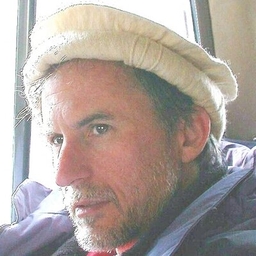
James Rupert
VerifiedJames Rupert’s Biography
I'VE REPORTED from more than 70 countries over 30 years. I didn't start out to be a war correspondent, but simply to illuminate the most important, unattended human problems I could find. Often, these have been wars and political conflicts abroad; in recent years, they're increasingly at home in the United States. I've also served as an international affairs editor -- at the Washington Post and New York's Newsday -- and at foreign affairs think tanks.
AS A TEENAGER in 1974, I watched U.S. President Richard Nixon resign, forced to do so by the power of journalism that sought accountability. Years later, as a Peace Corps volunteer (teaching in Morocco), I learned that America’s global influence was most rooted in neither its economic or military power, but in its role as an exemplar (however imperfect) of a democracy that hewed to a fundamental human notion of justice.
THOSE IDEAS LED me to report on America's role abroad. Because the U.S. is a democracy and a superpower, its citizens wield latent, often hidden, influence in distant places. So American journalists bear a singular responsibility to interest and inform our compatriots about events that may seem remote, but over which they ultimately can wield enormous influence. We bear equally a responsibility to hear and transmit voices of people who lack the power to be heard on their own.
AMONG THE PLACES this work has taken me are Afghanistan, Pakistan, India, Central Asia, the Caucasus, the Balkans, Russia, Ukraine, Haiti, Iraq, Jordan, Israel/Palestine, Thailand, the Philippines, Nigeria, Congo, Sierra Leone, Liberia, the Central African Republic—even (literally) Timbuktu.
OCCASIONALLY I FIND SHARDS of evidence that my reporting has helped people understand something new. Even, maybe, the humanity of their "enemies" across a chasm of war. Or that it has inspired someone to work on a tough issue or to help distant, previously unnoticed neighbors. Sometimes, a good story can help change something for the better. That's a reporter's dream.