
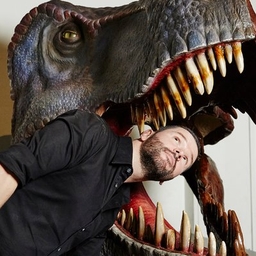
John Pickrell
As seen in:
Nature,
The Guardian,
National Geographic,
New Scientist,
Scientific American,
Reader's Digest (U.S.),
Science Magazine,
Science News,
National Geographic España,
Book Riot
and
Covers:
Paleontology, fossils, dinosaurs, natural history, wildlife, nature, environment, ecology, evolution, conservation, Australia, travel, adventure, human evolution, archaeology, science, palaeontology
Executive Editor APAC & China, branded content at @nature. Author: Flames of Extinction; Flying Dinosaurs; Weird Dinosaurs @ColumbiaUP @newsouthpub @IslandPress
Articles by John Pickrell
Is the truth still out there?
In the autumn of 1982, Tasmania Parks and Wildlife Service (PWS) ranger Hans Naarding was birdwatching near Togari in the state’s far north-west. After a tiring day in the field, he parked his LandCruiser near a crossroads to sleep. At about 2am, with rain thrumming on the thickly forested landscape, something woke him, and he pointed his torch out into the night. “When I opened the window, the rain just poured in, and I shone the spotlight around at the end of the [torch] beam.
Damping the deafening din
The report, which was released on World Ocean Day on 8 June by the body behind a major UN treaty – the Convention on the Conservation of Migratory Species of Wild Animals (CMS) – details the three major ways human-created noise pollution is generated: shipping, primarily from engines and propellers; seismic airgun surveys used by the oil and gas industry to map the sea floor; and piledriving to install foundations for marine infrastructure such as offshore windfarms and oil rigs.
High seas safeguard
Image credit: Getty Images For the first time, oceans beyond national water boundaries have been officially recognised for protection. In March, United Nations member states settled on an international legal framework to protect areas of open ocean – the High Seas Treaty. This came hot on the heels of a decision in December last year by the world’s governments to endorse the groundbreaking 30×30 target, which seeks protection of 30 per cent of the planet’s land and oceans by 2030.
A stand against extinction
Image credit: Hans Jurgen Mager/Unsplash In a landmark agreement, the world’s nations have agreed to set aside 30 per cent of the planet for nature by 2030. Given that the planet’s human population recently exceeded 8 billion, and a million plant and animal species are now threatened with extinction, slowing the global tide of biodiversity loss has never been more urgent.
This demure bird has the brightest feathers ever measured
In the clear light of day, the Eurasian woodcock doesn’t stand out. Reddish brown feathers help the bird blend in with forest underbrush to avoid predators. But at dawn and dusk, when males of the species swoop and dart in the pale luminance to attract a mate, they really shine. Now, researchers say their stark white tail feathers are the brightest plumage ever measured on a bird.
These megatrends will shape Australia’s future
Image credit: shutterstock From climate and sustainability to geopolitics and pandemics, scientific soothsayers have projected the global trends that will impact us most in the next two decades. Ten years ago, CSIRO released a landmark report looking at “global megatrends” that would shape people around the world in the years that followed. In July 2022, CSIRO revisited the idea.
Rewriting the history of feathered dinosaurs
Since 1996, nearly 50 new feathered dinosaur species have emerged from the fossil fields of China. Paleontologists thought they had a good idea of the diversity of these fluffy carnivores. But a recent finding left them scratching their heads. The Shandong Tianyu Museum of Nature in Pingyi is the place to go if you want to experience China’s dinosaurs in all their weird and wonderful glory.
After flooding rains come fires
Image credit: John Krutop\Dreamstime.com More catastrophic bushfire seasons are being predicted, despite two years of deluges along the eastern seaboard. Australia’s wettest November on record was in 2021. Halfway through the month the Bureau of Meteorology (BOM) declared the arrival of a La Niña climate event for the second year in a row.
Will we at last get the environment laws we need?
Image credit: Lisa Maree Williams/Getty Images Australia is losing more species than any other developed nation, but this year’s switch of government may herald legislative change to stem destruction. Every five years since the mid-1990s the federal government has released a State of the Environment Report documenting the condition of Australia’s natural assets and progress in protecting them. The latest report was released on 19 July 2022.
Audio long read: These six countries are about to go to the Moon
Your browser does not support the audio element. In the next year, no fewer than seven missions are heading to the Moon. While NASA's Artemis programme might be stealing most of the limelight, the United States is just one of many nations and private companies that soon plan to launch lunar missions.
Flames of Extinction
The race to save Australia’s threatened wildlife 9781742237169 / March 2021 / Paperback / 288pp / 234x153mm / RRP $29.99 Buy book Scientists estimate more than three billion native animals were killed or displaced during Australia’s Black Summer bushfire season. Many species – the koala, regent honeyeater, glossy black-cockatoo, platypus – are inching towards extinction at the hands of mega-blazes and the changing climate behind them.
Covid's ecological cost
Image credit: Justin Gilligan Pandemic-related pollution is clogging the environment, with potentially deadly consequences. In late 2020 Australian Geographic contributor and Lord Howe Island Marine Park manager Justin Gilligan photographed huge numbers of disposable masks washed up on the beaches of the relatively remote and typically pristine isle, 780km north-east of Sydney.
These six countries are about to go to the Moon - here’s why
The Moon will be one of the most popular destinations in the Solar System in the next year. No fewer than seven missions are headed there from India, Japan, Russia, South Korea, the United Arab Emirates and the United States, along with several companies. NASA’s US$93-billion Artemis programme might be stealing most of the limelight with its maiden launch this year because it’s the first step towards sending astronauts to the Moon.
John Pickrell : 9781642832020
In the early months of 2020, the world's attention was riveted on Australia, where the nation's iconic wildlife fought for survival in the face of unprecedented wildfires. Images of koalas drinking from firefighters' water bottles went viral and became the global face of a catastrophe that would kill as many as three billion animals. Known as the Black Summer, the fire season was responsible for more wildlife deaths and near-extinctions than any other single event in Australian history.
Drought and Fire Are Pushing Australia’s Platypus to the Brink
That night, we were hoping to find some, but here on the New South Wales (NSW) Mid North Coast and in streams across southeastern Australia, increasing evidence suggests these peculiar mammals have long been declining — and that they took a serious hit in the recent drought and the subsequent bushfire crisis it helped spawn.
A guide to the sea snakes of Australia
Australia has an abundance of true sea snakes, with about half of the 70 or so named species found here. They have evolved to fill a wide variety of niches, and although many are not yet listed as endangered, populations are declining. By John Pickrell • July 2, 2021 • Reading Time: 4 Minutes • Print this page A Decrease font size. A Reset font size. A Increase font size. Text Size Olive sea snake.
La cola de este pequeño dinosaurio tenía tacto
Los expertos creen que el sentido del tacto debía de ser imprescindible para los dinosaurios. Ilustración: Jake Baardse Mientras vadeaba las lagunas someras del archipiélago que hace millones de años ocupaba Europa, es muy posible que un dinosaurio del tamaño de una gallina se valiese de sus escamas sensoriales caudales, parecidas a las de los actuales cocodrilos, para buscar peces.
Coronapod: The variant blamed for India's catastrophic second wave
NATURE PODCAST 07 May 2021 Scientists race to understand the threat posed by SARS-CoV-2 variant B.1.617. Subscribe iTunesGoogle PodcastacastRSS Benjamin Thompson and John Pickrell discuss a SARS-CoV-2 variant linked to a surge in cases in India. Your browser does not support the audio element. Over the past few weeks, India has been experiencing a devastating second wave of COVID-19, recording hundreds of thousands of new cases a day.
How One of Australia’s Rarest Trees Was Saved From Wildfires
The following is excerpted from Flames of Extinction by John Pickrell. Copyright © 2021 by the author. Reproduced by permission of Island Press, Washington, D.C. As Christmas approached in 2019, David Crust, a director of park operations with the National Parks and Wildlife Service, watched with trepidation as multiple fires crept their way across the vastness of Wollemi National Park, northwest of Sydney, Australia.
New Book Available - Flames of Extinction: The Race to Save Australia's Threatened Wildlife
Flames of Extinction book cover In gripping detail, award-winning journalist John Pickrell delivers "Flames of Extinction" which tells the stories of Australia’s record-setting fires. Readable and full of copious research.” — Sydney Morning Herald WASHINGTON, DC, UNITED STATES, April 15, 2021 / EINPresswire.com/ -- In the early months of 2020, Australia’s iconic wildlife fought for survival in the face of unprecedented wildfires.
Flames of Extinction
"Although Pickrell's focus is on [the 2020] season's events, his reporting embraces themes of wildlife rehabilitation, fire dangers and protection efforts, and how to survive a changing climate as the future portends further global warming and more extreme fires....These experiences and lessons read with the drama of "you are here" fiction, but incorporate all the dilemmas and approaches of what really happened, making for a survey accessible to general readers and wildlife management...
A year after Australia’s wildfires, extinction threatens hundreds of species
When Isabel Hyman heads out in coming weeks to the wilds of northern New South Wales, she’s worried about what she won’t find. Fifteen years ago, the malacologist — or mollusk scientist — with the Australian Museum made an incredible discovery among the limestone outcrops there: a tiny, 3-millimeter-long snail, with a ribbed, dark golden-brown shell, that was new to science.
Flames of Extinction: The race to save Australia's threatened wildlife
Scientists estimate more than three billion native animals were killed or displaced during Australia's Black Summer bushfire season. Many species - the koala, regent honeyeater, glossy black-cockatoo, platypus - are inching towards extinction at the hands of mega-blazes and the changing climate behind them. In Flames of Extinction, award-winning science writer John Pickrell investigates the effects of the 2019-2020 bushfires on Australian wildlife and ecosystems.
Flames of Extinction
Flames of Extinction: The race to save Australia’s threatened wildlife John Pickrell Paperback | Mar 2021 | NewSouth | 9781742237169 | 288pp | 234x153mm | GEN | AUD$29.99, NZD$34.99 Scientists estimate more than three billion native animals were killed or displaced during Australia’s Black Summer bushfire season. Many species – the koala, regent honeyeater, glossy black-cockatoo, platypus – are inching towards extinction at the hands of mega-blazes and the changing climate behind them.
Call for entries: The Best Australian Science Writing 2022 and the UNSW Press Bragg Prize for Science Writing 2022
Entries are now open for writers to submit their pieces for consideration in The Best Australian Science Writing 2022 and the UNSW Press Bragg Prize for Science Writing 2022. Rarely has the world of science and research had a more captive global audience. In 2021, the second year of the pandemic has been marked by monumental shifts that have shaped and disrupted our lives.
A newfound feathered dinosaur sported fuzz and weird rods on its shoulders
The fossil of a chicken-sized, meat eater from Brazil that had a mane of fluffy filaments and a pair of stiff, ribbon-like streamers emerging from both shoulders is the first dinosaur with feathers ever discovered in the Southern Hemisphere.
'How many assumptions have been made?' There's a lot we don't know about echidnas
TAHLIA PERRY shows me an extraordinary photograph of an echidna, which is testament to the remarkable resilience of these animals in the face of bushfires. The picture, submitted to her citizen science project EchidnaCSI, shows an animal with its spines severed halfway along their length, giving it the appearance of having been trimmed into a flat-top hairstyle.
This small dinosaur had a marvelous sense of touch, detailed fossils reveal Original
By John Pickrell PUBLISHED October 5, 2020 Preserved scales from the tail of Juravenator—a small predatory dinosaur that lived 150 million years ago in what is now Germany—contain small bumps that scientists believe are sensory organs. Illustration by Jake Baardse A chicken-size dinosaur that lived in what is now Germany about 150 million years ago might have used sensory scales on its tail as it foraged for fish at night.
Record U.S. and Australian fires raise fears for many species
In DepthConservation Biology John Pickrell1, Elizabeth Pennisi 1John Pickrell is a journalist in Sydney. See allHide authors and affiliations Science 02 Oct 2020: Vol. 370, Issue 6512, pp. 18-19 DOI: 10.1126/science.370.6512.18 Summary For the past 3 months, Australian researchers have been searching for endangered spiders and other animals whose habitats have been incinerated by record fires in that country. They are not alone.
Introduction: Evolution
By John Pickrell A male peacock displaying his fanned tail feathers (Image: Tom Chance / WestEnd61/Rex Features) In 1859 Charles Darwin published his theory of natural selection amid an explosion of controversy. Like the work of Copernicus in the 16th century revealing the movement of the Earth, Darwin’s idea shook the foundations of the establishment and profoundly altered humanity’s view of its place in the universe.
'Jurassic Park' got almost everything wrong about this iconic dinosaur
In the 1993 film Jurassic Park, a nefarious character meets his demise during an encounter with a Dilophosaurus. No taller than a human, the curious dinosaur morphs into a true menace when it extends a large neck frill, hisses, and spits venom in the man’s eyes. The scene cemented Dilophosaurus as a pop culture icon—except it turns out the real Jurassic predator was nothing like the one in the movie.
'Jurassic Park' got almost everything wrong about this iconic dinosaur
Please be respectful of copyright. Unauthorized use is prohibited. Science News New fossil discoveries and the most detailed analysis yet of Dilophosaurus have produced the first clear picture of what the crested dinosaur really looked like. In the 1993 film Jurassic Park, a nefarious character meets his demise during an encounter with a Dilophosaurus. No taller than a human, the curious dinosaur morphs into a true menace when it extends a large neck frill, hisses, and spits venom in the man’s eyes.
This dinosaur may have been a cannibal, gnarly bite marks reveal
Fossils found covered with ancient bite marks suggest at least one type of large dinosaur was in such dire straits, it began dining on members of its own species. A remarkable 29 percent of 2,368 fossil bones unearthed since 1981 from the late Jurassic Mygatt-Moore Quarry have bite marks on them; this is six times more than is typically found at similar sites elsewhere, researchers report today in the journal PLOS One.
This dinosaur may have been a cannibal, gnarly bite marks reveal
This Jurassic-era Allosaurus skull was found at Dinosaur National Monument, Utah. Allosaurus fossils with bite marks on them suggest to researchers that the dinosaur cannibalized its dead. Photograph by Breck P. Kent, Earth Scenes/Nat Geo Image Collection Please be respectful of copyright. Unauthorized use is prohibited. Science News Newly discovered fossils show that the fierce Allosaurus may have scavenged its own species, possibly in lean times.
'Zoom fatigue' is real, and it's causing a new kind of anxiety amid coronavirus isolation
It’s about staring at yourself, and the silences. 22 May 2020 John Pickrell wsfurlan/Getty Images A rift has opened up between researchers who are stressed and exhausted by daily video calls and those who are thriving in a virtual, work-from-home environment.
Size matters: inside Australia’s National Measurement Institute
THE ABILITY TO precisely measure and calibrate things such as time, distance, weight, temperature and brightness has a surprisingly massive impact on our lives. Even seemingly trifling measurement errors can have dire consequences. Consider, for example, NASA’s Mars Climate Orbiter.
A ‘crazy beast’ from the time of dinosaurs belongs to an obscure mammal group
The ancient mammal Adalatherium hui is so weird that it eluded classification for over a decade. A roughly 70-million-year-old skeleton of the species, uncovered in Madagascar in 1999, was clearly a mammal. But it boasted several distinctly un-mammalian features, such as a large hole on top of its snout. Also, although the animal’s forelimbs were aligned with its spine, like a typical mammal, its back legs were splayed out to the sides like a reptile.
The journey to find the Endeavour
IN 22 AUGUST 1770, the crew of HMB Endeavour, led by Lieutenant James Cook, reached Possession Island, off the northern tip of Australia. From there they sailed east to the Dutch colony of Batavia for repairs, before making the long journey home. Cook’s time in Australia was over, and although he would lead two more voyages of discovery, Endeavour was in a woeful state and no longer suitable to meet the rigours of such journeys.
Deep Caves a Rich Source of Dinosaur Prints
Deep Caves a Rich Source of Dinosaur Prints Crawling through tight underground passages in southern France, paleontologist Jean-David Moreau and his colleagues have to descend 500 meters below the surface to reach the only known footprints of long-necked dinosaurs called sauropods ever found in a natural cave. Read Full Article »
Deep caves are a rich source of dinosaur prints for this paleontologist
Crawling through tight underground passages in southern France, paleontologist Jean-David Moreau and his colleagues have to descend 500 meters below the surface to reach the only known footprints of long-necked dinosaurs called sauropods ever found in a natural cave. The team discovered the prints, left by behemoths related to Brachiosaurus, in Castelbouc Cave in December 2015 (SN: 2/21/18). But getting to the site might make even the most hardened field scientists balk.
The first frog fossil from Antarctica has been found
The first fossil of a frog found in Antarctica gives new insight into the continent’s ancient climate. Paleontologists uncovered fragments of the frog’s hip bone and skull in 40-million-year-old sediment collected from Seymour Island, near the tip of the Antarctic Peninsula. Scientists have previously found evidence of giant amphibians that walked Antarctica during the Triassic Period, over 200 million years ago, but no traces on the continent of amphibians like those around today (SN: 3/23/15).
Toxin-producing bacteria can make this newt deadly
|
Some newts living in the western United States are poisonous, perhaps thanks to bacteria living on their skin. Rough-skinned newts use tetrodotoxin — a paralytic neurotoxin also found in pufferfish and the blue-ringed octopus — as a defense against predators. But rather than making the toxin on their own, the amphibians (Taricha granulosa) may rely on microbes to produce it for them, researchers report April 7 in eLife.
By Tina Saey Verified, John Pickrell, Susan Milius Verified, Maria Temming Verified, Erin Garcia de Jesús Verified
|
Science News
Verified
Dancing peacock spiders turned an arachnophobe into an arachnologist
Joseph Schubert spends hours at a time lying in the dirt of the Australian outback watching for tiny flickers in the sparse, ground-hugging foliage. The 22-year-old arachnologist is searching for flea-sized peacock spiders, and he admits, he’s a little obsessed. But it wasn’t always so. Schubert grew up fearing spiders, with parents who were “absolutely terrified” of the eight-legged crawlers.
Seabirds may find food at sea by flying in a massive, kilometers-wide arc
Food is scattered thinly in the open ocean, and seabirds often need to search far and wide to find sustenance. Now, researchers think they’ve found a new cooperative strategy among the birds, one that may help them survive on the high seas. Multiple groups of flying seabirds can arrange themselves into massive line formations that “rake” over the ocean’s surface, possibly to more efficiently search for food.
Two primate lineages crossed the Atlantic millions of years ago
Four fossilized molar teeth excavated in Peru’s Amazon basin come from a now-extinct lineage of primates that rafted across the Atlantic Ocean from Africa and reached the inland site between around 35 million and 32 million years ago, researchers say. Until now, South American sites had yielded only fossils of primates ancestral to those inhabiting the continent today.
The Great Barrier Reef is suffering its most widespread bleaching ever recorded
Australia’s Great Barrier Reef is currently experiencing its third mass bleaching in just five years — and it is the most widespread bleaching event ever recorded. Results from aerial surveys conducted along the 2,000-kilometer-long reef over nine days in late March, and released April 7, show that 25 percent of 1,036 individuals reefs surveyed were severely affected, with more than 60 percent of corals bleached. Another 35 percent of the reefs had less extensive bleaching.
Roughly 90 million years ago, a rainforest grew near the South Pole
Once upon a time, there was a swampy rainforest near the bottom of the world. Buried sediment extracted from the seafloor off West Antarctica contains ancient pollen, fossilized roots and other chemical evidence of a diverse forest that flourished millions of years ago, less than a thousand kilometers from the South Pole. The sediment offers the southernmost glimpse yet into just how warm Earth was during the mid-Cretaceous Period, between 92 million and 83 million years ago.
Parasitic worm populations are skyrocketing in some fish species used in sushi
“Waiter, there’s a worm in my sushi.” Diners may be more likely to utter those words today than in decades past, as the abundance of parasitic Anisakis worms infecting fishes around the globe is now 283 times what it was in the 1970s, researchers report March 19 in Global Change Biology. Worms of the genus Anisakis, also called whale worms, can cause vomiting and diarrhea in people who ingest them. Fortunately, freezing fillets kills the parasites, and farmed fish are rarely infected with them.
Fossils of a new dromaeosaur date to the end of the Age of Dinosaurs
A wolf-sized warrior, kin to the fierce, feathered Velociraptor, prowled what is now New Mexico about 68 million years ago. Dineobellator notohesperus was a dromaeosaur, a group of swift, agile predators that is distantly related to the much larger Tyrannosaurus rex. The discovery of this new species suggests that dromaeosaurs were still diversifying, and even becoming better at pursuing prey, right up to the end of the Age of Dinosaurs, researchers say March 26 in Scientific Reports.
Show More
loading
Actions
Is this you?
As a journalist, you can create a free Muck Rack account to customize your profile, list your contact preferences, and upload a portfolio of your best work.Get in touch with John
Contact John, search articles and posts on X, monitor coverage, and track replies from one place.
Learn more about Muck Rack