
Research article Get full access to this article View all access and purchase options for this article. References Acker J (2006) Inequality regimes: gender, class, and race in organizations. Gender & Society 20(4): 441–464. Amis JM, Mair J, Munir KA (2020) The organizational reproduction of inequality. Academy of Management Annals 14(1): 195–230. Amis JM, Munir KA, Lawrence TB, et al. (2018) Inequality, institutions and organizations. Organization Studies 39(9): 1131–1152.
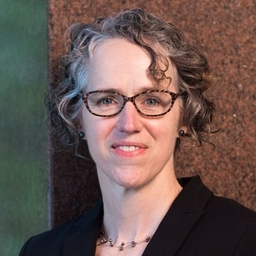
Joy E. Beatty
Ann Arbor
Organizational behavior, diversity, chronic illness, disability, & gender. Academic department head, Management Dept, Eastern Michigan University.
Is this you? As a journalist, you can create a free Muck Rack account to customize your profile, list your contact preferences, and upload a portfolio of your best work.
Claim your profile
Articles by Joy E. Beatty
Republication of: Philosophy Rediscovered: Exploring the Connections Between Teaching Philosophies, Educational Philosophies, and Philosophy
Blake, N., Masschelein, J. (2003). Critical theory and critical pedagogy. In Blake, N., Smeyers, P., Smith, R., Standish, P. (Eds.), The Blackwell guide to the philosophy of education (pp. 38-56). Malden, MA: Blackwell. Google Scholar | Crossref Blake, N., Smeyers, P., Smith, R., Standish, P. (Eds.). (2003). The Blackwell guide to the philosophy of education. Malden, MA: Blackwell. Google Scholar | Crossref Boyer, E. L. (1990). Scholarship reconsidered: Priorities of the professoriate.
Republication of: Finding Our Roots: An Exercise For Creating a Personal Teaching Philosophy Statement
Teaching philosophy statements clarify why we do what we do in the classroom, and the process of drafting a philosophy offers an opportunity for developmental reflection. Personal teaching philosophies can be grounded in the shared foundation of historical educational philosophies. The authors offer here for facilitators a reflective card-sort exercise that helps surface the philosophical roots of personal teaching philosophies and helps teachers create or renew a teaching philosophy statement.
The More Things Change, the More They Stay the Same: Teaching Philosophy Statements and the State of Student Learning
In association with the republishing of our 2009 papers, we revisit the core ideas about teaching philosophy papers, considering how the ideas have evolved and offering possible questions for future research on teaching philosophy statements. We note that the role and importance of teaching philosophy statements endures and describe some of the changes that have enriched the learning contexts of today such as the expansion of teaching technology.
Why Are Bugs So Common in Software Engineering?
Save {{ articles[0].views | formatCount}} Views Join the DZone community and get the full member experience. Join For Free Adopting a DevOps practice starts with understanding where you are in the implementation journey. Download the DevOps Transformation Roadmap. Brought to you in partnership with Techtown. There are several kinds of software defects, and all of them have completely different causes. First, let's start with the technical defects.
Finding Our Roots: An Exercise For Creating a Personal Teaching Philosophy Statement
Teaching philosophy statements clarify why we do what we do in the classroom, and the process of drafting a philosophy offers an opportunity for developmental reflection. Personal teaching philosophies can be grounded in the shared foundation of historical educational philosophies. The authors offer here for facilitators a reflective card-sort exercise that helps surface the philosophical roots of personal teaching philosophies and helps teachers create or renew a teaching philosophy statement.
Building the Foundation: The BOK on BA
Wondering How PMI’s New BA Standard Will Enhance the Value of the PMI-PBA Credential? by Laura Paton In my last blog, I shared with you that The PMI Guide to Business Analysis (Includes The Standard for Business Analysis) will be published later this year. Many business analysis professionals are eager to have a full consensus based business analysis standard they can use when preparing for PMI’s Professional in Business Analysis (PMI-PBA)® certification.
Show More
loading
Actions
Is this you?
As a journalist, you can create a free Muck Rack account to customize your profile, list your contact preferences, and upload a portfolio of your best work.Get in touch with Joy E.
Contact Joy E., search articles and posts on X, monitor coverage, and track replies from one place.
Learn more about Muck Rack