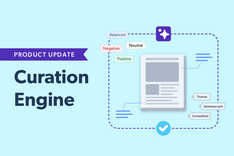
A new AI capability that delivers analysis-ready Media Intelligence. More than just a product launch, this is a shift in how communications teams monitor, understand and act on media coverage.
State and local governments are under the growing pressure of meeting rising citizen expectations while managing workforce shortages, fiscal constraints, and increasingly complex operational environments. These pressures are compounded by the need to defend critical public infrastructure against escalating cyber threats, ensure responsible AI adoption, and deliver seamless, citizen-centric services across interconnected digital ecosystems.
Enterprises are adopting AI more rapidly as they move from experimentation to operational deployment and look to improve time-to-value, strengthen governance, and integrate AI across core business functions. This shift is increasing demand for ecosystem-enabled solutions that combine foundation models, cloud infrastructure, enterprise applications, and implementation expertise.
Chapter 10 provides comprehensive benchmarks for marketing function metrics in the manufacturing industry, covering organizations that design, produce, and distribute physical goods across discrete, process, and hybrid environments. This includes industrial manufacturers, automotive and aerospace firms, electronics and machinery producers, chemical and materials companies, and consumer and business goods manufacturers.
The investment advisory profession is approaching a structural inflection point. For decades, the advisory model has operated on a fundamentally human-driven architecture that involved advisors conducting research, preparing for client meetings, documenting outcomes, managing compliance, and maintaining client relationships through periodic, scheduled interactions.
We are witnessing a fundamental strategic shift in the global market. Sustainability has evolved from a peripheral regulatory check-the-box exercise into a central growth driver and the “North Star” for modern business strategy. Leading firms no longer view environmental, social, and governance (ESG) factors merely as a means to mitigate legal risk.
Chapter 12 provides comprehensive benchmarks for marketing function metrics in the retail industry, which includes organizations that sell goods and services directly to consumers through physical stores, e-commerce platforms, and omnichannel models. This industry spans general merchandise retailers, specialty stores, apparel and footwear brands, grocery chains, big box retailers, and direct-to-consumer (DTC) companies.
Chapter 11 provides comprehensive benchmarks for marketing function metrics in the media and entertainment industry, including organizations that create, produce, and distribute content across television, film, digital media, music, gaming, and publishing. This industry spans broadcasters, streaming platforms, film studios, production companies, music labels, gaming firms, and other media and entertainment organizations.
Chapter 9 provides comprehensive benchmarks for marketing function metrics in the insurance industry, which includes organizations that provide risk management solutions across life, health, property, casualty, and specialty insurance segments. This industry spans life insurers, health insurance providers, property and casualty carriers, reinsurance firms, and other insurance service organizations.
Chapter 8 provides comprehensive benchmarks for marketing function metrics in the high-tech (SaaS) sector. This industry focuses specifically on Software-as-a-Service (SaaS) and software product–based companies. These organizations develop, license, and deliver software solutions through cloud-based or subscription models, serving enterprise, mid-market, and SMB customers across industries.
Chapter 7 provides comprehensive benchmarks for marketing function metrics in the healthcare industry, which includes organizations that deliver medical care, develop and manufacture pharmaceuticals and medical devices, and support care delivery through technology and specialized services. This sector spans hospitals and health systems, pharmaceutical and biotechnology companies, medical device manufacturers, healthcare services providers, and health insurers.