
Start with the columns in the old postcard. Above them is a triangular pediment, and behind them rises a domed cupola. The building looks like a declaration of civic importance. It takes a moment to recognize it as part of Santa Barbara. It was our Santa Barbara County courthouse. Published by M. Rieder between 1905 and 1909, the postcard preserves a building very different from the one visitors know today.
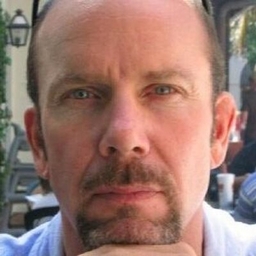
Wayne Mellinger
(He/Him)
Covers:
Homelessness, Housing, Poverty, Inequality, Street Outreach, Mental Illness, Dual Diagnosis, Recovery, Premature Death, Civic Life, Social Policy
Social Justice Educator, Writer and Activist
Articles by Wayne Mellinger
How to Cite This Material
How to Cite This Material Ideas grow through conversation. If an Essay on this site contributes to your writing, teaching, research, or public discussion, please acknowledge that contribution and help your readers find the original. You can cite an online essay even when it has not appeared in a journal or book. The essential information A useful citation identifies the author, the essay’s title, the name of the blog or website, the publication date, and the direct link to the essay.
Wayne Mellinger: Why This Progressive Is Voting for Eric Friedman for Mayor
Eric Friedman might seem an unlikely candidate for me to endorse for mayor of Santa Barbara. My politics sit considerably to his left. Anyone familiar with my writing about homelessness, inequality and social justice knows I rarely suffer from an excess of political moderation. Yet I enthusiastically support Friedman. I admire his practical attitude, independence and seriousness about housing and public finances. I believe he has the preparation and temperament to serve our city well.
Wayne Mellinger: There Are 2 Kinds of People in Santa Barbara
There are two kinds of people in Santa Barbara: the people who think we have a housing crisis, and the people who own homes. The first group talks about it constantly. The second group talks about it, too, but only to mention what the place down the street just sold for. I love both groups. Some of my best friends are homeowners. After a second glass of Santa Ynez pinot, a few will confess they couldn’t afford their own house today. Then they get in the Volvo and drive home to it.
Wayne Mellinger: Highway 101 and the Art of Never Quite Finishing
I have lived in Santa Barbara long enough to remember when Highway 101 construction was a transportation project. Those were innocent times. Today, widening the freeway is better understood as one of our enduring civic institutions, alongside the Santa Barbara Mission, Fiesta, UC Santa Barbara and complaining about housing.
Wayne Mellinger: Lynne Gibbs Keeps Showing Up to Fight for County’s Mental Health System
Anyone who has sat through a Santa Barbara County hearing on mental health has likely seen Lynne Gibbs at the podium or in the audience, waiting her turn. She reads the reports, attends the meetings, remembers what was promised years ago and returns to ask what happened. I have known Gibbs for about 15 years and served alongside her on the county’s Behavioral Wellness Commission. She has become part of our community’s civic infrastructure. She shows up.
Wayne Mellinger: On Homelessness, Catch People Before They Fall
Nearly 20 years ago, I learned that sometimes the cheapest and most humane way to address homelessness is remarkably simple: don’t let it happen. In 2008, I became homeless prevention manager at Transition House, a family shelter in Santa Barbara, in a position funded by the Women’s Fund of Santa Barbara. Before that, I had spent several years doing case management and street outreach with New Beginnings Counseling Center and WillBridge. I knew what could happen after someone lost housing.
Wayne Mellinger: What Santa Barbara’s Chumash Past Can Teach Us About Patriarchy
In a recent tribute to the late Gloria Steinem, former state Sen. Hannah-Beth Jackson, D-Santa Barbara, captured something true about Steinem’s extraordinary gift: her ability to help millions of women recognize inequality not as a private failing but as a system that could be named, challenged and changed. But one phrase caught my sociologist’s ear. Jackson described patriarchy as a system that “has controlled women’s lives since the beginning of time.” Since the beginning of time?
Patriarchy Has a History
I appreciated Hannah-Beth Jackson’s moving remembrance of Gloria Steinem. Jackson captured both Steinem’s extraordinary personal presence and her historic role in teaching generations of women to recognize inequality not as a private failing but as a system that could be challenged. One phrase, however, gave me pause.
Wayne Mellinger: What Kind of State Street Do We Want?
For years, Santa Barbara has debated the future of State Street as though the central question were simple: cars or pedestrians? That framing is understandable, but it is too narrow. The deeper question is what kind of common life our most important downtown street should make possible — and whose needs, bodies, histories and hopes will count as we create it?
Wayne Mellinger: Chumash, Settler Colonialism and the Work of Reconciliation
For generations, Californians learned a comforting story about this place: Spanish explorers, Franciscan missionaries, ranchos and American settlers, each building upon what came before. Some of us built missions from sugar cubes and learned that kindly padres brought Christianity and civilization to grateful Native people. There is a more truthful way to tell this history: settler colonialism.
Wayne Mellinger: I Am Currently Serving My Second Sentence
The offense was confusion. There was no trial, no hearing, no opportunity to confront my accuser. No human being decided I was guilty — as far as I can tell, nobody at Apple thinks I did anything wrong. Nevertheless, for the second time in roughly two weeks, I have been banished from my Apple account while an invisible clock decides when I may again be trusted with my own electronic life. It began innocently enough, with water. Some found its way into the keyboard of my MacBook Pro.
Wayne Mellinger: Sociology, Activism and the Lessons I Learned in Santa Barbara
Walk down Santa Barbara’s State Street and you can encounter a sociological question in less time than it takes to cross an intersection. Who belongs in public space? Who gets heard? Who gets housed? Who gets moved along? Who gets to decide what Santa Barbara should become? Those are not merely political questions. They are sociological questions. And when sociology helps us see serious injustice, I believe we have an obligation to do more than describe it.
Wayne Mellinger: Learning to Dance with Anna Galindo
About 10 years ago, I met Anna Galindo at the Fellowship Club of Santa Barbara, a day center for people living with mental health challenges. Anna Galindo dancing flamenco. I did not know that she had been a celebrated flamenco dancer, teacher, costume maker and force within Old Spanish Days. I knew only the woman before me: older, poor, sometimes struggling, arriving on an old bicycle she had decorated herself, three bags crossed over her chest, sandals on her feet no matter the weather.
Wayne Mellinger: Old Spanish Days and the Stories We Choose to Tell
From my apartment in downtown Santa Barbara, I know Fiesta has arrived before I ever glance at the calendar. First come the hoofbeats echoing along the pavement. Then the mariachi music drifts through my open windows. Children armed with glitter-filled cascarones stalk one another along the sidewalks while tourists claim their places for the parade. For one week every August, Santa Barbara becomes a stage upon which it performs its favorite story about itself. It is a beautiful spectacle.
Wayne Mellinger: Federal Funding Fight Threatens Santa Barbara County’s Homeless Response System
On any given night, more than a thousand people across Santa Barbara County are without stable housing — sleeping in vehicles, shelters or outdoors. Most of the systems working to help them depend on a regional partnership that few residents have ever heard of. During the past two years, that partnership has had to adapt repeatedly to changing federal policy. What happens next will shape how quickly — or whether — people currently living on the street find permanent housing.
Wayne Mellinger: The Math of Living Indoors
Santa Barbara County Supervisor Steve Lavagnino said something last week that deserves closer attention. Praising the county’s encampment-clearance team, he said it is “hard now to go out and find an encampment somewhere.” He meant it as a compliment. It is worth pausing over what it measures. Difficulty finding an encampment tells us something about visibility. It does not, by itself, tell us whether homelessness has diminished — only whether it has become harder for housed residents to see.
Wayne Mellinger: When the Library Is the Last Public Living Room
The first time I saw Marguerite, she was sitting on the low wall outside the Santa Barbara Central Library on East Anapamu Street, a canvas tote bag on her lap, both hands resting on top of it like she was keeping something warm. It was a little past 9:30 a.m., before the doors opened, and she was first in line. She’s always first in line.
Wayne Mellinger: Inside CLUE-Santa Barbara, Where Faith Becomes Public
On warm summer evenings, our meetings begin in the library of Trinity Episcopal Church, the great stone church at 1500 State St. that has quietly watched over Santa Barbara for more than a century. The room is lined with biblical commentaries, Books of Common Prayer, and sacred texts from many traditions. A silver bowl used for baptisms rests nearby, waiting for its next use. A whimsical portrait of the Rev.
Wayne Mellinger: How the 500 Block of State Street Quietly Transformed Public Space
A server emerges from a downtown Santa Barbara restaurant doorway and turns left, weaving between tables arranged along what was once a sidewalk. At one table, two women linger over glasses of white wine, unhurried, their conversation easy. At another, a family consults a menu while their youngest leans out to watch a cyclist slow through the pedestrian corridor.
Wayne Mellinger: How a Monthly Lunch Helped Shape Santa Barbara’s Response to Homelessness
The meetings did not take place around a conference table. They took place in a large circle overlooking the Pacific Ocean. On the wall of that room, hand-lettered in careful calligraphy on a white-painted brick surface, were names. Dozens of them. The names of homeless men and women who had died on the streets of Santa Barbara. One name per brick.
Wayne Mellinger: Helen Meloy and the Invisible Life of the Mind
Santa Barbara is full of people whose contributions to civic and intellectual life far exceed the recognition they receive. One of them is my friend, Helen Meloy. I met Helen in 1983, the year I arrived at UC Santa Barbara, to begin my graduate training in sociology. She was already there, already remarkable — a serious scholar, a campus radical, a feminist whose intellectual commitments were not abstractions but lived conditions.
Wayne Mellinger: Paco, Fentanyl, and the Changing Rules of Street Knowledge
A few months ago, I wrote about Paco. I wrote about the clothes, the swagger, and the carefully constructed style that helped him maintain a sense of dignity while living on the streets of Santa Barbara. I wrote about the armor he wore against a world that often treats homeless people as invisible. What I did not fully explore was why competence mattered so much to him. Or why that competence may have contributed to his death.
Budgets Are Moral Documents
Santa Barbara County’s budget hearings are often framed as technical exercises driven by unavoidable fiscal realities. Revenues decline. Costs rise. Difficult choices must be made. But budgets are not morally neutral documents. They reveal what a community is willing to protect and what it is willing to abandon.
Wayne Mellinger: Students Without Rooms in Paradise
In Santa Barbara County, we often speak about housing through the language of economics: vacancy rates, zoning battles, development plans, affordability indexes and market pressures. But sometimes the real meaning of a housing crisis becomes visible through something smaller and more intimate — where a student sleeps at night before taking an exam the next morning.
Wayne Mellinger: The City Stepped Around Him
A few years ago, on a cold January morning near the intersection of State and Carrillo streets in downtown Santa Barbara, a man died beside a bus bench while commuters stepped around him on their way to work. Call him Ernesto. That was not his real name, and some identifying details have been changed.
Wayne Mellinger: Rev. Julia Hamilton Preaches a Theology of Deeds
The Rev. Julia Hamilton leads the Unitarian Society of Santa Barbara with a ministry rooted in action, social justice and the belief that faith is ultimately measured not by doctrine, but by how people live. Occasionally, her outreach involves goats. On a typical Sunday morning at the Unitarian Society of Santa Barbara, there is a moment — quiet, almost unremarkable — when the Rev. Julia Hamilton steps to the pulpit and begins to speak. There is no creed to recite.
Wayne Mellinger: Everyone Was Being Reasonable, and He Died Anyway
He was 57 years old. He had type 2 diabetes, a foot wound infected for four months, and a name that every outreach worker on the Cota Street corridor knew. Call him Rafael. Rafael was not invisible to Santa Barbara County’s service system. He was the opposite of invisible. His name was in the county database. His vulnerability score qualified him for priority housing placement. Outreach workers had engaged him weekly for more than a year. He had been hospitalized twice. Referrals had been written.
Wayne Mellinger: Visionaries, Guardians, Critics - and Benches - in Santa Barbara
A few years ago, I watched a City of Santa Barbara worker remove bus benches. I asked why. His answer was direct: homelessness. It was not a formal policy statement or a public announcement. It was a brief, ordinary exchange — one of those moments that passes quickly but lingers. What stayed with me was not just the act of removal, but the reasoning behind it.
Wayne Mellinger: How Santa Barbara’s Institutions Produce Harm Without Intending To
There is a pattern in modern life that is difficult to see precisely because it is produced by people doing their jobs correctly. In Santa Barbara County, we have excellent outreach workers. We have a county behavioral health system, a network of nonprofit organizations, emergency rooms, shelters and case managers. We have procedures, eligibility criteria, discharge protocols and databases.
Wayne Mellinger: Signs of Our Times at Santa Barbara’s ‘No Kings’ Rally
On a bright Santa Barbara afternoon, approximately 12,000 people gathered at Alameda Park before marching down Anacapa Street to De la Guerra Plaza as part of the latest “No Kings” protest. The scale was unusual, the emotional intensity striking — and above all, the visual landscape was extraordinary: hundreds, perhaps thousands, of handmade protest signs rising above the crowd like a forest of cardboard and color. Many participants appeared to be over 50. Many were white.
Our Neighbors Are Dying on Our Streets
On the longest night of the year, December 21, 2025, about 75 people gathered beneath the archway of the Santa Barbara County Courthouse to call out the names of 69 neighbors who had died homeless in our county during the past year. One name was Timothy John Largent, a 31-year-old man from Bakersfield who died of a fentanyl overdose at the bottom of Mission Creek. He just wanted, as I said that night, one night when his skull wasn’t screaming.
Wayne Mellinger: The Bench on Cota Street That Isn’t There
A few years ago, on East Cota Street near the old Santa Barbara farmers market site, there was a bus stop with two full benches. It was a wide, sheltered stop, set back just enough from the street to feel like a place rather than a signpost. The shelter carried tile work commemorating McKinley Elementary School, which once stood on that ground. Children had occupied that space long before commuters did. The tiles held that memory in place.
Wayne Mellinger, Author at Noozhawk
A few years ago, on East Cota Street near the old Santa Barbara farmers market site, there was a bus stop with two full benches. It was a wide, sheltered […]
Wayne Mellinger: What the Andrée Clark Bird Refuge Reveals About Visibility and Power
On most mornings the walking path around Santa Barbara’s Andrée Clark Bird Refuge fills early. Joggers circle the lagoon. Tourists photograph the water from Cabrillo Boulevard. From the Montecito hills above, the entire basin is visible in a single sweep. It is technically a wildlife refuge. The name promises shelter. But standing there today, something feels strangely exposed. Sight lines stretch across the open water. The walking path circles the lagoon like a viewing platform.
Wayne Mellinger: On the Streets of Santa Barbara, Style Can Be Armor
When you do street outreach long enough in Santa Barbara, you learn that appearances can be misleading. Sometimes the person with the sharpest style is the one barely holding things together. Take Paco. He’s 28, from Goleta originally. About 5-foot-6, maybe 130 pounds, tattoos running up both arms and across his neck. Paco cares deeply about how he looks. The clothes matter. The shoes matter. The swagger matters. Every so often he disappears for a few hours and comes back with a brand-new outfit.
Wayne Mellinger: Fellowship Club of Santa Barbara Is a Place to Belong
I first walked into the Fellowship Club of Santa Barbara when I was unhoused and staying at the Salvation Army’s Hospitality House in downtown Santa Barbara. Residents had to leave the shelter during the day, between 9 a.m. and 4 p.m., and for many of us that meant hours of wandering — libraries, parks, coffee shops if we could afford them, or simply the sidewalks.
Wayne Mellinger: Rising Tide of Homeless Deaths a Tragic Reality We Must Face
Santa Barbara is beautiful in many ways — its beaches, its architecture, its year-round sunshine. But in recent years its streets and creek beds have told another story: a sharp rise in deaths among people experiencing homelessness. That rise is not an abstract statistic. It is an ongoing tragedy unfolding in our community’s margins — one that demands not reassurance, but reckoning. In 2017, Santa Barbara County reported 44 deaths of people experiencing homelessness.
Wayne Mellinger: Ernestine Ygnacio-De Soto a Living Thread to Survival of Chumash Heritage
Some people remember a culture. Others carry it. Ernestine Ygnacio-De Soto belongs unmistakably to the latter category. To encounter her—even briefly — is to encounter a living thread that runs from the deep past of this coastline into its uncertain present. Years ago, through a friendship with one of her daughters, I had the opportunity to spend a little time in Ygnacio-De Soto’s presence. I did not interview her formally, nor sit with her as a student.
Wayne Mellinger: How UCSB Became a World Center for Studying Race, Policing, and Everyday Interaction
When a police officer pulls someone over, the outcome often hinges on what happens in the first 30 seconds — not on policies or statistics, but on how a command is delivered, how a question is framed, how a pause is interpreted. These micro-moments are where race, authority and accountability become real. And at UC Santa Barbara, a remarkable concentration of scholars has developed the tools to study them systematically.
Wayne Mellinger: Why Santa Barbara County Must Rethink How Help Reaches the Street
As described in a recent Noozhawk commentary, I lost a friend to a fentanyl overdose. His name was Tim. He was 31, unhoused and fighting every day to stay alive. His death is one face of a much larger crisis. As former Santa Barbara County Supervisor Das Williams noted recently, our county lost 493 people in all wars and conflicts over the past 163 years — yet 539 residents died from drug overdoses in just the last three years.
Wayne Mellinger: Santa Barbara County Must Enforce Denial of Sable’s Oil Restart
On Dec. 16, the Santa Barbara County Board of Supervisors made one of the most consequential environmental decisions in recent years: the board denied Sable Offshore Corp.’s application to restart the processing, pipeline and storage facilities associated with the Santa Ynez Unit oil operations. It was the right decision — grounded in safety concerns, environmental responsibility and sober recognition of Sable Offshore’s troubling track record.
Wayne Mellinger: I Saw the Best Souls of My City - and We Must Not Look Away
On the night of Dec. 21, under the archway of the historic Santa Barbara County Courthouse, we gathered for the 13th annual Longest Night candlelight vigil to remember those who died while homeless this past year. The air was mercifully mild. The crowd — about 75 people — was smaller than in some years, but no less attentive, no less reverent. More than 70 names were read aloud. We know the real number is higher.
Wayne Mellinger: What Santa Barbara County Needs to Know About the Fentanyl Crisis
In my last column, I shared Tim’s story — a 31-year-old unhoused man lost to what I believe was a fentanyl overdose. His death represents one face of a crisis that is reshaping our community. Now it’s time to understand what we’re up against and what we can do about it. Santa Barbara County saw 112 fentanyl deaths in 2023, up from just 12 in 2017.
Wayne Mellinger: Outreach in the Age of Fentanyl, and Another Young Man Lost
I met “Tim” one night at the 24-hour gas station at Chapala and West Carrillo streets where unhoused people gather when everything else in Santa Barbara has closed. He was hard to miss: tall, blond, blue eyes, a warm half-smile that flashed even when he was exhausted or slipping into psychosis. He hung around the wall in front of Ralphs, across the street, the stage for so many of my outreach encounters. I had known him 12 weeks when he disappeared. Outreach workers are not supposed to get attached.
Wayne Mellinger: Don Zimmerman the Quiet Maverick of Ethnomethodology
In the early 1960s, a young sociologist named Don Zimmerman arrived in Santa Barbara carrying with him the seeds of a revolution few yet recognized. Before completing his doctorate at UCLA under Harold Garfinkel — the pioneering sociologist who launched ethnomethodology — Zimmerman stepped into a discipline unsure of how best to study everyday life. Sociologists were divided about which methods mattered most, and Zimmerman simply kept looking closely at what people actually do.
Wayne Mellinger: End of Oil in Santa Barbara County a Half-Century in the Making
A 1969 blowout on Union Oil’s Platform A spewed more than 3 million gallons of crude into the Santa Barbara Channel, coating birds, beaches and the conscience of a community. The disaster shocked the nation and helped ignite the modern environmental movement. Outrage in Santa Barbara led to the first Earth Day, the creation of the Environmental Protection Agency, and landmark laws such as the Clean Air and Clean Water acts. Fifty-six years later, Santa Barbara County has again made history. On Oct.
Wayne Mellinger: Touring Sanctuary Centers’ New Supportive Housing Project and Clinic
Before we even stepped onto the Sanctuary Centers construction site in downtown Santa Barbara, Barry Schoer sat me down in a small conference room in the adjacent building and queued up a video on a wide monitor.
Wayne Mellinger: Francisco’s Story a Long Way Home
When I first met Francisco, he was pacing outside the Santa Barbara Eastside Library, muttering to himself and clutching a half-empty Gatorade bottle like a compass that had lost its north. Forty years old, a once-promising computer programmer from San José, he’d been sleeping behind laundromats and talking to voices only he could hear. The divorce had broken him, he said. “Like my operating system crashed,” he explained.
Wayne Mellinger: Reflections on More Mesa
Late afternoon light spills over the bluffs at More Mesa, gilding the grasses and tracing long shadows toward the sea. The surf murmurs below, and the scent of sage and salt mingles with sun-warmed dust. Every time I walk here, I feel something loosen inside me — the chatter of news, the drone of traffic, the hum of screens. Crossing the trailhead gate is a small act of pilgrimage.
Show More
loading
Actions
Is this you?
As a journalist, you can create a free Muck Rack account to customize your profile, list your contact preferences, and upload a portfolio of your best work.Get in touch with Wayne
Contact Wayne, search articles and posts on X, monitor coverage, and track replies from one place.
Learn more about Muck Rack