
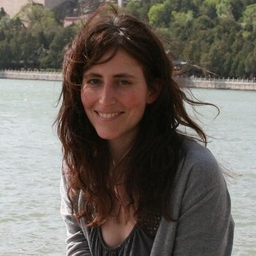
Amanda Yarnell
Boston
Lead @HarvardChanCHC at @HarvardChanSPH | Board @drughuntersite | Formerly @cenmag. Opinions=mine. She/her. @amandayarnell on Post | @amandayarnell.bsky.social
Is this you? As a journalist, you can create a free Muck Rack account to customize your profile, list your contact preferences, and upload a portfolio of your best work.
Claim your profile
Articles by Amanda Yarnell
Social media harm abatement: Mechanisms for transparent public health assessment
COMPETING INTERESTS Nathaniel Lubin, S. Bryn Austin, and Zachary J. Ward have been retained as experts to consult with an attorney general in social media litigation. Amanda Yarnell has received research grant support from Google. Supporting Information Filename Description nyas15345-sup-0001-SuppMat.docx1.6 MB Supporting Information REFERENCES 1 Amnesty International. (2022). Myanmar: Facebook's systems promoted violence against Rohingya; Meta owes reparations—new report.
Opening Doors In China
HARVARD UNIVERSITY organic chemist William von E. Doering is a chemical legend. He is credited with, among other things, paving a route to quinine, pioneering carbene chemistry, and nailing down the mechanism of the Cope rearrangement. But his most important chemical legacy may well be his least celebrated and most lasting one: Opening China's then-insular chemistry and chemistry education communities to the West in the wake of the Cultural Revolution.
100 Years of X-ray Crystallography
That noise you're hearing as you read this article is probably the gods having a jolly old time at my expense. As that great American philosopher and poet Yogi Berra was fond of reminding us, it's tough to make predictions, especially about the future. Still, that hasn't prevented fortune-tellers and stock analysts from making a comfortable living doing it. And as far as short-term predictions go, it isn't as hard as Berra suggests.
Chemistry year in review
As 2016 draws to a close, C&EN is taking stock of the year's biggest moments in chemistry. In the pages that follow, we reflect on some of the year's biggest chemistry headlines-the impact of a lab explosion at the University of Hawaii, the expected fallout from the U.S.'s national election, recent consolidation in the global agricultural chemicals industry, and many more.
History's Hidden Fire
GUNPOWDER: Alchemy, Bombards & Pyrotechnics: The History of the Explosive That Changed the World, by Jack Kelly, Basic Books, 2004, 261 pages, $25 (ISBN 0-465-03718-6) Among books that strive to show how a single substance changed the course of history, Jack Kelly's new history of gunpowder makes a compelling case.
Can Storytelling Reduce the Suffering of Homelessness?
More Must-Reads from TIME Donald Trump Is TIME's 2024 Person of the Year Why We Chose Trump as Person of the Year Is Intermittent Fasting Good or Bad for You?
How influencers can give public health the Stanley Quencher treatment
The crisis of unregulated social media, and its effect on the mental health of our kids, is finally getting the unanimous political traction it deserves. But the road to regulation is long, and we must harness the viral power of these digital ecosystems for public health right now. We have the playbook, thanks to the unexpected viral sensation that is the Stanley Quencher, a once-unremarkable water bottle now flooding TikTok feeds everywhere.
Lessons learned: What makes vaccine messages persuasive
You’re reading Lessons Learned, which distills practical takeaways from standout campaigns and peer-reviewed research in health and science communication. Want more Lessons Learned? Subscribe to our Call to Action newsletter. Vaccine hesitancy threatened public health’s response to the COVID-19 pandemic. Scientists at the University of Maryland recently reviewed 47 randomized controlled trials to determine how COVID-19 communications persuaded—or failed to persuade—people to take the vaccine.
New Harvard Chan School course: Practical communication strategies and tactics for influencing a healthier world
This fall, the Center for Health Communication at Harvard Chan School is launching a new 2.5-credit course called SBS 285 | Practical Communication Strategies and Tactics for Influencing a Healthier World. It will be taught by Andy Burness, founder and CEO of Burness, a mission-driven global communications firm. We caught up with Burness to find out more. Tell me about your journey to the field of health communication.
New Harvard Chan School course: Engaging the media
This fall, the Center for Health Communication at Harvard Chan School is launching a new 2.5-credit course called SBS 225 | Engaging with the press: A practical look at health communication. It will be taught by veteran news executive Richard J. Tofel, the former president of ProPublica and a distinguished visiting fellow at Harvard Chan. We caught up with Tofel to find out more. Tell us a little bit about your career in journalism.
Show and tell: What I learned about timing an op-ed pitch
You’re reading Show and Tell, which highlights communication “wins” from our community. Want more inspiration like this? Subscribe to our Call to Action newsletter. What to see your work here? Tell us about your win. Who I am: Anna Shchetinina, a PhD student in Population Health Sciences at the Harvard Chan School. What I created: I recently published an op-ed that called attention to restricted abortion access and the shortcomings of emergency care provision.
Lessons learned: The rise of AI-generated news websites
You’re reading Lessons Learned, which distills practical takeaways from standout campaigns and peer-reviewed research in health and science communication. Want more Lessons Learned? Subscribe to our Call to Action newsletter.
Lessons learned: A negative headline makes it more likely you’ll click
You’re reading Lessons Learned, which distills practical takeaways from standout campaigns and peer-reviewed research in health and science communication. Want more Lessons Learned? Subscribe to our Call to Action newsletter. Two teams—one made up of researchers from social and cognitive psychology, the other from computer science—analyzed a dataset of news consumption data from Upworthy.com.
Lessons learned: The reasons for trust
You’re reading Lessons Learned, which distills practical takeaways from standout campaigns and peer-reviewed research in health and science communication. Want more Lessons Learned? Subscribe to our Call to Action newsletter. We know that trust in US health agencies eroded during the COVID-19 pandemic. But little work has been done to explore why.
Show and tell: My op-ed journey
You're reading Show and Tell, which highlights communication "wins" from our community. Want more inspiration like this? Subscribe to our Call to Action newsletter. What to see your work here? Tell us about your win.
Show and tell: Interactive map tells story of environmental racism in Boston
You’re reading Show and Tell, which highlights communication “wins” from our community. Want more inspiration like this? Subscribe to our Call to Action newsletter. What to see your work here? Tell us about your win.
Opinion: How to communicate during a public health emergency
Amal Cheema is a member of the MPH Class of 2023 at Harvard T.H. Chan School of Public Health and the Class of 2024 at the Geisel School of Medicine at Dartmouth.
Show and tell: Delivering nutrition expertise via local news
You’re reading Show and Tell, which highlights communication “wins” from our community. Want more inspiration like this? Subscribe to our Call to Action newsletter. What to see your work here? Tell us about your win. Who I am: Elizabeth Gunner, MPH ’24 and a registered dietitian What I created: I regularly appear on-air and off-air for various TV new outlets as a nutrition expert.
Lessons learned: Who is most vulnerable to health misinformation and why
You’re reading Lessons Learned, which distills practical takeaways from standout campaigns and peer-reviewed research in health and science communication. Want more Lessons Learned? Subscribe to our Call to Action newsletter. Researchers from the University of Maryland recently conducted a systematic review of research into who is most vulnerable to health misinformation and why. The team published its findings in Social Science and Medicine (2022, DOI: 10.1016/j.socscimed.2022.115398).
Show and tell: The menstrual cycle, animated
You’re reading Show and Tell, which highlights communication “wins” from our community. Want more inspiration like this? Subscribe to our Call to Action newsletter. What to see your work here? Tell us about your win. Who we are: Tatheer Adnan (left), project lead, and Shruthi Mahalingaiah (right), principal investigator at the Harvard T.H. Chan School of Public Health. What we created: An animation about the menstrual cycle.
Four things newsrooms can do right now to counter science polarization
At SRCCON in June, we hosted a . On the heels of two years of pandemic weirdness, not to mention years of entrenched discourse about climate change, the topic feels especially relevant.
Lessons learned: inoculating against misinformation
You’re reading Lessons Learned, which distills practical takeaways from standout campaigns and peer-reviewed research in health and science communication. Want more Lessons Learned? Subscribe to our Call to Action newsletter. Researchers from the University of Cambridge, the University of Bristol, and Google Jigsaw recently inoculated nearly 1 million YouTube users against misinformation.
Show and tell: An online calculator for #HealthyBuildings
You’re reading Show and Tell, which highlights communication “wins” from our community. Want more inspiration like this? Subscribe to our Call to Action newsletter. What to see your work here? Tell us about your win. Who we are: Parham Azimi (left) and Zahra Keshavarz (right), Harvard Chan #HealthyBuildings team. What we created: An online calculator that helps schools, companies, and other organizations evaluate ventilation rates inside their buildings.
Lessons learned: Dear Pandemic edition
You’re reading Lessons Learned, which distills practical takeaways from standout campaigns and peer-reviewed research in health and science communication. Want more Lessons Learned? Subscribe to our Call to Action newsletter. Researchers involved in Dear Pandemic, a COVID-era social media-based science communication project, reviewed what they learned about effective public health communication in a recent paper in Public Health Reports (2022, DOI: 10.1177/00333549221076544).
New Harvard Chan course: Engaging with the Press
This fall Harvard Chan is launching a new, noncredit course called Engaging with the Press: A Practical Look at Effective Public Health Communications. It will be taught by veteran journalist Richard J. Tofel, the former president of ProPublica and a distinguished visiting fellow at Harvard Chan. We caught up with Tofel to find out more. Your course will explore the relationship between public health and the press. Why is it important that we probe that relationship right now?
Local news gives COVID research real-world impact
By Brandon Yan CNN touts itself as “The Most Trusted Name in News.” In reality, that is not quite true, at least according to 2019 data from Gallup. The most trusted sources of news are in fact local television news and local newspapers. Respectively, 74% and 67% of survey respondents found them trustworthy. Just 48% trusted CNN. My media appearances during the COVID pandemic taught me the value of local news for public health.
“It’s Up to You” COVID-19 vaccine education campaign launches, aims to replace concern with confidence in getting vaccinated
February 25, 2020 — Associated Press: “A public service ad campaign…aims to convince Americans to get vaccinated against COVID-19, telling them ‘It’s Up to You.’ The campaign by the Ad Council and its partners is focused on those who may be hesitant to get the shots…and directs readers to a website with information about vaccines in seven languages…The large, national campaign is producing an array of English and Spanish ads for TV, billboards, bus shelters, social media and publications that...
February 7, 2021 — “Weekend Edition,” WBUR — “Among the challenges for public health professionals: getting people to take precautions. Jay Winsten was the architect of the U.S. ‘Designated Driver’ campaign that focused on shifting the culture of drinking and driving — which contributed to a sharp decline in alcohol-related traffic fatalities and injuries.
Effective public health ads/PSAs require clear, actionable, steps combined with credible stories from ‘the right messengers’
January 19, 2021 — Kaiser Health News: “[P]ublic health advertising often falls short because it incites people’s worst fears rather than providing clear steps viewers can take to save lives…To address public health issues, marketers often use images of diseased lungs to discourage smokers or the bloody aftermath of car crashes to prevent drunken driving.
Actions from the June ACS Board of Directors meeting
On the recommendation of the Women Chemists Committee, the board approved the submission of several scientists' names to a US Mint program that celebrates the accomplishments of prominent American women with special quarter-dollar coins. The board approved funding to cosponsor the 10th Malta Conference happening Dec.
Why we're turning off commenting on cen.acs.org
As a member-focused newsroom, C&EN is committed to building trust-and relationships-with our readers. We're also committed to doing all we can to ensure that C&EN spaces are welcoming, inclusive, and useful for all. Unfortunately, we continue to see uncivil and even hateful comments as well as unproductive discussion and misinformation on some stories on cen.acs.org. Vigorous debate is how science moves forward.
How We Built (and Nurtured) a Newsroom Product Team
Features: Lessons from changing minds and shifting processes to be more product-oriented at Chemical & Engineering News By Jessica Morrison and Amanda Yarnell Posted on: July 18, 2019 Participants working on a product-focused exercise that we led at SRCCON 2019. (Jessica Morrison) When we started thinking about bringing a product mindset to Chemical & Engineering News, we were looking for a way to maintain the quality journalism our readers expect as our ambitions grew.
Machine learning and artificial intelligence (AI) are transforming chemistry, allowing scientists to automate previously rote or tiresome tasks and tackle previously intractable questions. These tools are having a similar effect on our newsroom. For years, C&EN reporters submitted lists of related stories with each article they wrote.
Welcome to your new chemistry homepage
For the past year, the chemistry news nerds here at C&EN have been hunkered down, renovating our digital home. Finally, we’re ready to begin showing it off. Take a look around, and what you’ll see is a new site befitting of our award-winning daily report. You’ll find up-to-the-minute chemistry news coverage and exclusive analysis from our expert editors. We’re also bringing you more interactive graphics, videos, and databases that let you explore what matters to the global chemistry community.
American Chemical Society Dives Deeper Into Open Access With The Debut of ACS Omega
The American Chemical Society will push further into open access publishing in 2016 with the launch of ACS Omega, a pay-to-publish, free-to-read multidisciplinary journal. The peer-reviewed journal is the society’s second fully open access title. ACS Central Science, a highly selective, multidisciplinary journal launched in 2015, is free to both authors and readers.
Highlights From The Paris Climate Meeting So Far
In an effort to stave off the worst of human-caused climate change, negotiators in Paris are hammering out an unprecedented deal that calls for worldwide action. As the meeting enters its second week, we’ve got what you need to catch up. The emissions gap is wide and growing—and won’t be closed in Paris. Even if a deal emerges from Paris, we must mind the emissions gap: Countries’ pledged emission reductions are not nearly enough to solve the problem of climate change.
2015 Yields Two Nobels For Chemistry
In some quarters of the chemical universe these days, it’s become commonplace to complain about how Chemistry Nobel Prizes go to discoveries that seem more biology than chemistry. Is the central science overlooked? Not this year, that’s for sure. Chemistry got the Nobel nod twice last week. Three biochemists—Tomas Lindahl, Paul Modrich, and Aziz Sancar—took home the Chemistry Nobel for revealing the inner workings of the repair systems that guard the integrity of our genomic DNA (see page 6).
Chemical & Engineering News
Like many chemists of a certain age, Derek Lowe remembers the exact moment when he learned about the chemical-structure-drawing program we now call ChemDraw. It was 1986, when Lowe, now a chemist at Vertex and the author of the influential In the Pipeline blog, was still in grad school at Duke University. “I remember the room, and where I was standing in it,” he said at a June 18 event in Cambridge, Mass., marking the program’s 30th anniversary.
Show More
loading
Actions
Is this you?
As a journalist, you can create a free Muck Rack account to customize your profile, list your contact preferences, and upload a portfolio of your best work.Get in touch with Amanda
Contact Amanda, search articles and posts on X, monitor coverage, and track replies from one place.
Learn more about Muck Rack