
About Author: Shauheen Etminan is the founder of VCENNA, a biotech company specializing in natural drug discovery and development for mental health. He is a repeat founder, scientist, researcher, and product developer dedicated to integrating ancient Eastern knowledge in medicine and mysticism into modern science to develop more holistic wellness solutions for today. Shauheen holds a Ph.D. in Chemical Engineering and co-founded Magi Ancestral Supplements.
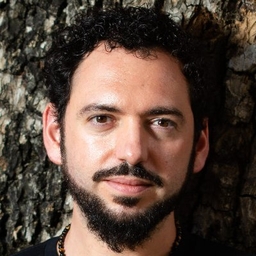
Benjamin Ramm
As seen in:
Bottom LINE,
Época Negócios,
The New York Times,
UOL,
BBC,
Business Insider,
The Guardian,
Substack,
openDemocracy,
AlterNet
and
Founder of Honeydew, a global network of ecovillages. Created in 🇮🇹, with 19 pioneering projects worldwide 🇧🇷 🇮🇳 🇱🇰 🇨🇴 🇵🇹 Insta: HoneydewCommunity
Is this you? As a journalist, you can create a free Muck Rack account to customize your profile, list your contact preferences, and upload a portfolio of your best work.
Claim your profile
Articles by Benjamin Ramm
Honeydew 2023
Horizons offer only a glimpse of possibilities, and at Honeydew, the landscape never ceases to surprise us. When we arrived on site in late February — deep in snow — we could not have foreseen what an incredible year it would be. 2023 surpassed all our expectations, and challenged us to grow further & faster than we could have imagined.
Surfing the Third Wave: A Vision of Ecological Integration
About the Author: Benjamin Ramm is the author of the forthcoming book High Definition: A Vision of Our Psychedelic Future. As a journalist, he presented documentaries for the BBC and wrote for The New York Times and The Guardian. He is the founder of Honeydew, an eco-community in Italy inspired by plant medicine. You can follow the project on Instagram @HoneydewCommunity. The Third Wave is surging – but in which direction is the current flowing, and how is it transforming the social landscape?
Preface
There are those who teach by leading people like horses each step of the way: and there are those who like to be guided like that. There are those who teach by praising the good and by having fun: and some people enjoy this kind of support. And then there are those who educate without hiding the absurdities of the world, open to change yet sincere with others as with themselves, who dream for others of a different life: people only grow if dreamed for.
Coming soon
This is The Honeycomb, a newsletter about Honeydew and our psychedelic future.
Time travel to Jewish Provence
The town of Carpentras, in the Vaucluse region of Provence, is home to the oldest active Jewish community in western Europe and the second oldest on the continent (after Prague). It’s a little-known destination for travellers seeking to discover more about the 2,000-year cultural legacy of Jews in the region. Throughout its many incarnations, Jews have remained, nurturing a distinct cultural legacy.
Microdosing on magic mushrooms helped me fight pandemic burnout. After 6 months, I feel healthier, happier, and more in harmony with others.
Benjamin Ramm first took psilocybin in a controlled setting in the Netherlands in 2019. He began microdosing this year to restore the feelings of his first trip and alleviate burnout. "Psilocybin helped me confront and navigate painful memories and gave me glimpses of great joy." A year into the pandemic, I was feeling jaded and burned out. Anxiety had seeped into every aspect of daily life, alongside a pervasive sense of uncertainty.
I did a 22-hour trip on high-speed trains. Here's what it cost and why it's better than flying during COVID-19.
Benjamin Ramm dreaded the prospect of flying from France during COVID to attend a wedding in Spain. So for around the same price, he booked himself a high-speed train ride to make the trip. This is what it cost and what it was like. Imagine being able to cross a national border without a passport check, a PCR test, or a quarantine, all without having to spend hours in a claustrophobic cabin at 30,000 feet. In Europe, this is a reality.
Nikolai Fyodorov, 'o Sócrates de Moscou' que promoveu a corrida espacial soviética
Nikolai Fyodorov se converteu em um ícone para os transhumanistas de todo o mundo e em uma guia espiritual para a exploração interplanetária Em 28 de dezembro de 1903, durante um inverno russo particularmente rigoroso, um homem pobre morreu de pneumonia dentro de um baú que havia alugado em um quarto abarrotado de moradores de rua. Nikolai Fyodorov (1829-1903) perdeu a vida ali, no escuro, e mais de um século depois permanece quase desconhecido no Ocidente.
Nikolai Fyodorov, "el Sócrates de Moscú" que impulsó el "cosmismo" y la carrera espacial soviética
Las enseñanzas de Fyodorov fueron una gran influencia para el pionero de cohetes ruso Tsiolkovsky (izquierda) y el diseñador jefe de cohetes de la URSS Sergei Korolev (derecha). El 28 de diciembre de 1903, durante un invierno ruso particularmente duro, un hombre pobre murió de neumonía en un baúl que había alquilado en una habitación repleta de indigentes. Nikolai Fyodorov murió allí, en la oscuridad, y más de un siglo después, sigue siendo casi desconocido en Occidente.
The TV shows that reveal the real France
American streaming giants have benefitted from France's well-funded, state-backed creative infrastructure, with production costs vastly lower than in the US. Similarly, French networks – for too long reliant on dubbing second-rate American dramas – have benefitted from home-grown productions, with rights sold across the world.
Cosmism: Russia's Religion for the Rocket Age
On 28 December 1903, during a particularly harsh Russian winter, a pauper died of pneumonia on a trunk he had rented in a room full of destitute strangers. Nikolai Fyodorov died in obscurity, and he remains almost unknown in the West, yet in life he was celebrated by Leo Tolstoy and Fyodor Dostoevsky, and by a devoted group of disciples – one of whom is credited with winning the Space Race for the Soviet Union. Read Full Article »
Cosmism: Russia's religion for the rocket age
Nikolai Fyodorov's beliefs in a cosmic religion centred on life off Earth helped inspire some of the Soviet Union's most brilliant engineers. On 28 December 1903, during a particularly harsh Russian winter, a pauper died of pneumonia on a trunk he had rented in a room full of destitute strangers.
Why you should re-read Paradise Lost
Why you should re-read Paradise Lost The greatest epic poem in the English language, John Milton’s Paradise Lost, has divided critics – but its influence on English literature is second only to Shakespeare’s, writes Benjamin Ramm. M Milton’s Paradise Lost is rarely read today. But this epic poem, 350 years old this month, remains a work of unparalleled imaginative genius that shapes English literature even now.
The Meaning of Trump’s Threat to Hit Iranian Cultural Sites
What a pity to see a mind as great as Napoleon’s devoted to trivial things such as empires, historic events, the thundering of cannons and of men; he believed in glory, in posterity, in Caesar; nations in turmoil and other trifles absorbed all his attention... How could he fail to see that what really mattered was something else entirely?
Why You Should Re-Read Paradise Lost
Milton’s Paradise Lost is rarely read today. But this epic poem, at over 350 years old, remains a work of unparalleled imaginative genius that shapes English literature even now. In more than 10,000 lines of blank verse, it tells the story of the war for heaven and of man’s expulsion from Eden. Its dozen sections are an ambitious attempt to comprehend the loss of paradise – from the perspectives of the fallen angel Satan and of man, fallen from grace.
O que une os famosos discursos de Luther King, Robert Kennedy e Obama
Martin Luther King, principal liderança do movimento pelos direitos civis nos EUA, foi morto em 4 de abril de 1968. No mesmo dia, o então senador Robert F. Kennedy desembarcava no Estado de Indiana, onde faria campanha para ser nomeado candidato a presidente pelo Partido Democrata. Luther King trabalhou para criar o que ele chamava de "comunidade amada" e escreveu extensivamente sobre o ágape, a noção grega de "amor sem interesse".
What King, Kennedy and Obama’s great speeches have in common
Popular volumes of great speeches celebrate the mastery of the art of persuasion. These tomes are full of rhetorical flourishes, of stirring appeals to universal ideals, with elevated cadences and effortless assurances. But two of the most significant rhetoricians of the 20th Century, both of whom were assassinated 50 years ago this year, delivered speeches that were infused with doubt, with a self-reflective, questioning quality, and which expressed an intimate vulnerability.
Johann Hari: Is our mental health affected by chemical imbalances in our brain?
Interview with writer Johann Hari on his new book, Lost Connections Writer Johann Hari is author of the NY Times best-seller 'Chasing the Scream', written about the war on drugs and the impact it has had on our society. His new book, Lost Connections, explores the real causes of depression and the myths around mental health.openDemocracy's Benjamin Ramm talks to him about unexpected solutions.
Why tyrants love to write poetry
Mao’s work is proof that artistic refinement is no guarantee of a gentler politics. In 1966, Red Guards supplemented their Little Red Book with a collection of 25 poems attributed to Mao, which led to an enthusiasm for old style verses among those dedicated to destroying “feudal relics”. The last line that Mao ever wrote, a year before launching the Cultural Revolution, was a premonition of the coming tumult: “Look, the world is being turned upside down”.
Why tyrants love to write poetry
Poetry is an art of refinement, synonymous with delicacy and sensitivity. It seems counterintuitive that it might also be a celebration of brutality, and the art form beloved of tyrants. But from classical antiquity to modernity, dictators have been inspired to write verse – seeking solace, intimacy, or glory. Their work informs us about the nature of power, the abiding appeal of poetry, and the perils of artistic interpretation.
The subversive power of calypso music
Outside the Caribbean, calypso music is regarded as carefree, light-hearted, even frivolous. Yet calypso is among the most political of all musical traditions – a form that combines joyful cadences with serious and often subtle social commentary. Originating in the struggle for emancipation, the genre is characterised by its witty and imaginative treatment of themes as diverse as racism, the Cold War, and the cost of living.
A world in peril: an interview with Noam Chomsky
"There's a diversionary process underway... out of the spotlight, the most savage fringe of the Republican Party is carefully advancing policies to enrich their true constituency: the Constituency of private power and wealth." Noam Chomsky has a new book of interviews with David Barsamain coming out in early December. You can pre-order Global Discontents: Conversations on the Rising Threats to Democracy by clicking on this link.
What the myth of Faust can teach us
“Politicians promise you heaven before an election and give you hell after,” wrote the anarchist Emma Goldman. The experience of the legendary Doctor Faustus, who sells his soul to the demon Mephistopheles in return for worldly knowledge and pleasure, has been treated as a metaphor for unholy political pacts. It may even shed light on our own populist moment, from Brexit to the election of Donald Trump.
What the myth of Faust can teach us
What the myth of Faust can teach us (Image credit: Alamy) The legend of a man selling his soul to the devil ‘seems to have particular resonance at times of moral crisis’, writes Benjamin Ramm. “Politicians promise you heaven before an election and give you hell after,” wrote the anarchist Emma Goldman.
What the myth of Faust can teach us
“Politicians promise you heaven before an election and give you hell after,” wrote the anarchist Emma Goldman. The experience of the legendary Doctor Faustus, who sells his soul to the demon Mephistopheles in return for worldly knowledge and pleasure, has been treated as a metaphor for unholy political pacts. It may even shed light on our own populist moment, from Brexit to the election of Donald Trump.
A Controversial Restoration That Wipes Away the Past (Published 2017)
Art & Design|A Controversial Restoration That Wipes Away the Past https://www.nytimes.com/2017/09/01/arts/design/chartres-cathedral-restoration-controversial.html The statue formerly revered as the Black Madonna has become white in the restoration of Chartres Cathedral.Credit...Roberto Frankenberg for The New York Times CHARTRES, France — The pilgrim did not find what he was searching for.
Donald Trump - America's carbon-pusher in chief
Who says Trump doesn't have a coherent foreign policy? It entails doing anything and everything it takes to prolong the reign of fossil fuels and promote US sales of the stuff. Who says President Trump doesn’t have a coherent foreign policy? Pundits and critics across the political spectrum have chided him for failing to articulate and implement a clear international agenda.
The ‘greatest film-maker who ever lived’
It’s not right that the Swedish master Ingmar Bergman is always described as dark and gloomy. He was a deeply humane artist with great empathy, writes Benjamin Ramm. Woody Allen once lauded Ingmar Bergman as “probably the greatest film artist, all things considered, since the invention of the motion picture camera” – yet he is also the most misunderstood.
The ‘greatest film-maker who ever lived’
Woody Allen once lauded Ingmar Bergman as “probably the greatest film artist, all things considered, since the invention of the motion picture camera” – yet he is also the most misunderstood. Ten years after Bergman’s death, the received wisdom about his work continues to obscure his legacy, and discourages new audiences from discovering his achievements.
The writers who defied Soviet censors
The writers who defied Soviet censors (Image credit: Alamy) Underground publishers in the USSR broke rules in ingenious ways – such as hiding books in fake binding and making records on X-ray film, writes Benjamin Ramm. I In anticipation of the poet’s arrest, his creations were concealed by inventive means – sewn into the insides of cushions and shoes, or hidden in mattresses and saucepans.
The writers who defied Soviet censors
In anticipation of the poet’s arrest, his creations were concealed by inventive means – sewn into the insides of cushions and shoes, or hidden in mattresses and saucepans. The police confiscated most of his papers, but others were smuggled out, or hidden surreptitiously in obscure locations. The most important poems were inscribed where even the wiliest investigator could not find them – in the memory of a devoted reader, who would pass them on.
'The fatherland of Rausch': how Germany, where many of the world's drugs were invented, began to turn against them
A German chemist invented cocaine in 1859. Heroin was invented by the Bayer corporation in 1888, and a ban was introduced in 1929. Now, however, times are changing – and more compassionate policies are taking root. In the mid-1980s, Timothy Leary – the American evangelist for drug use – came to visit Germany, and one day, he turned to the journalist who had volunteered to drive him around – Mathias Bröckers – and explained why he was thrilled to be here, of all places.
fp selection 6 july 2017
Civil Society Futures is a national conversation about how English civil society can flourish in a fast changing world.Come and add your voice»
Naomi Klein discusses the climate crisis, Trump's brand, and America's war on memory
Naomi Klein's new book is a rapid response to Trump, but it is the product of two decades of radical thinking. No Is Not Enough offers fresh insight about Trumpism while incoprorating earlier ideas from No Logo (2001), The Shock Doctrine (2007), and This Change Everything (2014).
The 1,000-year-old lost Arab poetry that lives on in Hebrew
The 1,000-year-old lost Arab poetry that lives on in Hebrew (Image credit: Tom McShane) A thousand years ago, the Iberian peninsula was a cultural oasis – until a million of its Arabic manuscripts were destroyed. Benjamin Ramm explains how its poetry lives on. O On 9 December 1499, the citizens of Granada awoke to a scene of devastation: the smouldering remains of over a million Arabic manuscripts, burnt on the orders of the Spanish Inquisition.
The 1,000-year-old lost Arab poetry that lives on in Hebrew
On 9 December 1499, the citizens of Granada awoke to a scene of devastation: the smouldering remains of over a million Arabic manuscripts, burnt on the orders of the Spanish Inquisition. The scale of cultural desecration is difficult to comprehend – it stands alongside the burning of the Mayan codices by Conquistadors 60 years later, and the destruction of the library at Alexandria.
Why thousands of teens ran away from home in the 1960s
Fifty years ago, a song topped the UK charts that expressed the fears of a generation of parents. She’s Leaving Home by The Beatles tells the story of a girl who runs away abruptly, leaving only “the note that she hoped would say more”, and of her parents’ shock and sadness at awaking to her absence.
Cultural Manifesto
The biography of Britain’s outgoing culture secretary, Karen Bradley, makes no mention of either culture or the arts. This ought to be surprising, but it is in keeping with the philistine trend in government, in which the arts are regarded purely in utilitarian terms (their value calculated by revenue alone).
A passport from a country that doesn’t exist
A passport from a country that doesn’t exist (Image credit: Davide Carpenedo) The NSK has invented a nation as a work of art – and its pavilion at the Venice Biennale has much to say about statehood and globalisation, writes Benjamin Ramm. T The woman who stamps my passport is called Mercy and she has no fixed abode. Born in Nigeria, she travelled via Libya to Italy, where she lives in the city of Padua in a state of legal limbo.
A passport from a country that doesn’t exist
The woman who stamps my passport is called Mercy and she has no fixed abode. Born in Nigeria, she travelled via Libya to Italy, where she lives in the city of Padua in a state of legal limbo. The passport she stamps is issued not by the United Kingdom but by the Neue Slowenische Kunst (NSK), a Slovenian art collective exhibiting at the 2017 Venice Biennale.
The X Factor of ancient Athens
“Popular culture is a contradiction in terms,” remarked the fashion designer Vivienne Westwood. “If it’s popular, it’s not culture”. This pithy fallacy reflects a widespread belief that artistic excellence is the preserve of a social elite. But it ignores arguably the most important creative moment in Western culture – when the citizens of ancient Athens developed a form of theatre that was richly imaginative, morally complex and distinctly democratic.
Why you should re-read Paradise Lost
Milton’s Paradise Lost is rarely read today. But this epic poem, 350 years old this month, remains a work of unparalleled imaginative genius that shapes English literature even now. In more than 10,000 lines of blank verse, it tells the story of the war for heaven and of man’s expulsion from Eden. Its dozen sections are an ambitious attempt to comprehend the loss of paradise – from the perspectives of the fallen angel Satan and of man, fallen from grace.
Love in a time of fear: an interview with Dashni Morad
As the battle for Mosul nears its conclusion, the fate of civilian survivors remains uncertain. The Kurdish singer and humanitarian Dashni Morad, whose youth was defined by conflict in the region, aims to highlight the psychological scars of living under a brutal regime. In 2014, Morad raised funds for refugee camps outside Mosul, where she witnessed the impact of three years of war on displaced children.
Citizens Of Nowhere - Jewish Identity After Brexit
“If you believe you’re acitizen of the world, you’re acitizen of nowhere.”—Theresa May At roughly 2 a.m. on 24 June 2016, I experienced a deep sense of grief —it felt as if part of my identity had been cleaved from me. This attachment to Europe was more civilisational than generational, as the Ashkenazi side of my family had left over a century ago; but it was framed by the fact that the EU evolved partly in response to the Jewish experience on the Continent.
Zweig: The writer who dreamed of a world without borders
The exiled author killed himself in despair over Nazism. But before he did, he said Brazil had become what he hoped Europe could be, writes Benjamin Ramm. Seventy-five years ago, in February 1942, Europe’s most popular author committed suicide in a bungalow in the Brazilian town of Petrópolis, 10,000 km (6,200 miles) from his birthplace in Vienna.
Zweig: The writer who dreamed of a world without borders
Seventy-five years ago, in February 1942, Europe’s most popular author committed suicide in a bungalow in the Brazilian town of Petrópolis, 10,000 km (6,200 miles) from his birthplace in Vienna. In the year before his death, Stefan Zweig completed two contrasting studies – The World of Yesterday: Memoirs of a European, an elegy for a civilisation now consumed by war, and Brazil: Land of the Future, an optimistic portrait of a new world.
Show More
loading
Actions
Is this you?
As a journalist, you can create a free Muck Rack account to customize your profile, list your contact preferences, and upload a portfolio of your best work.Get in touch with Benjamin
Contact Benjamin, search articles and posts on X, monitor coverage, and track replies from one place.
Learn more about Muck Rack