
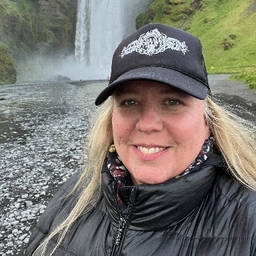
Mary Spiro
(She/Her)
- Director of Communications and External Affairs, American Sociological Association
- Writer and Technical Editor, Freelance
Baltimore
Covers:
basic science, social science and sociology, engineering, medicine, public health, cool tech and gadgets
Articles by Mary Spiro
How Trump's AI-generated memes impact political authority and masculinity
Trump’s AI Superman coopts the superhero fandom’s theatricality of comic-book superheroes and the aesthetics of fantasy art while reinforcing a deeply traditional narrative of invincible dominating masculinity and saviorism. Credit: Contexts (2026). DOI: 10.1177/15365042261471529 A new article by sociologists Tristan Bridges (University of California, Santa Barbara) and James W.
How privilege shaped families' ability to stay healthy during COVID-19
Credit: Gustavo Fring from Pexels Money, social networks and access to information are resources that are frequently available to privileged groups or classes in society, helping them weather tough times and adversity. Drawing on interviews with families conducted before and during the COVID-19 pandemic, "The Privilege of Protection During the Pandemic" shows how middle-class households leveraged existing advantages to remain safer, healthier and more secure amid widespread uncertainty.
Study finds right-wing media operate more like a religion
A new sociological study offers a surprising take on the state of American news: Right-wing news media doesn't just sit on the opposite end of the political spectrum from mainstream outlets—it operates more like a religion than a traditional news source. While we often hear about polarized news media, research from Purdue University argues that this is the wrong framework. Instead of a simple left vs.
Framing social issues as 'civil rights' can sometimes backfire
Framing is a powerful tool in communications: It can help people grasp complex ideas, but it can also distort or mislead. A recent sociological study suggests that framing social issues as "civil rights" can sometimes have surprising and even negative consequences.
Perceptions of the past and the future affect individual climate change action
Have you ever spotted a problem but assumed someone else would handle it, so you did nothing? A recent sociological study explores this common mindset in the context of how we respond—or fail to respond—to climate change. Research published online in the April 2025 issue of American Sociological Review reveals that people's perceptions of what others expect for the future affect their own reactions to climate change. In the paper, "Time's Up?
Sociological Research Reveals How Immigrants Can Reduce Crime
by Mary Spiro Immigration has long been contentious in the U.S. with debates revolving around its perceived link to crime. Recent political shifts have amplified these discussions, fueling public opinion through policies and rhetoric. Isolated incidents of violent crimes committed by undocumented immigrants, as well as outright disinformation, are spotlighted to justify harsh deportation policies.
School segregation widens racial achievement gaps among Black, white and Hispanic students
New sociological research finds that school segregation continues to widen racial achievement gaps among Black, Hispanic, and white students in U.S. public schools. Analyzing standardized test scores from millions of students, researchers concluded that these gaps grow fastest in school systems where Black and Hispanic students are concentrated in higher-poverty schools than their white peers. The study, "Is Separate Still Unequal?
Tailored Interventions Lower Blood Pressure for Groups Experiencing Health Disparities
Cardiovascular disease remains the leading cause of death in the US, significantly affecting racial, geographic, and socioeconomic disparities in mortality and life expectancy. Researchers at the Johns Hopkins Center for Health Equity have published a groundbreaking study in Circulation journal that reveals new strategies for combating hypertension disparities in underserved communities. Led by Lisa A. Cooper, MD, MPH, and Jill A.
Hearing the ‘photovoice’ of Baltimore’s community health workers
The term may not be as common as “doctor” or “nurse,” but community health workers play a significant role in the public’s health. Chidinma Ibe, PhD is an assistant professor in the Johns Hopkins School of Medicine and the Associate Director of Community Engagement for Johns Hopkins Center for Health Equity (CHE).
Maryland Hunger Solutions collaboration with Public Health wins 2023 Henrietta Lacks Memorial Award | Urban Health Institute
The Johns Hopkins Urban Health Institute awarded the 2023 Henrietta Lacks Memorial Award to a collaboration between Maryland Hunger Solutions, an advocacy and outreach organization seeking to end hunger in Maryland, and Susan Gross, PHD, MPH, RDN, LDN, an associate scientist in the Bloomberg School of Public Health in the Department of Population, Family and Reproductive Health.
Call for Applications for the 2023 Henrietta Lacks Memorial Award | Urban Health Institute
Johns Hopkins Urban Health Institute announces call for applications for the 2023 Henrietta Lacks Memorial Award. The Johns Hopkins Urban Health Institute (UHI) is now accepting applications for the prestigious Henrietta Lacks Memorial Award. Created to honor the memory of Henrietta Lacks, a former resident of Turner Station and a cancer patient at Johns Hopkins Hospital, this award aims to recognize the groundbreaking contributions of Mrs.
Needhi Bhalla chosen for 2022 ASCB Prize for Excellence in Inclusivity - ASCB
Needhi Bhalla, Professor of Molecular, Cell, and Developmental (MCD) Biology at the University of California, Santa Cruz (UCSC), will receive the 2022 American Society for Cell Biology Prize for Excellence in Inclusivity award. ASCB will recognize Bhalla on December 3 before the keynote of the Cell Bio 2022 meeting in Washington, DC. She also will write an essay to be published in Molecular Biology of the Cell (MBOC) and will receive $5,000 to use as she chooses.
ASCB announces 2022 honorific awards and recognition - ASCB
The American Society for Cell Biology (ASCB) recognizes 18 remarkable individuals for their various achievements in the realm of life sciences. “ASCB honorific awards recognize individuals making important contributions to our community,” said ASCB CEO Rebecca Alvania.
Expansion microscopy ‘grows’ samples larger for super-resolution imaging
If you’ve ever bought one of those grow-in-water dinosaur toys from a gumball machine, you understand a little about the process of expansion microscopy. This sample-preparation technique, developed at the Massachusetts Institute of Technology, allows researchers to achieve super-resolution microscopy using just a regular light microscope.
OpenCell reveals the intracellular life of proteins - ASCB
After proteins are synthesized in a cell, they don’t just sit there. They get straight to work—alone or in combination—performing nearly every task in a cell’s life, moving from nucleus to cytoplasm to membrane. Cell biologists know this happens, and they’ve done a decent job of describing a multitude of these activities and interactions. But of course, we always want to know more, especially when it comes to what happens in a living cell.
Cell Bio Virtual 2021: A Retrospective - ASCB
One of the hardest articles for me to write each year is the review of the ASCB annual meeting. How does one summarize hours of presentations of leading-edge cell biology or the lively and spontaneous interactions that happen during Q&As or networking sessions? Whether the meeting has been in-person or online, it’s always a challenging writing assignment. So let me offer you a tiny glimpse—some thin-sections—of what transpired at Cell Bio Virtual 2021–an ASCB|EMBO Online Meeting.
HHMI adds new research focus on 4D cellular physiology
The Howard Hughes Medical Institute (HHMI) is adding a new research direction, 4D cellular physiology, to its current portfolio of research interests, which includes mechanistic cognitive neuroscience. The ASCB Newsletter posed a few questions to Ron Vale, the Vice President and Executive Director of HHMI’s Janelia Research Campus, and Jennifer Lippincott-Schwartz, a senior group leader also at Janelia, about this new direction and how it will impact the cell biology community.
Age is not a number, it’s a cellular morphology
Dermal fibroblasts derived from a healthy 85-year-old donor stained for F-actin (green) and DNA (blue). Image shows the presence of both senescent and non-senescent cells in 2D cell cultures. They say you are only as old as you feel. The truth is you are as old as your cell morphology dictates. Jude Phillip, an assistant professor at Johns Hopkins University, thinks a lot about aging and has been pondering the questions: “Can we determine a person’s age based on the properties of their cells?
Member profile: John McCutcheon
“Endosymbiosis” sounds like the title of a science fiction film, and when John McCutcheon explains it, it kind of seems like it could be.But this beneficial interaction that harnesses the power of bacteria cells to supplement the nutritional needs of animal cells is a relationship that McCutcheon has been curious about since his graduate school days.
Ending racial disparities in NIH funding
The events of the past year have been a wake-up call for some of us: We have had to starkly acknowledge the systemic racism that shapes our nation and institutions. Science is not immune to this systemic racism. This is the time to listen to Black and other historically marginalized colleagues and trainees (e.g Dzirasa, 2020a).
Erika Shugart leaving ASCB to head NSTA
After almost five years as CEO, Erika Shugart will be leaving the American Society for Cell Biology as of March 5 to become the Executive Director of the National Science Teaching Association (NSTA).
ASCB announces its inaugural cohort of NIH MOSAIC Scholars
MOSAIC Scholars from left top: Jenna Christensen, Yadira M. Soto-Feliciano, Nicole R. Sparks, Charisse Winston, and Yvon L. Woappi. The American Society for Cell Biology (ASCB) is pleased to announce its first cohort of scholars for the Maximizing Opportunities for Scientific and Academic Independent Careers (MOSAIC) K99/R00 program, an initiative funded by the National Institutes of Health.
Mini-lungs offer clues to COVID-19 and more
Purushothama Rao Tata’s laboratory at the Duke University School of Medicine developed lung cell organoids—mini-lungs—from alveolar type 2 (AT2) progenitor cells as a means to better understand how lungs react to chemical toxins and pathogens, and to find ways for the lungs to heal themselves. Then COVID-19 hit. “Lungs are highly prone to damage as they are constantly exposed to environmental factors via the air we breathe,” said Tata, an assistant professor of cell biology.
ASCB members elected as AAAS Fellows
Each year the American Association for the Advancement of Science elects scientists to receive the lifetime distinction of being named AAAS Fellow. The title recognizes important contributions to STEM disciplines, including pioneering research, leadership within a given field, teaching and mentoring, fostering collaborations, and advancing public understanding of science. ASCB members elected this year are: Section on Education David J.
Member profile: Joyonna Gamble-George
Joyonna Gamble-George during the IF/THEN conference in Dallas Tx on Tuesday, Oct. 22, 2019 at the Perot Museum of Nature and Science. (Michael Ainsworth) Joyonna Gamble-George is a bit of a Renaissance woman involved in all the letters of STEAM (science, technology, engineering, arts, and medicine). Gamble-George is currently the co-founder, chief operations officer, and chief scientific and medical officer for the medical biotech company SciX LLC.
Sylvia Hurtado invited to present 2020 diversity keynote
“Inclusive Science and Institutional Change” will be the title of the Diversity Keynote presented by invited speaker Sylvia Hurtado for Cell Bio Virtual 2020–An Online ASCB|EMBO Meeting. Hurtado is a professor in the Graduate School of Education and Information Studies at the University of California, Los Angeles (UCLA). Hurtado’s research centers on the impact that student-centered interventions for underrepresented groups has, not only on the students, but on the institution itself.
MariaElena Zavala to present 2020 mentoring keynote
MariaElena Zavala, professor of biology at California State University, Northridge, has been invited to present the 2020 Mentoring Keynote at Cell Bio Virtual 2020–An Online ASCB|EMBO Meeting. The title of her talk will be “Changing the Face of Science.” The talk will premiere on December 2 from 11:45–12:30 ET. Zavala said she was very excited to be asked to present the ASCB Mentoring Keynote. “Very excited actually, I was floored!” she said.
Hyman to present Keith Porter lecture at Cell Bio Virtual 2020
The American Society for Cell Biology is pleased to present the Keith R. Porter Award to Anthony Hyman, given to an eminent cell biologist in memory of one of ASCB’s founding members. Hyman, one of four founding directors of the Max Planck Institute of Molecular Cell Biology and Genetics in Dresden, Germany, and an ASCB Fellow, will present the Keith R. Porter Lecture at Cell Bio Virtual 2020-an ASCB|EMBO Meeting.
Science sketches bring MBoC research to life
You may have noticed that ASCB’s basic science journal, Molecular Biology of the Cell (MBoC), has recently featured short explanatory videos to accompany some article abstracts. These videos, called Science Sketches, are the brainchild of MBoC editors Lisa Dennison and Liam Holt, and are part of a new science outreach partnership with the journal.
Health equity expert Lovell Jones to present 2020 E.E. Just award lecture
ASCB is pleased to announce that Lovell Jones, Emeritus Professor at both the University of Texas M.D. Anderson Cancer Center and the University of Texas Graduate School of Biomedical Sciences at Houston, will present the 2020 E.E. Just Award Lecture at Cell Bio Virtual 2020–An Online ASCB|EMBO Meeting. Jones is the first Black professor from the University of Texas System to hold dual emeritus status and the first to be so honored by the University of Texas M.D. Anderson Cancer Center.
Member profile: Ursula Goodenough
About three years ago, former ASCB president (1995) and Professor of Biology Emerita at Washington University in St. Louis (WUSTL) Ursula Goodenough closed down her lab where she had built a career studying the life cycle of Chlamydomonas reinhardtii.Today Goodenough, now living on Martha’s Vineyard, hasn’t lost her curiosity about the wonders of nature or her ability to contribute valuable research.
E.B. Wilson lecture to be presented by Jennifer Lippincott-Schwartz
Jennifer Lippincott-Schwartz Jennifer Lippincott-Schwartz has spent most of her career as a cell biologist devising live cell imaging techniques for studying how cells are organized and dynamically function. Most recently, at the Howard Hughes Medical Institute’s Janelia Research Campus, she’s been studying how organelles communicate with each other through inter-organelle contacts and the role this plays in maintaining cell homeostasis.
Online cell biology meeting aims to engage and enthrall attendees
Cell Bio Virtual 2020–An Online ASCB|EMBO Meeting came into being when the global pandemic forced ASCB and EMBO to move their traditional annual meeting fully online. But the meeting planners say they had hoped for an online component to the meeting from the outset. Greater access to a broader audience was, in fact, what Program Committee Co-Chairs Rebecca Heald and Buzz Baum intended all along in putting this meeting together.
ASCB Names 18 Members as Its 2020 Fellows Cohort
The ASCB Council has named the 2020 cohort of Fellows, ASCB members selected for their lifetime achievements in advancing cell biology. Eighteen members were chosen for their outstanding contributions to the field of cell biology and to the community of cell biologists through their service to the Society. The ASCB Fellows program is committed to recognizing the breadth and diversity of the Society’s membership.
With glutamate receptors, it’s all about location and timing
A schematic showing the current model for how release sites and receptors are organized. Based on our recent experiments, AMPA receptors (red) seem to localize towards the periphery of a postsynaptic density, whereas NMDA receptors towards the center. Synaptic vesicles first fuse near the AMPA receptors (as shown here) and then near the NMDA receptors. An electron micrograph showing fusion of synaptic vesicles.
Council addresses pandemic effects on society, engages in all-day diversity workshop
The ASCB Council convened its first-ever entirely virtual meeting in June. Not surprisingly, the impact of COVID-19 on university research labs and other biomedical research institutions and industries around the world dominated much of the conversation on the first day of the Council’s online gathering. During the second day, councilors participated in a diversity, equity, and inclusion workshop facilitated by experts in that field.
Zebrafish outreach program nets organizers 2020 Bruce Alberts Award for Excellence in Science Education
The science outreach program BioEYES gives children hands-on experience studying the life cycle and genetics of the shiny, darting zebrafish (Danio rerio). Since 2002, BioEYES has shared the wonder of scientific discovery with more than 155,000 children across the United States and as far away as Melbourne, Australia.
Member profile: Susan Walsh
Susan Walsh never set out to become an educator. Now this associate professor of Molecular/Cell Biology is designing the science curriculum from the ground up at Soka University of America (SUA) in Aliso Viejo, CA, where she is Director of the Life Sciences Concentration. Recently, Walsh helped organize ASCB’s Regional Educator Meeting “Teaching Tomorrow’s Scientists,” which, amid pandemic shutdowns, had to quickly shift online. She answered a few questions for ASCB.
JoAnn Trejo selected for 2020 ASCB Prize for Excellence in Inclusivity
JoAnn Trejo calls herself a problem solver. “I was born with a natural curiosity, always wondering how things work. I like to fix things—I like problem-solving. This is the essence of science, trying to solve problems,” Trejo said. These problem-solving skills have no doubt helped her become an accomplished and well-respected scientist, but they have also given her the tools to be a creative advocate for diversity, equity, and inclusion in the scientific community.
Universities should support public engagement: why and how
Canadian Association for Girls In Science (CAGIS) Science and society need each other. The COVID-19 pandemic is a stark demonstration of why this is—just as we rely on scientists to research the SARS-CoV-2 virus, treatments, and vaccines, we also need members of the public and policymakers to use emerging insights to make the best decisions possible.
Promoting diversity and advancing racial equity in the biomedical sciences
The need for science to enhance the participation of students and faculty from historically underrepresented minority (URM) backgrounds, and the glacial progress our community has made to remedy our historic and present day exclusion, have been chronicled for longer than I have been alive.
Mental health resources for trainees are more important than ever
Over the years, my siblings and close friends have sought mental health resources like therapy, psychoanalysis, or psychiatry, so I understood their benefits. When I was a PhD student I even went to therapy, but my counselor and I decided I could do without it. Since I started my postdoc, my stress manifested in new ways, but I managed it well with my usual coping strategies and support. That changed when I got a call one bright December day that my father had died unexpectedly.
Eleven reasons why you should bring your whole lab to Cell Bio Virtual 2020
Whenever ASCB asks, one of the things members always say they love about membership is the chance to attend the annual meeting. It’s THE place to check in with your colleagues, get feedback on your research, and to build relationships that impact your career. With Cell Bio Virtual 2020 – An ASCB|EMBO Meeting moving online, it might be hard to visualize how regular attendees are going recreate the experience of mingling with their colleagues and friends.
Immigration Paths for Scientific Researchers in the U.S.: Part 1 of 3
As an immigration lawyer in the U.S., I travel to the annual meetings of numerous major scientific organizations to give presentations and provide free consultations. I find that most foreign scientists, from PhD students to postdocs who have been in the U.S. for many years, have a poor understanding of their legal situation.
Outreach from afar: successful socially distanced science programming
Open Labs volunteers engaged in a science demonstration with local students at our 2018 Science Cafe (Photo Credit: Diondra Dilworth) In mid-March, Connecticut locked down to limit the spread of COVID-19. School closures forced parents to juggle working from home with childcare. As graduate students dedicated to science outreach for underserved students in New Haven, we saw a chance to leverage our skills and experience to provide virtual educational opportunities for them.
ASCB awarded $1.3M NIH grant to enhance academic biomedical workforce diversity
The American Society for Cell Biology (ASCB) was awarded a first-of-its-kind National Institutes of Health (NIH) grant to enhance diversity in the academic biomedical workforce.
Our adventures in science outreach: from cell-inspired art to a lab-on-wheels
Faculty and undergraduate volunteers (from left to right: Nathan Grinalds, Kendall Ziegler, Austin Kratz, Bella Grifasi, Mike Rizzo, Jackson Sparks, Prowler the Panther, Neil Coffield and Verónica Segarra) in front of the HPU Mobile Lab (before COVID-19). Receiving an ASCB COMPASS Outreach grant in 2016 helped us jump-start our science outreach efforts at High Point University (HPU), a private liberal arts college in North Carolina.
Public Engagement grant awardees bring science to diverse groups | ASCB
Science Clubs International (Clubes de Ciencia), one of seven science outreach programs to be supported by ASCB's Public Engagement grants. Outreach programs to foster an appreciation for science are often part of afterschool programs or found at large public gatherings.
In memoriam: Theodore Peters, Jr., clinical chemist
Theodore Peters, Jr., died at his home in Cooperstown, NY, on March 19. He was 97. Peters was a research biochemist at Mary Imogene Bassett Hospital and was best known for his life’s work on the structure and function of serum albumin. He attended the Massachusetts Institute of Technology, served in the Navy during World War II, and ultimately earned a doctorate in biological chemistry from Harvard University.
Annual cell bio meeting goes virtual
After careful consideration, the ASCB Council unanimously voted to cancel the in-person meeting scheduled to be held in Philadelphia in December and instead hold Cell Bio Virtual 2020-An Online ASCB|EMBO Meeting. The health and safety of our members remains paramount during this ongoing global pandemic. The abstract submission system for Cell Bio Virtual 2020 is now open for those interested in giving virtual talks. To be considered for a talk, you must submit your abstract by July 30.
Show More
loading
Actions
Is this you?
As a journalist, you can create a free Muck Rack account to customize your profile, list your contact preferences, and upload a portfolio of your best work.Get in touch with Mary
Contact Mary, search articles and posts on X, monitor coverage, and track replies from one place.
Learn more about Muck Rack