
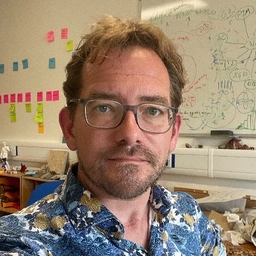
Nicholas Longrich
Bath, Kodiak
As seen in:
MSN New Zealand,
BBC,
El País,
The Independent (UK),
Yahoo Canada,
Yahoo News,
Yahoo News UK,
Diario ABC,
Infobae,
The Conversation
and
Covers:
Evolution, paleontology (dinosaurs, fossil birds, pterosaurs, mosasaurs, humans), mass extinction, human evolution, biogeography, archaeology, macroevolution
Paleontologist, biologist, sometimes archaeologist from Alaska. Dinosaurs, evolution in deep time and writing. Nature is the only authority that is never wrong.
Articles by Nicholas Longrich
Morocco dinosaur discovery gives clues on why they went extinct
The causes of the mass extinction have been debated for two centuries. Georges Cuvier, the father of palaeontology, thought extinction was driven by catastrophes. Charles Darwin thought gradual changes in the environment and competition between species slowly drove lineages extinct. As our understanding of the fossil record improved, it became clear that the Cretaceous period (145 million years to 66 million years ago) ended with an extraordinary wave of extinction.
Neanderthals vs Homo sapiens: How social structures affected ancient species’ ability to survive
Why did humans take over the world while our closest relatives, the , became extinct? It’s possible we were just smarter, but there’s surprisingly little evidence that’s true. Neanderthals had big brains, language and sophisticated tools. They made art and jewellery. They were smart, suggesting a curious possibility. Maybe the crucial differences weren’t at the individual level, but in our societies. Two hundred and fifty thousand years ago, Europe and western Asia were Neanderthal lands.
Why Did Modern Humans Replace The Neanderthals? The Key Might Lie In Our Social Structures
Why did humans take over the world while our closest relatives, the , became extinct? It’s possible we were just smarter, but there’s surprisingly little evidence that’s true. Neanderthals had big brains, language and sophisticated tools. They made art and jewellery. They were smart, suggesting a curious possibility. Maybe the crucial differences weren’t at the individual level, but in our societies. Two hundred and fifty thousand years ago, Europe and western Asia were Neanderthal lands.
Why did modern humans replace the Neanderthals? The key might lie in our social structures
Why did humans take over the world while our closest relatives, the , became extinct? It's possible we were just smarter, but there's surprisingly little evidence that's true. Neanderthals had big brains, language and sophisticated tools. They made art and jewelry. They were smart, suggesting a curious possibility. Maybe the crucial differences weren't at the individual level, but in our societies. Two hundred and fifty thousand years ago, Europe and western Asia were Neanderthal lands.
Why did modern humans replace the Neanderthals? The key might lie in our social structures Original
Why did humans take over the world while our closest relatives, the , became extinct? It’s possible we were just smarter, but there’s surprisingly little evidence that’s true. Neanderthals had big brains, language and sophisticated tools. They made art and jewellery. They were smart, suggesting a curious possibility. Maybe the crucial differences weren’t at the individual level, but in our societies. Two hundred and fifty thousand years ago, Europe and western Asia were Neanderthal lands.
Duckbill dinosaur discovery in Morocco: Expert unpacks the mystery of how they got there Original
Why are fossils of duckbill dinosaurs, a North American family, found in North Africa? Dinosaurs couldn't just walk there. Sixty-six million years ago, when duckbills suddenly appear in Africa's fossil record, the world's land masses formed a series of islands. A seaway divided eastern and western North America; Europe was an archipelago. South America, India, Australia and Madagascar were all island continents, surrounded by ocean.
Duckbill dinosaur discovery in Morocco - expert unpacks the mystery of how they got there
Why are fossils of duckbill dinosaurs, a North American family, found in North Africa? Dinosaurs couldn’t just walk there. Sixty-six million years ago, when duckbills suddenly appear in Africa’s fossil record, the world’s land masses formed a series of islands. A seaway divided eastern and western North America; Europe was an archipelago. South America, India, Australia and Madagascar were all island continents, surrounded by ocean.
La découverte d'un dinosaure au Maroc donne des indices sur les raisons de son extinction
Il y a 66 millions d'années, les derniers dinosaures ont disparu de la Terre. Nous essayons toujours d'en comprendre les raisons. De nouveaux fossiles d'abelisaures - des parents éloignés des tyrannosaures - provenant d'Afrique du Nord suggèrent que les dinosaures africains sont restés diversifiés jusqu'à la toute fin. Ce qui laisse penser que leur disparition a été soudaine, avec l'impact d'un astéroïde géant. Les causes de l'extinction massive ont été débattues pendant deux siècles.
Morocco dinosaur discovery gives clues on why they went extinct
66 million years ago, the last dinosaurs vanished from Earth. We're still trying to understand why. New fossils of abelisaurs—distant relatives of the tyrannosaurs—from north Africa suggest that African dinosaurs remained diverse up to the very end. And that suggests their demise came suddenly, with the impact of a giant asteroid. The causes of the mass extinction have been debated for two centuries. Georges Cuvier, the father of paleontology, thought extinction was driven by catastrophes.
Morocco dinosaur discovery gives clues on why they went extinct
66 million years ago, the last dinosaurs vanished from Earth. We’re still trying to understand why. New fossils of abelisaurs – distant relatives of the tyrannosaurs – from north Africa suggest that African dinosaurs remained diverse up to the very end. And that suggests their demise came suddenly, with the impact of a giant asteroid. The causes of the mass extinction have been debated for two centuries. Georges Cuvier, the father of palaeontology, thought extinction was driven by catastrophes.
War In The Time Of Neanderthals: How Our Species Battled For Supremacy For Over 100,000 Years
Neanderthals fascinate us because of what they tell us about ourselves. Around 600,000 years ago, humanity split in two. One group stayed in Africa, evolving into us. The other struck out overland, into Asia, then Europe, becoming Homo neanderthalensis – the Neanderthals. They weren’t our ancestors, but a sister species, evolving in parallel. Neanderthals fascinate us because of what they tell us about ourselves – who we were, and who we might have become.
Kapan kita menjadi manusia seutuhnya? Apa yang dikatakan fosil dan DNA tentang evolusi kecerdasan modern
Kapan makhluk seperti kita pertama kali muncul di planet ini? Ternyata hanya ada sedikit sekali kesepakatan mengenai pertanyaan ini. Fosil dan DNA menunjukkan bahwa manusia yang mirip dengan kita, yang secara anatomis adalah Homo sapiens, berevolusi sekitar 300.000 tahun yang lalu. Anehnya, arkeologi - peralatan, artefak, seni gua - menunjukkan bahwa teknologi dan budaya yang kompleks, “modernitas perilaku”, berevolusi lebih baru: 50.000-65.000 tahun yang lalu.
Giant sea lizards: fossils in Morocco reveal the astounding diversity of marine life 66 million years ago, just before the asteroid hit
Sixty-six million years ago, the Cretaceous period ended. Dinosaurs disappeared, along with around 90% of all species on Earth. The patterns and causes of this extinction have been debated since palaeontology began. Was it a slow, inevitable decline, or did the end come quickly, driven by a sudden, unpredictable disaster? Georges Cuvier, working in the early 19th century, was one of the first palaeontologists.
New species of chicken-sized dinosaur found on Isle of Wight
The fossil of a new species of plant-eating dinosaur has been discovered on the Isle of Wight, suggesting Europe had its own family of small herbivorous dinosaurs distinct from Asia and North America. The preserved remains are of a dinosaur called vectidromeus insularis, which was the size of a chicken but juvenile so might have grown much larger. It is the second member of the hypsilophodont family to be found on the island off the south coast of England.
¿Y si los dinosaurios no se hubieran extinguido? Por qué nuestro mundo podría ser muy diferente
Hace sesenta y seis millones de años, un asteroide golpeó la Tierra con la fuerza de 10 000 millones de bombas atómicas y cambió el curso de la evolución. Los cielos se oscurecieron y las plantas dejaron de hacer la fotosíntesis y murieron. Luego, claro está, perdieron también la vida los animales que se alimentaban de ellas. La cadena alimentaria se colapsó. Más del 90 % de las especies desaparecieron. Cuando el polvo se asentó, todos los dinosaurios –excepto un puñado de aves– se habían extinguido.
What if the dinosaurs hadn't gone extinct? Why our world might look very different
Sixty-six million years ago, an asteroid hit the Earth with the force of 10 billion atomic bombs and changed the course of evolution. The skies darkened and plants stopped photosynthesising. The plants died, then the animals that fed on them. The food chain collapsed. Over 90% of all species vanished. When the dust settled, all dinosaurs except a handful of birds had gone extinct. But this catastrophic event made human evolution possible.
Temuan fosil baru buktikan 'monster laut' hidup jutaan tahun yang lalu di Bumi
Enam puluh enam juta tahun yang lalu, monster laut benar-benar ada. Mereka adalah mosasaurus, kadal laut besar yang hidup pada waktu yang sama dengan dinosaurus terakhir. Dengan panjangnya yang mencapai 12 meter, mosasaurus terlihat seperti komodo dengan sirip dan ekor seperti hiu. Mereka juga sangat beragam, mengembangkan lusinan spesies yang mengisi peran yang berbeda. Beberapa mosasaurus makan ikan dan cumi-cumi, sedangkan yang lain makan kerang atau amon.
'Sea monsters' were real millions of years ago. New fossils tell about their rise and fall
Sixty six million years ago, sea monsters really existed. They were mosasaurs, huge marine lizards that lived at the same time as the last dinosaurs. Growing up to 12 metres long, mosasaurs looked like a Komodo dragon with flippers and a shark-like tail. They were also wildly diverse, evolving dozens of species that filled different niches. Some ate fish and squid, some ate shellfish or ammonites. Now we’ve found a new mosasaur preying on large marine animals, including other mosasaurs.
Seven times people discovered the Americas - and how they got there Original
When Columbus landed in 1492, the Americas had been settled for tens of thousands of years. He wasn’t the first person to discover the continent. Instead, his discovery was the last of many discoveries. In all, people found the Americas at least seven different times. For at least six of those, it wasn’t so new after all. The discoverers came by sea and by land, bringing new genes, new languages, new technologies. Some stayed, explored, and built empires.
The cluttercore TikTok trend has a surprising connection to Victorian England
Have you heard maximalism is in and minimalism is out? Rooms bursting at the seams with clashing florals, colorful furniture, and innumerable knick-knacks, this is what defines the new interiors trend cluttercore (or bricabracomania). Some say it’s a battle between Generation Z (born 1997-2012) and minimal millennials (born 1981-1996), symptomatic of bigger differences.
Future evolution: from looks to brains and personality, how will humans change in the next 10,000 years?
READER QUESTION: If humans don’t die out in a climate apocalypse or asteroid impact in the next 10,000 years, are we likely to evolve further into a more advanced species than what we are at the moment? Harry Bonas, 57, Nigeria Humanity is the unlikely result of 4 billion years of evolution.
War in the Time of Neanderthals: How Our Species Battled for Supremacy for Over 100,000 Years
By Nicholas R. Longrich, University of Bath March 5, 2022 Credit: Charles R Knight/Wikimedia Around 600,000 years ago, humanity split in two. One group stayed in Africa, evolving into us. The other struck out overland, into Asia, then Europe, becoming Homo neanderthalensis – the Neanderthals. They weren’t our ancestors, but a sister species, evolving in parallel. Neanderthals fascinate us because of what they tell us about ourselves – who we were, and who we might have become.
Future evolution: from looks to brains and personality, how will humans change in the next 10,000 years?
By Nicholas R Longrich for The Conversation Humanity is the unlikely result of 4 billion years of evolution. From self-replicating molecules in Archean seas, to eyeless fish in the Cambrian deep, to mammals scurrying from dinosaurs in the dark, and then, finally, improbably, ourselves – evolution shaped us. Organisms reproduced imperfectly. Mistakes made when copying genes sometimes made them better fit to their environments, so those genes tended to get passed on.
Future Evolution: From Looks To Brains And Personality, How Will Humans Change In The Next 10,000 Years?
READER QUESTION: If humans don’t die out in a climate apocalypse or asteroid impact in the next 10,000 years, are we likely to evolve further into a more advanced species than what we are at the moment? Harry Bonas, 57, Nigeria Humanity is the unlikely result of 4 billion years of evolution. From self-replicating molecules in Archean seas, to eyeless fish in the Cambrian deep, to mammals scurrying from dinosaurs in the dark, and then, finally, improbably, ourselves – evolution shaped us.
Future evolution: from looks to brains and personality, how will humans change in the next 10,000 years?
READER QUESTION: If humans don’t die out in a climate apocalypse or asteroid impact in the next 10,000 years, are we likely to evolve further into a more advanced species than what we are at the moment? Harry Bonas, 57, Nigeria Humanity is the unlikely result of 4 billion years of evolution. From self-replicating molecules in Archean seas, to eyeless fish in the Cambrian deep, to mammals scurrying from dinosaurs in the dark, and then, finally, improbably, ourselves – evolution shaped us.
Hominids have existed on earth for two million years. What makes us human?
The GLP Needs Your Help It is easier than ever for advocacy groups to spread disinformation on pressing science issues, such as the ongoing coronavirus pandemic. No, vaccines are not harmful. Yes, the use of biotechnology, GMOs or gene editing to develop antigens for treatments including vaccines are part of the solution. To inform the public about what’s really going on, we present the facts and challenge those who don't. We can’t do this work without your help.
How a handful of prehistoric geniuses launched humanity's technological revolution
For the first few million years of human evolution, technologies changed slowly. Some three million years ago, our ancestors were making chipped stone flakes and crude choppers. Two million years ago, hand-axes. A million years ago, primitive humans sometimes used fire, but with difficulty. Then, 500,000 years ago, technological change accelerated, as spearpoints, firemaking, axes, beads and bows appeared. This technological revolution wasn’t the work of one people.
How a handful of prehistoric geniuses launched humanity's technological revolution
Clovis spearheads. Credit: wikimedia, CC BY-SA For the first few million years of human evolution, technologies changed slowly. Some three million years ago, our ancestors were making chipped stone flakes and crude choppers. Two million years ago, hand-axes. A million years ago, primitive humans sometimes used fire, but with difficulty. Then, 500,000 years ago, technological change accelerated, as spearpoints, firemaking, axes, beads and bows appeared.
Prehistoric Geniuses Launched Technological Revolution
For the first few million years of human evolution, technologies changed slowly. Some three million years ago, our ancestors were making chipped stone flakes and crude choppers. Two million years ago, hand-axes. A million years ago, primitive humans sometimes used fire, but with difficulty. Then, 500,000 years ago, technological change accelerated, as spearpoints, firemaking, axes, beads and bows appeared. Read Full Article »
How the Extinction of Ice Age Mammals May Have Forced Us to Invent Civilization
Why did we take so long to invent civilization? Modern Homo sapiens first evolved roughly 250,000 to 350,000 years ago. But initial steps towards civilization—harvesting, then domestication of crop plants—began only around 10,000 years ago, with the first civilizations appearing 6,400 years ago. For 95 percent of our species’ history, we didn’t farm, create large settlements, or form complex political hierarchies. We lived in small, nomadic bands, hunting and gathering. Then, something changed.
How a handful of prehistoric geniuses launched humanity's technological revolution
For the first few million years of human evolution, technologies changed slowly. Some three million years ago, our ancestors were making chipped stone flakes and crude choppers. Two million years ago, hand-axes. A million years ago, primitive humans sometimes used fire, but with difficulty. Then, 500,000 years ago, technological change accelerated, as spearpoints, firemaking, axes, beads and bows appeared. This technological revolution wasn’t the work of one people.
Evolution Tells Us We Might Be the Only Intelligent Life in the Universe
Are we alone in the universe? It comes down to whether intelligence is a probable outcome of natural selection, or an improbable fluke. By definition, probable events occur frequently, improbable events occur rarely—or once. Our evolutionary history shows that many key adaptations—not just intelligence, but complex animals, complex cells, photosynthesis, and life itself—were unique, one-off events, and therefore highly improbable.
Would We Still See Ourselves as 'Human' if Other Hominins Hadn't Gone Extinct?
READER QUESTION: We now know from evolutionary science that humanity has existed in some form or another for around 2 million years or more. Homo sapiens are comparatively new on the block. There were also many other human species, some which we interbred with. The question is then inevitable – when can we claim personhood in the long story of evolution? Are Chimpanzees people? Did Australopithecine have an afterlife? What are the implications for how we think about rights and religion? Anthony A.
Would we still see ourselves as 'human' if other hominin species hadn't gone extinct?
READER QUESTION: We now know from evolutionary science that humanity has existed in some form or another for around two million years or more. Homo sapiens are comparatively new on the block. There were also many other human species, some which we interbred with. The question is then inevitable - when can we claim personhood in the long story of evolution? Are Chimpanzees people? Did Australopithecine have an afterlife? What are the implications for how we think about rights and religion? Anthony A.
When Did Humans Start Experimenting With Alcohol and Drugs?
Humans constantly alter the world. We fire fields, turn forests into farms, and breed plants and animals. But humans don’t just reshape our external world—we engineer our internal worlds, and reshape our minds. One way we do this is by upgrading our mental “software,” so to speak, with myths, religion, philosophy and psychology. The other is to change our mental hardware—our brains. And we do that with chemistry.
When did humans start experimenting with alcohol and drugs?
Mexican soldiers destroy a marihuana plantation in Tecate.GUILLERMO ARIAS Humans constantly alter the world. We fire fields, turn forests into farms and breed plants and animals. But humans don’t just reshape our external world – we engineer our internal worlds, and reshape our minds. One way we do this is by upgrading our mental “software,” so to speak, with myths, religion, philosophy and psychology. The other is to change our mental hardware – our brains. And we do that with chemistry.
When Did Humans Start Using Drugs?
Humans constantly alter the world. We fire fields, turn forests into farms, and breed plants and animals. But humans don’t just reshape our external world – we engineer our internal worlds, and reshape our minds. One way we do this is by upgrading our mental “software”, so to speak, with myths, religion, philosophy and psychology. The other is to change our mental hardware – our brains. And we do that with chemistry.
When did humans start experimenting with alcohol and drugs?
Credit: Nicholas Longrich, Author provided Humans constantly alter the world. We fire fields, turn forests into farms, and breed plants and animals. But humans don't just reshape our external world—we engineer our internal worlds, and reshape our minds. One way we do this is by upgrading our mental "software", so to speak, with myths, religion, philosophy and psychology. The other is to change our mental hardware—our brains. And we do that with chemistry.
When did humans start experimenting with alcohol and drugs?
Humans constantly alter the world. We fire fields, turn forests into farms, and breed plants and animals. But humans don’t just reshape our external world – we engineer our internal worlds, and reshape our minds. One way we do this is by upgrading our mental “software”, so to speak, with myths, religion, philosophy and psychology. The other is to change our mental hardware – our brains. And we do that with chemistry.
One Incredible Ocean Crossing May Have Made Human Evolution Possible
Humans evolved in Africa, along with chimpanzees, gorillas, and monkeys. But primates themselves appear to have evolved elsewhere—likely in Asia—before colonizing Africa. At the time, around 50 million years ago, Africa was an island isolated from the rest of the world by ocean—so how did primates get there? A land bridge is the obvious explanation, but the geological evidence currently argues against it.
One incredible ocean crossing may have made human evolution possible
Credit: Yasni/Shutterstock Humans evolved in Africa, along with chimpanzees, gorillas and monkeys. But primates themselves appear to have evolved elsewhere—likely in Asia—before colonizing Africa. At the time, around 50 million years ago, Africa was an island isolated from the rest of the world by ocean—so how did primates get there? A land bridge is the obvious explanation, but the geological evidence currently argues against it.
One Ocean Crossing May Have Driven Human Evolution
Humans evolved in Africa, along with chimpanzees, gorillas and monkeys. But primates themselves appear to have evolved elsewhere – likely in Asia – before colonising Africa. At the time, around 50 million years ago, Africa was an island isolated from the rest of the world by ocean – so how did primates get there? Read Full Article »
One incredible ocean crossing may have made human evolution possible
Humans evolved in Africa, along with chimpanzees, gorillas and monkeys. But primates themselves appear to have evolved elsewhere – likely in Asia – before colonising Africa. At the time, around 50 million years ago, Africa was an island isolated from the rest of the world by ocean – so how did primates get there? A land bridge is the obvious explanation, but the geological evidence currently argues against it.
Porpoise-sized mosasaur sported specialized shark-like teeth
Tyrannosaurus rex may have ruled the land in the time of the dinosaurs, but the mosasaur was likely the most ferocious reptile in the sea. A new species of the creature was recently classified, which distinguished itself with teeth like those of a shark. Named Xenodens calminechari, the animal lived off the coast of what is now Morocco during the Cretaceous period, approximately 66 million years ago.
Why humanity will likely be around for a long time
Will our species go extinct? The short answer is yes. The fossil record shows everything goes extinct, eventually. Almost all species that ever lived, over 99.9%, are extinct. Some left descendants. Most – plesiosaurs, trilobites, Brontosaurus – didn’t. That’s also true of other human species. Neanderthals, Denisovans, Homo erectus all vanished, leaving just Homo sapiens. Humans are inevitably heading for extinction. The question isn’t whether we go extinct, but when.
To the victor goes the spoils: How Homo sapiens prevailed in battles for survival with Neanderthals
Around 600,000 years ago, humanity split in two. One group stayed in Africa, evolving into us. The other struck out overland, into Asia, then Europe, becoming Homo neanderthalensis – the Neanderthals. They weren’t our ancestors, but a sister species, evolving in parallel. Neanderthals fascinate us because of what they tell us about ourselves – who we were, and who we might have become.
Show More
loading
Actions
Is this you?
As a journalist, you can create a free Muck Rack account to customize your profile, list your contact preferences, and upload a portfolio of your best work.Get in touch with Nicholas
Contact Nicholas, search articles and posts on X, monitor coverage, and track replies from one place.
Learn more about Muck Rack