
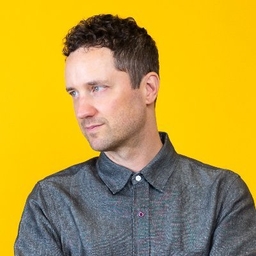
Aaron Scott
Verified
Is this you? As a journalist, you can create a free Muck Rack account to customize your profile, list your contact preferences, and upload a portfolio of your best work.
Claim your profile
Articles by Aaron Scott
Activation of the endocytosis pathway stratifies subtypes and therapeutic sensitivity in colorectal cancer
Abstract Endocytosis regulates receptor trafficking and signaling, yet its role in colorectal cancer (CRC) remains unclear. We analyzed transcriptomic data from 15,025 CRC tumors to evaluate gene expression in clathrin-mediated endocytosis (CME) and the endosomal sorting complexes required for transport (ESCRT) pathway.
Top 12 Video Editing Tools That are Worth Using for US YouTubers
Think about this, you are a YouTuber, and you have uploaded a video, and in hours your video is going viral with millions of views as well as subscribers. Now, do you want this to happen in reality? It’s not the magic but the sharp video editing tools that turn the raw footage into a perfect form with different effects and colors.
OPB’s ‘Slow TV’ brings you a maritime sunset, Cascade Range hike and more
OPB's Slow TV Astoria Barge Cameron Nielsen / OPB Tired of the same old yule log fire on your TV this holiday season? OPB has something a little different for you. It’s a sunset over the Columbia River in Astoria with giant ships sailing by. In other words, a celestial maritime yule log. It’s the latest in a new experiment we’re trying called “OPB’s Slow TV.” Basically, the idea is our cinematographers take you on leisurely journeys through some of the most beautiful landscapes in the region.
Explore the scenic Pacific Northwest ... slowly ... with ‘OPB’s Slow TV’
Sometimes it seems like the world is moving too fast. So the “Oregon Field Guide” team tried something new: We wanted to see what happens when we take it slow. Really slow.
Rio de Janeiro’s ‘Award-Winning’ Mayor Hollows Out Benchmark Favela Climate Initiatives While Hosting C40
Clique aqui para Português November 5, 2025—Rio de Janeiro Mayor Eduardo Paes, like Brazil’s President Lula, has recently been recognized by TIME magazine as one of 100 Climate Leaders. Currently hosting the C40 World Mayors Summit in Rio, he paints a picture of a city intent on addressing climate risks, all the more in the news as Brazil prepares to host COP30, the 30th UN Climate Conference, in Belém, in the heart of the Brazilian Amazon, next week.
Have a food allergy? Your broken skin barrier might be the cause
Food allergies have risen in the United States over the last few decades. Research suggests that 40 years ago the prevalence of food allergies was less than 1%. But today that number is closer to 6%. But this trend is not present in all countries — and what people are allergic to varies globally. Today, we dive into the complex world of food allergies with Dr. Waheeda Samady. She's the Director of Clinical Research at Northwestern University's Center for Food Allergy and Asthma Research.
Have a food allergy? Your broken skin barrier might be the cause : Short Wave
Have a food allergy? Your broken skin barrier might be the cause Food allergies have risen in the United States over the last few decades. Research suggests that 40 years ago the prevalence of food allergies was less than 1%. But today that number is closer to 6%. But this trend is not present in all countries — and what people are allergic to varies globally. Today, we dive into the complex world of food allergies with Dr. Waheeda Samady.
The war on trans people
This year, Pride Month arrives at an especially dire moment for the LGBTQ+ community. Under the second Trump administration, homophobic vitriol and violence are on the rise. On Elon Musk’s X platform, a “deepfake” video of Donald Trump canceling Pride Month has gone viral. And even as Pride celebrations continue as planned (in many places without as many corporate contributions), the attacks against LGBTQ+ people, especially transgender people, seem to be on steroids.
The War on Trans People
This year, Pride Month arrives at an especially dire moment for the LGBTQ+ community. Under the second Trump administration, homophobic vitriol and violence are on the rise. On Elon Musk’s X platform, a “deepfake” video of Donald Trump canceling Pride Month has gone viral. And even as Pride celebrations continue as planned (in many places without as many corporate contributions), the attacks against LGBTQ+ people, especially transgender people, seem to be on steroids.
Tech Solutions for External Hard Drive Data Recovery!
Lost important files from your external hard drive? Don’t panic just yet—there’s a good chance you can get them back! Whether it’s an accidental deletion, a sudden crash, or a corrupted drive, data recovery is possible if you act fast and follow the right steps. First things first—stop using the drive immediately! The more you write new data to it, the harder it becomes to recover lost files. Next, check if the issue is simple—try plugging the drive into a different port or computer.
Top 10 Competitive Intelligence Tools for Business Growth
“Keep your friends close and your enemies closer”. This proverb holds as much value in personal life as incorporates. Competitive intelligence (CI) tools are here to rescue you. Staying ahead of the competition is crucial for businesses to thrive. As new ventures enter the market and startups innovate to stay afloat, knowing what competitors are up to is important. Competitive intelligence tools enable businesses to do just that.
Management of Locally Advanced Rectal Cancer: ASCO Guideline
This systematic review-based guideline product was developed by a multidisciplinary Expert Panel, which included a patient representative and an ASCO guidelines staff member with health research methodology expertise (Appendix Table A1 , online only).
Groundbreaking study by Dr. Aaron Scott highlights how Autistic Unemployment can help overcome Medical Staff Shortage
Groundbreaking study by Dr. Aaron Scott highlights how Autistic Unemployment can help overcome Medical Staff Shortage GLEN BURNIE, MARYLAND, UNITED STATES, July 8, 2024 /EINPresswire.com/ -- In his fantastic study, A Qualitative Study of Health Care Hiring Manager Perception of Hiring Adults with Autism, Dr. Aaron Scott shows how the increasing shortages of trained medical staff can be addressed by hiring Autistic individuals while also clearing the stigma around hiring ASD individuals.
Countdown To Change: UK's New Securitisation Regime Effective From 1 November 2024
The HM Treasury on April 22, 2024, published the draft Securitisation (Amendment) Regulations 2024 (the "Draft SI Amendment") as part of the continued process of replacing the retained EU Securitisation Regulation (which was onshored in the UK following the end of the Brexit transition period) with a regulatory regime tailored to the UK. Once in force, the Draft SI Amendment will amend the UK Securitisation Regulations (S.I. 2024/102) that were made on January 29, 2024 (the "SI").
Countdown to Change: UK's New Securitisation Regime Effective from 1 November 2024
|
The HM Treasury on April 22, 2024, published the draft Securitisation (Amendment) Regulations 2024 (the “Draft SI Amendment”) as part of the continued process of replacing the retained EU Securitisation Regulation (which was onshored in the UK following the end of the Brexit transition period) with a regulatory regime tailored to the UK. Once in force, the Draft SI Amendment will amend the UK Securitisation Regulations (S.I. 2024/102) that were made on January 29, 2024 (the “SI”).
By John McGrath Verified, Richard Pugh, Aaron Scott Verified, Tom Caster, Rory C. O’Connor, Glenn Weston
|
Lexology
Verified
Population scale proteomics enables adaptive digital twin modelling in sepsis
The authors have declared no competing interest. L.M. is funded by the Swedish Research Council (grant number VR-2020-02419), the Wallenberg foundation (grant number 2016.0023) and Alfred Österlunds Foundation. J.M. is a Wallenberg academy fellow (KAW 2017.0271) and is also funded by the Swedish Research Council (Vetenskapsrådet, VR) (2019-01646 and 2018-05795), the Wallenberg foundation (KAW2016.0023, KAW2019.0353 and KAW2020.0299), and Alfred Österlunds Foundation.
Cancer is no longer a death sentence, but treatments still have a long way to go : Short Wave Original
Getty Images/Getty Images Getty Images/Getty Images One of the first recorded mentions of cancer appears in an ancient Egyptian text from around 3000 B.C. And although we now know much more about how cancer begins–as a series of mutations in someone's DNA–it's a disease people are still struggling to cure today. Centuries of treatments Over the centuries, people have using a wide range of things to try to cure cancer — everything from pastes, salts, teas to cauterization and more.
CFO scholarships now open for application
Students can now apply for $1.7 million in scholarships administered by the Community Foundation of the Ozarks. By completing the CFO’s new universal application, students can more efficiently apply for scholarship opportunities. Students can begin the process at cfozarks.org/applyforscholarships. The universal application is a comprehensive online form with a series of questions unique to each student.
It's not just you: Christmas lights look different now, and can give you headaches : Short Wave
Buses pass under the 2007 'Enchanted' Oxford Street LED Light Display in London, England. Chris Jackson/Getty Images hide caption toggle caption Chris Jackson/Getty Images Buses pass under the 2007 'Enchanted' Oxford Street LED Light Display in London, England. Chris Jackson/Getty Images For many, strolling around neighborhoods to look at the holiday light displays is an annual tradition that brings twinkling cheer. But with the rise of LED lights in the last decade, some of the joy is lost.
Artificial intelligence is not a silver bullet : Short Wave
EMILY KWONG, BYLINE: You're listening to SHORT WAVE from NPR. (SOUNDBITE OF MUSIC) AARON SCOTT, HOST: In 2017, a medical company called Epic Systems rolled out a cutting-edge program to hospitals. It claimed to use artificial intelligence algorithms to predict which patients are at highest risk of sepsis, which is a deadly condition where the body responds improperly to an infection. SAYASH KAPOOR: Sepsis kills a lot of people.
How glaciers move — and affect sea level rise : Short Wave
How glaciers move — and affect sea level rise Download Embed <iframe src="https://www.npr.org/player/embed/1198908839/1218047530" width="100%" height="290" frameborder="0" scrolling="no" title="NPR embedded audio player"> Researchers camp out on the Greenland ice sheet beneath the aurora borealis, or the northern lights. Jessica Mejía hide caption toggle caption Jessica Mejía Researchers camp out on the Greenland ice sheet beneath the aurora borealis, or the northern lights.
This World Soil Day, take a look at the surprising science of soil : Short Wave Original
This World Soil Day, take a look at the surprising science of soil Download Embed <iframe src="https://www.npr.org/player/embed/1198908762/1216657168" width="100%" height="290" frameborder="0" scrolling="no" title="NPR embedded audio player"> TravelCouples/Getty Images TravelCouples/Getty Images It's easy to overlook the soil beneath our feet, or to think of it as just dirt to be cleaned up.
These penguins take 10,000 little naps a day — seconds at a time
Sleep. It's an essential biological function that has long intrigued scientists. Similar to the book Everyone Poops, most animals sleep. Scientists have studied everything from mice to fruit flies in the lab to get a better understanding of what happens when animals sleep — and why so many do it. However, gathering data on how animals sleep in their natural habitat has always been tricky and hard to do. But scientists did just that with wild chinstrap penguins in Antarctica.
These penguins take 10,000 little naps a day — seconds at a time : Short Wave
Chinstrap penguins (Pygoscelis Antarctica) are pictured in Orne Harbour in the western Antarctic peninsula. Waddling over the rocks, legions of penguins hurl themselves into the icy waters of Antarctica, foraging to feed their young. Eitan Abramovich/AFP via Getty Images hide caption toggle caption Eitan Abramovich/AFP via Getty Images Chinstrap penguins (Pygoscelis Antarctica) are pictured in Orne Harbour in the western Antarctic peninsula.
This week in science: Cellular 'robots,' sleeping penguins and a rediscovered echidna Original
This week in science: Cellular 'robots,' sleeping penguins and a rediscovered echidna This week in science: Cellular 'robots,' sleeping penguins and a rediscovered echidna Audio will be available later today. NPR's Mary Louise Kelly talks with Regina Barber and Aaron Scott of Short Wave about building cellular 'robots,' the bizarre sleeping habits of chinstrap penguins, and a lost echidna found again.
This week in science: Cellular 'robots,' sleeping penguins and a rediscovered echidna
Strictly Necessary Cookie should be enabled at all times so that we can save your preferences for cookie settings. If you disable this cookie, we will not be able to save your preferences. This means that every time you visit this website you will need to enable or disable cookies again.
This week in science: Cellular 'robots,' sleeping penguins and a rediscovered echidna
This week in science: Cellular 'robots,' sleeping penguins and a rediscovered echidna
What fossilized poop can teach us about dinosaurs : Short Wave
Karen Chin in the University of Colorado Museum of Natural History, where she is the curator of paleontology. She is also a professor of geological sciences at the University of Colorado, Boulder and a leading expert on fossilized dinosaur feces. Casey A. Cass/University of Colo hide caption toggle caption Casey A. Cass/University of Colo Karen Chin in the University of Colorado Museum of Natural History, where she is the curator of paleontology.
3 major ways climate change affects life in the U.S. : Short Wave Original
|
3 major ways climate change affects life in the U.S. Download Embed <iframe src="https://www.npr.org/player/embed/1198908641/1213938399" width="100%" height="290" frameborder="0" scrolling="no" title="NPR embedded audio player"> Tourists walk around the base of the Washington Monument as smoke from wildfires in Canada casts a haze of the U.S. Capitol on the National Mall in June of this year. Air pollution alerts were issued across the United States due to the fires.
By Rebecca Hersher Verified, Alejandra Borunda Verified, Aaron Scott Verified, Berly McCoy, Rebecca Ramirez Verified
|
NPR
Verified
Cutting a teaspoon of salt is comparable to taking blood pressure medication : Short Wave
|
Cutting a teaspoon of salt is comparable to taking blood pressure medication Download Embed <iframe src="https://www.npr.org/player/embed/1198908628/1213644133" width="100%" height="290" frameborder="0" scrolling="no" title="NPR embedded audio player"> Sabina Iliescu/500px/Getty Images Sabina Iliescu/500px/Getty Images How much salt is too much salt? Unfortunately, it's most likely the amount you're consuming.
By Regina G. Barber, Aaron Scott Verified, Viet Le Verified, Rachel Carlson Verified, Kai McNamee Verified, Ari Shapiro Verified
|
NPR
Verified
NPR's Short Wave gives us the latest on black holes, sea turtles, and blood pressure Original
NPR's Short Wave gives us the latest on black holes, sea turtles, and blood pressure NPR's Ari Shapiro speaks with Regina Barber and Aaron Scott of Short Wave about a black hole nearly as old as the universe, how pollution plagues sea turtles, and a simple fix to cut blood pressure.
NPR's Short Wave gives us the latest on black holes, sea turtles, and blood pressure
Strictly Necessary Cookie should be enabled at all times so that we can save your preferences for cookie settings. If you disable this cookie, we will not be able to save your preferences. This means that every time you visit this website you will need to enable or disable cookies again.
To figure out the future climate, scientists are researching how trees form clouds : Short Wave
Research has found that trees contribute to the formation of clouds, which reflect heat from the sun and cool the atmosphere in the immediate area. Dan Kitwood/Getty Images hide caption toggle caption Dan Kitwood/Getty Images Research has found that trees contribute to the formation of clouds, which reflect heat from the sun and cool the atmosphere in the immediate area. Dan Kitwood/Getty Images Ever looked up at the clouds and wondered where they came from?
Pulling an all-nighter is a temporary antidepressant : Short Wave
|
EMILY KWONG, BYLINE: You're listening to SHORT WAVE... (SOUNDBITE OF MUSIC) KWONG: ...From NPR. REGINA BARBER, HOST: Hey, SHORT WAVErs. Regina Barber here. AARON SCOTT, HOST: With Aaron Scott. ARI SHAPIRO, BYLINE: And Ari Shapiro. SCOTT: Ari is taking a break from All Things Considered to chat with us for another SHORT WAVE roundup of science in the headlines. SHAPIRO: It's my favorite kind of break. I hear we are talking about a record low for sea ice in Antarctica today?
By Regina G. Barber, Aaron Scott Verified, Ari Shapiro Verified, Rachel Carlson Verified, Gus Contreras Verified
|
NPR
Verified
This week in science: Melting arctic ice, sea star anatomy and sleep deprived mice Original
ARI SHAPIRO, HOST: Time now for our science news roundup from our friends at NPR's Short Wave podcast. Aaron Scott and Regina Barber, welcome back. REGINA BARBER, BYLINE: Hi, Ari. AARON SCOTT, BYLINE: Thank you, Ari. SHAPIRO: You have, as usual, brought us three science stories that grabbed your attention this week. What have you got for us? BARBER: How about the weird anatomy of starfish? SHAPIRO: Cool. SCOTT: And staying up all night can ease depression - in mice. SHAPIRO: Fun.
This week in science: Melting arctic ice, sea star anatomy and sleep deprived mice
Strictly Necessary Cookie should be enabled at all times so that we can save your preferences for cookie settings. If you disable this cookie, we will not be able to save your preferences. This means that every time you visit this website you will need to enable or disable cookies again.
This week in science: Melting arctic ice, sea star anatomy and sleep deprived mice
This week in science: Melting arctic ice, sea star anatomy and sleep deprived mice
Thanks, Neanderthals: How our ancient relatives could help find new antibiotics : Short Wave
Thanks, Neanderthals: How our ancient relatives could help find new antibiotics Download Embed <iframe src="https://www.npr.org/player/embed/1198908442/1209093706" width="100%" height="290" frameborder="0" scrolling="no" title="NPR embedded audio player"> With an antimicrobial resistance epidemic looming, some researchers are looking to solutions in molecular de-extinction.
How age, stress and genetics turn hair gray
Why does hair turn gray? Is it stress? Age? Genetics? As a kid, host Aaron Scott would dress up for Halloween as an older version of himself — complete with a cane, a set of polyester britches and painted gray hair. These days, that costume is becoming a bit more of a day-to-day reality. At least, the gray hair is. So today, in honor of all you out there flirting with gray hair, whether for a witch costume or just that exciting and terrifying thing called aging, we're digging into why hair turns gray.
How age, stress and genetics turn hair gray : Short Wave
How age, stress and genetics turn hair gray Download Embed <iframe src="https://www.npr.org/player/embed/1198908342/1207461034" width="100%" height="290" frameborder="0" scrolling="no" title="NPR embedded audio player"> Why a person's hair turns gray has to do with melanocytes, or pigment-producing cells that are concentrated around the hair follicle that give it color. One stops producing pigment, that strand of hair turns gray.
The Orionid meteor shower peaks this weekend. Enhance your view with these tips : Short Wave
EMILY KWONG, BYLINE: You're listening to SHORT WAVE from NPR. AARON SCOTT, HOST: Hey there, SHORT WAVErs - Aaron Scott here. REGINA BARBER, HOST: With me, Regina Barber. SCOTT: And also one of our most beloved colleagues, Ailsa Chang. AILSA CHANG, BYLINE: Aww (ph). SCOTT: So, Ailsa, we brought you on to share some science joy we're seeing in the headlines and the journals that we are really into. CHANG: Always happy to pretend I actually know something about science. BARBER: Oh, I'm sure you do.
This week in science: How albatrosses navigate, fossilized ocean worms, meteor shower
NPR's Ailsa Chang talks with Regina Barber and Aaron Scott of Short Wave about albatrosses' impressive navigational abilities, fossilized ocean worms and an upcoming meteor shower.
This week in science: How albatrosses navigate, fossilized ocean worms, meteor shower
0:00 0:00 Stand up for civility This news story is funded in large part by Connecticut Public’s Members — listeners, viewers, and readers like you who value fact-based journalism and trustworthy information. We hope their support inspires you to donate so that we can continue telling stories that inform, educate, and inspire you and your neighbors. As a community-supported public media service, Connecticut Public has relied on donor support for more than 50 years.
Show More
loading
Actions
Get in touch with Aaron
Contact Aaron, search articles and posts on X, monitor coverage, and track replies from one place.
Learn more about Muck Rack