
In 2018, Lidl walked away from a seven-year ERP project that had cost nearly $600 million. The software wasn't junk and the vendor wasn't incompetent. One of the biggest problems was a decision to make the new system work like the old processes. That decision happens on ERP projects every day. It usually looks like "just a small tweak" to handle a process someone believes is unique. Each tweak quietly sets up one of three problems: A money pit.
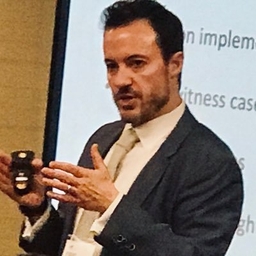
Independent ERP, digital transformation, and AI advisor. I sell no software. CEO of @ThirdStageERP. Author of Welcome to the Machine. 1M+ on YouTube.
Is this you? As a journalist, you can create a free Muck Rack account to customize your profile, list your contact preferences, and upload a portfolio of your best work.
Claim your profile
Articles by Eric Kimberling
Your ERP Vendor Is Missing The Point
When you hire a software vendor and the ERP consultants who support them, the assumption is comforting and almost automatic: these are the experts, they do this every day for a living, and surely they will handle whatever it takes to make the project successful. It is an understandable instinct, but it is also one of the most expensive misconceptions in enterprise technology.
Clean Core Is a Hoax: Why Forcing ERP Purity Creates More Risk Than Value
There’s a lot of talk right now about something called clean core in digital transformations and ERP upgrades. It’s being marketed as the long-overdue answer to decades of failed implementations, runaway customization, and bloated technical debt. According to the narrative, if organizations would just stop customizing ERP systems and instead embrace a pristine, untouched core, everything would magically become easier, cheaper, faster, and more successful.
The Dark Side of Big Four Consulting Firms (What They Don’t Want You to Know)
Many of the world’s largest and most recognizable organizations instinctively turn to the Big Four consulting firms when embarking on digital transformation initiatives. Whether the project involves ERP modernization, cloud migration, AI enablement, or enterprise-wide operating model change, the Big Four are often viewed as the safest and most credible option. Their brand recognition, global reach, and long track record create a sense of reassurance for executives, boards, and investors alike.
Inside the Dark Underworld of Consulting: What 25 Years in the Industry Taught Me
Why I’m Pulling Back the Curtain I have spent most of my professional life in the technology and consulting space, and despite its flaws, I still genuinely enjoy this industry. Consulting has the potential to be a powerful catalyst for positive change. At its best, it helps organizations gain clarity, align strategy with execution, modernize operations, and ultimately create long-term value.
Why 2026 Might Not Be the Year to Start Your Digital Transformation
For years, the enterprise technology industry has been telling organizations that now is the moment to begin a digital transformation. Vendors push the narrative that if you aren’t moving to the cloud, adopting AI, reducing technical debt, or replacing “outdated” systems immediately, you are already behind your competitors. The pressure is intense, and the message is nearly always the same: transform now or suffer the consequences. But what if that message is incomplete?
Long Live ECC: Why Many SAP Customers Should Think Twice Before Rushing to S/4HANA
If you’re an existing SAP customer, chances are you’ve felt the growing pressure from SAP to move from ECC to S/4HANA. The messaging from Walldorf has been clear: the clock is ticking, maintenance deadlines are coming, and the future is S/4HANA. But the reality is that the move from ECC to S/4HANA is not always necessary, nor is it always in your organization’s best interest right now.
The Rise of Boomi and the Shift Toward Composable ERP
For years, businesses have wrestled with a fundamental question in digital transformation: should we centralize everything into one massive ERP system, or build a flexible ecosystem of best-of-breed applications that talk to one another? Twenty or thirty years ago, the answer was simple—one monolithic ERP that served as the “single source of truth.” But times have changed. Today, agility and flexibility often matter more than a single data model.
The Top 10 Enterprise Technologies for Digital Transformation in 2026
LinkedIn respects your privacy LinkedIn and 3rd parties use essential and non-essential cookies to provide, secure, analyze and improve our Services, and to show you relevant ads (including professional and job ads) on and off LinkedIn. Learn more in our Cookie Policy. Select Accept to consent or Reject to decline non-essential cookies for this use. You can update your choices at any time in your settings.
Is SAP the Next Blockbuster or BlackBerry? A Cautionary Tale About the Future of ERP Giants
For decades, SAP has been one of the most powerful forces in enterprise software. The company’s systems power some of the world’s largest organizations—from manufacturing and retail to finance and government. But history has shown us that even the biggest, most dominant companies can fall when they fail to adapt. Think about Blockbuster Video. Think about the BlackBerry smartphone.
Why You Should Stop Thinking About AI (and Start Focusing on People Instead)
Artificial intelligence has taken over nearly every business conversation. Executives, software vendors, analysts, and consultants are all racing to define what AI means for their industries and how it will reshape the world of work. But amid all the noise, something important is being forgotten: AI is not about technology—it’s about people. As I tell clients every day at Third Stage Consulting Group , the success or failure of any AI initiative doesn’t hinge on algorithms or data models.
Lessons from Navigating the Jungle of Digital Transformation
When you’re standing on a stage at Stratosphere and competing with Taylor Swift’s engagement news for attention, you know you’re in for a challenge. But moments like that remind me that technology and business transformation are never the center of the world—they’re part of a much bigger, messier, and often unpredictable picture. That’s exactly why I think of digital transformation as a jungle. It’s chaotic, risky, sometimes exciting, and full of hidden dangers.
The Death of Big ERP and the Rise of What’s Next
Big ERP systems are slowly becoming obsolete—much like Blockbuster Video or the Blackberry. Why is that happening, and what does it mean for the future of enterprise software? That’s the question I want to explore today. A big part of what we do at Third Stage Consulting Group is helping organizations select and implement enterprise technologies.
Cook County’s $250 Million Digital Transformation Failures: Lessons for Governments and Businesses Alike
When one of the largest counties in the United States decides to roll out new technology, you might assume they have the time, money, and resources to ensure success. Unfortunately, as the case of Cook County, Illinois shows us, even large public institutions with deep pockets can stumble in spectacular ways. Cook County, home to over 5 million residents including the city of Chicago, has endured three major technology failures in less than a decade.
Why RFPs Suck (And How to Fix Them)
When it comes to digital transformations, there are few tools that inspire as much frustration as the Request for Proposal, or RFP. In theory, RFPs are meant to help organizations make better technology and consulting decisions. They force you to think about your requirements, document them, and compare vendors on a level playing field. But in practice, RFPs often create more problems than they solve.
Five Lessons From 25 Years in Technology Consulting
I’ve been in the technology consulting space for 25 years now, and over that time I’ve had the chance to learn from clients, colleagues, and the industry itself. When I look back, there are five key lessons I wish I would have known when I first started my career. They would have saved me some frustration, helped me avoid mistakes, and given me a clearer sense of how to add value to clients. What I want to do here is walk through those five lessons in detail.
AI Is Slowly Killing Off the Technology Consulting Industry
As someone who has spent their entire career in consulting, I have to acknowledge a reality that is hard to ignore: artificial intelligence is slowly killing off the consulting industry as we know it. That might sound dramatic, but let me explain. The work that consultants have traditionally done is often repetitive, highly manual, and sometimes inefficient. These are precisely the kinds of activities AI excels at automating.
The 10 Biggest Government IT Failures of All Time (And What They Teach Us)
Government entities have a reputation—fair or not—for struggling with large-scale IT and ERP initiatives. Whether it’s state, federal, county, or city-level projects, there’s a long track record of missteps, budget overruns, and outright failures. The scale of these projects is enormous, and the stakes are even higher. When things go wrong, the cost isn’t just financial—it affects employees, contractors, and in many cases, everyday citizens who rely on these systems for essential services.
Five Whistleblower Warnings About SAP S/4HANA Implementations
Over the last several years, I’ve had a front-row seat to some of the most complex and challenging SAP S/4HANA implementations in the world.
SAP Sapphire 2025: Breaking Down the Announcements, AI Buzz, and What It Means for Your Business
SAP’s annual Sapphire conference is always a bellwether event in the enterprise technology space—and 2025 was no different. With splashy presentations, keynote speakers, and a slew of new product announcements, SAP used the event to reinforce its future vision and highlight recent investments, particularly in artificial intelligence (AI), cloud infrastructure, and platform partnerships.
Is AI in ERP Real? Breaking Down the Hype, Reality, and Risks in 2025
It seems like every ERP vendor and software sales rep is shouting about AI capabilities. Buzzwords like “embedded AI,” “generative insights,” and “predictive automation” are everywhere. But amidst the flashy demos and big promises, clients ask us a much simpler question: Is AI in ERP real? Is any of this actually materializing in the real world? This question is more than valid—it’s necessary.
Root Causes of Digital Transformation Failure: It’s Not Just the Tech
When organizations struggle during digital transformations, they often point fingers at the most visible culprits: a buggy system, an unhelpful vendor, or rising costs. But the reality is more complex. These common complaints are often symptoms, not root causes. To understand why digital transformations truly fail—and how to fix them—we have to dig deeper. Table of Contents Toggle Third Stage Consulting has helped countless companies recover from failed or floundering transformation projects.
What’s the ROI of a Dancing Panda? Why Every Digital Transformation Needs a Clear Strategy
Spoiler alert: It’s not about the panda. It’s about purpose. We live in an era where nearly anything is possible with technology. AI. Automation. Real-time data lakes. Predictive analytics. Virtual assistants. You name it—someone’s already building it. So the question is no longer what you can do in a digital transformation. It’s what you should do. It’s what you should do.
Where Are the Women in Tech? A Candid Look at Challenges, Progress, and What Comes Next
By Third Stage Consulting According to recent statistics, only 35% of the tech workforce is made up of women. That number speaks volumes — and not in a good way. Despite decades of progress across industries, technology remains one of the most male-dominated spaces in the professional world.
The Unique ERP Needs of Small and Mid-Sized Manufacturers and Distributors
By Eric Kimberling, CEO of Third Stage Consulting When most people think about ERP and digital transformation, they picture large enterprises with big budgets and full-time project teams. But the reality is, small and mid-sized manufacturing and distribution companies face just as much complexity — if not more — when it comes to upgrading their core systems.
Top 7 ERP Software Selection Mistakes (And How to Avoid Them
By Eric Kimberling, CEO of Third Stage Consulting When it comes to ERP software, companies often think the biggest risk is choosing the wrong system. But in reality? The bigger danger is picking the right software — and then failing in how you select, implement, and integrate it. After working with hundreds of organizations across industries, I’ve seen the same ERP selection mistakes repeat themselves time and time again.
Choosing the Right ERP for Small and Mid-Sized Manufacturers: Don’t Overlook the Underdogs
A Strategic Guide to Evaluating Vendors, Aligning Tech with Growth, and Avoiding Common ERP Mistakes Table of Contents Toggle If you’re running a small or mid-sized manufacturing or distribution company, you’re likely feeling the pressure to modernize. Disconnected systems, manual processes, and legacy software may have worked in the past — but they won’t support your growth for the next 3 to 5 years. That’s where Enterprise Resource Planning (ERP) systems come in.
Technology Strategies for Small and Midsize Manufacturers and Distributors
Table of Contents Toggle Small and midsize manufacturing and distribution companies are at a unique inflection point. Many are still relying on aging systems like QuickBooks, Excel spreadsheets, or legacy ERPs that weren’t designed for today’s dynamic supply chains or customer expectations.
Is Your ERP System Ready for AI? Here’s How to Tell
Table of Contents Toggle When organizations ask if their ERP system is “ready for AI,” they’re usually asking the wrong question. AI is system agnostic. It doesn’t matter whether you’re running a modern cloud-based ERP or a 20-year-old on-prem solution. What matters most? Your data. Before exploring AI capabilities, your first focus should be on data readiness. Is your organization consistently capturing clean, accurate, structured data? Are you centralizing that data across departments and systems?
5 Critical Reasons Executive Sponsorship Is Essential for Small Business ERP Success
ERP implementations are never easy—but for small businesses, they can be uniquely challenging. With fewer resources, tighter margins, and more hands-on leadership, small organizations must rely heavily on strong executive sponsorship to ensure digital transformation success. Whether you’re replacing outdated systems or rolling out new technology, the role of leadership—and more specifically, the executive sponsor—is essential.
Top 10 AI-Enabled ERP and Enterprise Technology Platforms in 2025
Artificial Intelligence (AI) is quickly becoming the cornerstone of modern enterprise software. ERP vendors and enterprise tech providers are racing to embed AI into their platforms—not just for automation, but to drive intelligent decision-making, predictive insights, and adaptive business processes. But the AI maturity curve varies wildly. Some vendors are ahead of the curve, using AI to transform how work gets done. Others are merely checking a box.
How the U.S.–China Trade War Is Reshaping Global Supply Chains in 2025 - Third Stage Consulting
Table of Contents Toggle The U.S.–China trade war is intensifying again in 2025, bringing with it sweeping implications for global supply chains. As tariffs return and economic nationalism ramps up, American companies are facing tough decisions about where and how to manufacture their goods. Industries that have long relied on low-cost Asian labor and infrastructure—like consumer electronics, automotive, and semiconductors—are at the center of this shake-up.
Why Current State Mapping Is Critical for Digital Transformation Success
Table of Contents Toggle Current state mapping is the essential first step in any digital transformation. Before you can optimize or automate a process, you need to understand how it works today. Whether you’re planning a large-scale ERP implementation, migrating to new systems, or reimagining your operations, this foundational exercise ensures you have the clarity needed to make informed decisions.
How Small Businesses Can Replace QuickBooks and Use Technology to Scale
Small businesses often hit a wall with outdated technology—especially when systems like QuickBooks can’t keep up with operational complexity or growth ambitions. The good news? Scaling with smarter technology doesn’t have to be overwhelming. This guide walks you through the essential technologies that can help you automate, optimize, and expand your business, along with how to evaluate what’s right for your specific goals.
D365 Integration Challenges and Why Industry Experience Matters
Implementing Microsoft Dynamics 365 (D365) can unlock major benefits for businesses—but it often comes with significant integration challenges, especially when connecting non-Microsoft tools or outdated legacy systems. These issues can slow down deployments, introduce errors, or create long-term technical debt.
How to Deploy a Digital Transformation and ERP Project at (Almost) No Cost
Digital transformation and ERP projects are notorious for costing too much — but they don’t have to. If you’re looking to modernize your business without breaking the bank, it’s time to rethink the traditional approach. At Third Stage Consulting, we help clients worldwide achieve successful digital transformations without overspending. In this blog, we’ll share practical strategies for how your organization can deploy technology and transform operations — often at little to no incremental cost.
How to Prepare for AI: The 4 Critical Steps Most Organizations Are Missing
The excitement around artificial intelligence (AI) is palpable. Businesses everywhere are eager to learn how to prepare for AI and leverage it for competitive advantage. But there’s a hard truth many organizations aren’t ready to face: most are not prepared for AI. At Third Stage Consulting, we work with companies worldwide on their digital transformation and AI initiatives.
Why This $25 Billion Steel Company Succeeded in ERP Implementation When So Many Fail
When most headlines shout about failed ERP implementations and digital transformations, the success stories often go untold. But understanding what makes a transformation succeed is just as critical—if not more—than dissecting what went wrong. In this blog, we highlight a case study of a $25 billion multinational steel company that defied the odds and executed one of the most successful ERP implementations we’ve seen at Third Stage Consulting.
Digital Transformation Is Dying—And That Might Be a Good Thing - Third Stage Consulting
Despite all the hype, massive budgets, and endless headlines in 2025, digital transformation is, quite frankly, dying. And for once, that’s not a bad thing. It sounds counterintuitive, doesn’t it? Especially when global spending on digital transformation is expected to balloon past $4 trillion in the next few years. Yet, beneath the buzzwords, the real story is unfolding quietly—one where organizations are starting to rethink what transformation actually means. Spoiler alert: it’s not about the tech.
How AI is Redefining Job Requirements and Skills: 4 Skills You Need For the Future
The integration of artificial intelligence (AI) into the workplace is transforming job requirements and redefining essential skills for the future. As AI continues to advance, its impact on the labor market will be profound, necessitating a shift in the skill sets required for various roles. Here, we explore the implications of AI on employment and the competencies that will become increasingly crucial.
Why Do Organizations Pursue Digital Transformations? Here Are the Top Reasons.
In today's dynamic business environment, digital transformation has shifted from a choice to a necessity for organizations striving to maintain competitiveness and relevance. But what exactly prompts these transformative endeavors? What are the primary motivations behind organizations deciding to embark on this journey of change? As an independent consulting firm specializing in digital transformations, we've had the privilege of working closely with numerous organizations across the globe.
SAP's Focus on Innovation and Artificial Intelligence
SAP stands as a dominant player in the ERP software space, navigating through waves of innovation, transformation, and the myriad challenges that accompany adapting to the dynamic technological landscape. This journey transcends simple software upgrades or new feature integrations; it involves a profound exploration of the interplay between technology and business processes, examining how this dynamic relationship shapes organizational growth and transformation.
Who Is To Blame for Digital Transformation and ERP Implementation Failures?
Author: Eric Kimberling I'm Eric Kimberling, the CEO of Third Stage Consulting. Today, we're delving into who is to blame for digital transformation and ERP Implementation failures. What are the real sources of blame in an unsuccessful or failed digital transformation? Whose fault is it? It can be for a myriad of reasons, but today I want to unpack and demystify some of the common factors and themes that can contribute to this unfortunate situation your organization could find itself in.
Turbo Energy "expecting to grow very fast" after Nasdaq listing
About Tom Warner Thomas is a Broadcast Presenter who joined Proactive in 2022. He has experience from across several sectors of the economy, garnered from various reporting and communication roles. His passion for broadcasting is an extension of his love of speaking to people and learning new things. As comfortable behind the camera as he is in front of it, Thomas is a skilled video producer as well as presenter.
École Ducasse Abu Dhabi Studio, in partnership with Erth Hospitality, to open this December | FE News
The Department of Culture and Tourism – Abu Dhabi (DCT Abu Dhabi) has announced a partnership with Erth Hospitality to launch École Ducasse Abu Dhabi Studio, the region’s first institute by École Ducasse, this coming December. Under the influence of culinary icon Chef Alain Ducasse, who has an impressive 20 Michelin stars to his name, the studio will be located in the heart of the city at Abu Dhabi’s Cultural Foundation and is set to enrich the culinary education landscape in the UAE.
Glasgow Clyde College is in the fast lane for the future with EV technology in automotive courses | FE News
As more EVs take to the roads, a new electric vehicle (EV) charging point has been added to GCC’s automotive engineering workshops. The introduction of the EV charging point aims to prepare students for a greener future in the world of automotive engineering Initiative is part of GCC’s commitment to sustainability and striving for a more eco-friendly future.
ACT has been ‘improving lives through learning’ for 35 years this month. | FE News
Wales’ largest training provider launched in September 1988 on The Parade in Cardiff, delivering training to 200 unemployed adults in its first year. Since then it has gone on to help over 75,000 learners achieve their career goals, working with more than 14,000 employers across Wales.
The Best Part-Time Jobs to Have at University | FE News
55% of university students in the UK have a paid part-time job, working 13.5 hours per week on average. As monthly bills and weekly food shops become increasingly pricey, getting a job is necessary for many students to keep up with all the expenses. However, at times, it can be a bit of a challenge to balance shifts whilst making it to those all-important lectures and seminars.
Record numbers of threatened academics rescued from Ukraine and Russia in charity’s 90th year | FE News
UK-based charity reports ‘more appeals for help than at any time since the 1930s’ as it saves hundreds of academics from persecution worldwide Today, Cara (the Council for At-Risk Academics), a UK-based charity founded in 1933 to rescue academics at risk from persecution, violence, and conflict reports that record numbers of Ukrainian and Russian academics have been rescued in the past 18 months since the launch of the war.
NG BAILEY WELCOMES LATEST APPRENTICES COHORT | FE News
NG Bailey, the UK’s largest independent engineering and services business, has welcomed 53 new apprentices as the group’s leading people development programme continues to go from strength to strength. The apprentices embarking upon their career journeys with NG Bailey will be joining teams across the UK in a range of roles. These include two new apprenticeship programmes in the IT Services business. The successful apprentices were selected from 2,300 high quality applications.
Show More
loading
Actions
Is this you?
As a journalist, you can create a free Muck Rack account to customize your profile, list your contact preferences, and upload a portfolio of your best work.Get in touch with Eric
Contact Eric, search articles and posts on X, monitor coverage, and track replies from one place.
Learn more about Muck Rack