
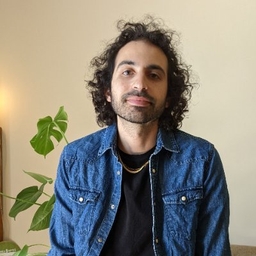
Max G. Levy
Verified
Los Angeles
As seen in:
Sequencer,
Line Today (Hong Kong),
MSN Brasil,
Estadão,
The Verge,
WIRED,
WIRED en Español,
Ars Technica,
Vox,
American Chemical Society,
Flipboard
and
Covers:
Science, health, energy, nanotechnology, policy
freelance science journalist. cofounder @Sequencermag
words in @WIRED, @Quantamagazine, @TED_ED, etc. phd @CUBoulder. he/him
Articles by Max G. Levy
What the FAQ???
This post is for subscribers only Sign up now to read the post and get access to the full library of posts for subscribers only. Sign up now Already have an account? Sign in Next for you 3 minute read max September 28, 2026 We're launching a zine! Membership Unlock full access to Sequencer and see the entire library of paid-members only posts
Get Our Zine in the Mail
September 28, 2026 1 minute read Photo by İsmail Efe Top / Unsplash Do you have a paid subscription to Sequencer? Great! We love you. As part of your membership, and at no additional cost, you can receive a physical zine of exclusive content prepared by our whole team. We aim to get new ones out every month. This post is for paying subscribers only Unlock access and see the entire library of paid-members only posts. Sign up now
Our biggest, most exciting announcement to date
max September 28, 2026 3 minute read Our biggest, most exciting announcement to date We're launching a zine! This post is for subscribers only Sign up now to read the post and get access to the full library of posts for subscribers only. Sign up now Already have an account? Sign in Next for you 11 minute read Membership Unlock full access to Sequencer and see the entire library of paid-members only posts
On beauty, dread, and chasing tornadoes
September 11, 2026 11 minute read Photo by NOAA / Unsplash This post is for subscribers only Sign up now to read the post and get access to the full library of posts for subscribers only. Sign up now Already have an account? Sign in Older post Next for you 7 minute read August 5, 2026 Do you care? My view as I wrote this newsletter See our plans
Chasing beauty and dread in the mysteries of American tornadoes
The first time Jana Houser chased a tornado was in 2004, when she was a college student finishing her junior year at Penn State. Houser went out with a team hoping to catch the moment the tornado appeared with a mobile radar. She has been using the tech ever since to better understand how tornadoes form. Radars send out microwave signals and detect when those waves reflect off objects, and how fast they are moving.
Texas A&M's RoboBall: A Giant Inflatable Robot for Lunar Crater Exploration
Rishi Jangale and his team at Texas A&M University have developed RoboBall, a 1.8-meter-wide inflatable robot designed for lunar exploration. This innovative vehicle aims to navigate challenging terrains like the Shackleton Crater, which is 21 km wide and 4 km deep, to collect geological samples and investigate frozen water deposits. The significance of RoboBall lies in its potential to access areas of the moon that are too dangerous for astronauts.
Do you care?
max August 5, 2026 7 minute read Do you care? My view as I wrote this newsletter This post is for subscribers only Sign up now to read the post and get access to the full library of posts for subscribers only. Sign up now Already have an account? Sign in Next for you 10 minute read max July 22, 2026 Max's neighbors Membership Unlock full access to Sequencer and see the entire library of paid-members only posts
Real snakes, fictional whales, and Greek myths
max July 22, 2026 10 minute read Real snakes, fictional whales, and Greek myths Max's neighbors This post is for subscribers only Sign up now to read the post and get access to the full library of posts for subscribers only. Sign up now Already have an account? Sign in Next for you 11 minute read kim June 1, 2026 Illustration of the American kestrel (male) by yours truly. Membership Unlock full access to Sequencer and see the entire library of paid-members only posts
Diversity is a technical solution to the problems facing AI in science
Adji Bousso Dieng fights an issue baked into the foundation of modern AI, called mode collapse. Mode collapse occurs when an algorithm gets stuck in the ordinary. Generative models, like the large language models behind popular chatbots, are designed to make predictions based on their training data. We often want the most reasonable prediction, and the quick pattern recognition skills of a well-trained algorithm comes in handy. But not always.
Psychedelics, mind control, radiation-eating: The secret superpowers of fungi
Max Levy | TED-Ed • June 2026 The diverse fungal kingdom, which includes everything from baker’s yeast to edible mushrooms to foot infections, has long defied assumptions. Scientists estimate that somewhere between 2 and 12 million species of fungi remain undiscovered— either because they’re microscopic, live hidden within other species, or for other unknown reasons. Max G. Levy digs into the vast and wild world of fungi.
Go Big or Stay Home
In spring 2020, as the COVID pandemic spread across the United States, a new technological system focused its watchful gaze on humankind’s most elemental output —our poop. Just outside of Tempe, Arizona, wastewater operators and researchers pulled samples from the gutter of a small town called Guadalupe, scanning for fragments of SARS-CoV-2 genomic material.
Finally! Scientists Can Buy Small Vials of Human Sh*t
max May 22, 2026 8 minute read Finally! Scientists Can Buy Small Vials of Human Sh*t NIST This post is for subscribers only Sign up now to read the post and get access to the full library of posts for subscribers only. Sign up now Already have an account? Sign in Next for you 9 minute read max April 2, 2026 photo by Michael Wong Membership Unlock full access to Sequencer and see the entire library of paid-members only posts
Why is a government agency selling small vials of human poop?
Your crap is complicated. Water content aside, up to 50% of the solid weight can come from a tangled mess of microbes — dead or alive.
The Hidden Mathematical Dance Inside Plant Cells
Living on light is a dangerous game. Not only do the sun’s rays carry ultraviolet waves that can snap DNA strands and degrade molecules, but they also vary wildly in intensity. Plants must endure and thrive through soft morning light and blazing summer afternoons, through shade one moment and full sun the next. Their solar calories come in a trickle — or a deluge.
🟢 The fungus among us
This post is for subscribers only Sign up now to read the post and get access to the full library of posts for subscribers only.
Underground highways of Arctic fungi challenge how we think about conservation
This story was produced with generous support from the Pulitzer Center. Until 470 million years ago, a time when our planet was warmer and wetter, plants were confined to oceans. They resembled today’s green algae. They had no roots and wouldn’t evolve any until at least 50 million years later. In order to mine nutrients from the rocky earth, plants instead relied on fungi. Today, in the cold tundra of northern Alaska, plant-fungus partnerships quietly dominate the landscape.
An Arctic Road Trip Brings Vital Underground Networks into View
“Some people just see dirt as dirt. But it’s a living, breathing system,” said Van Nuland, the lead data scientist of the nonprofit Society for the Protection of Underground Networks (SPUN).
Newsletter April 2, 2026: The one about space
max April 2, 2026 9 minute read Newsletter April 2, 2026: The one about space photo by Michael Wong This post is for subscribers only Sign up now to read the post and get access to the full library of posts for subscribers only. Sign up now Already have an account? Sign in Next for you 5 minute read kim March 12, 2026 Horseshoe Bend near Page, Arizona. Credit: Michael L. Wong Membership Unlock full access to Sequencer and see the entire library of paid-members only posts
Newsletter Feb 25, 2026: 🐳 Whale too cool for monogamy + alien life + Olympics
This post is for subscribers only Sign up now to read the post and get access to the full library of posts for subscribers only. Sign up now Already have an account? Sign in Next for you 6 minute read Membership Unlock full access to Sequencer and see the entire library of paid-members only posts
Whale too cool for monogamy. Arctic belugas go poly.
I’ll forever hold a tender home in my heart for stories of lifelong pair bonds in animals. Sequencer readers may remember all the times I’ve melted over the live feeds of Jackie and Shadow, SoCal’s famous bald eagle lovebirds who have been together since ~2018. No shade to the poly Sequins among us. You do you. That’s none of my business. What IS my business though—or, what I’m making my business as of writing—is the swinging sex life of whales.
Banking on unknown futures at the Frozen Zoo
max January 29, 2026 6 minute read Banking on unknown futures at the Frozen Zoo “You must collect things for reasons you don’t yet understand.”
Newsletter Jan 29, 2026: Good ice and bad ice
January 29, 2026 10 minute read "Whooping Crane" A. Warhol et al., Vanishing Animals © Kurt Benirschke and Andy Warhol and Richard L. Schulman 1986 This post is for subscribers only Sign up now to read the post and get access to the full library of posts for subscribers only. Sign up now Already have an account? Sign in Next for you 6 minute read See our plans
Don't eat these
max December 22, 2025 2 minute read Don't eat these A tour of some of the largest, rarest minerals on display that are most definitely not edible. This post is for subscribers only Sign up now to read the post and get access to the full library of posts for subscribers only. Sign up now Already have an account? Sign in Next for you 12 minute read max October 14, 2025 An excerpt from The Ellesmere Wolves, by L. David Mech, Morgan Anderson and H. Dean Cluff.
Newsletter Dec 19, 2025: A brain conference, ‘Find My’ supremacy, and chocolate mousse
December 19, 2025 8 minute read “The elephant is made from a big pear and a small apple skewered together and mounted on two pieces of banana.” Public Domain Review This post is for subscribers only Sign up now to read the post and get access to the full library of posts for subscribers only. Sign up now Already have an account? Sign in Older post Next for you 7 minute read Detail of Rhodomenia sobolifera from Anna Atkins’ Photographs of British Algae, ca. 1843–53 — Source. See our plans
Como corpos reagem a temperaturas extremas
É 25 de junho e estou tremendo de frio na roupa íntima fornecida pelo laboratório em Fort Worth, no Texas. Libby Cowgill, uma antropóloga usando um casaco felpudo, me levou junto com meu catre para uma sala de paredes metálicas ajustada para 4ºC. Um ventilador barulhento me golpeia de cima enquanto suga os últimos vestígios do meu calor corporal através da malha do catre por baixo. Um grande respirador encaixa firme sobre meu nariz e minha boca.
Beautiful sentences, surviving the holidays, porcupines & hyena genitals
December 4, 2025 7 minute read Detail of Rhodomenia sobolifera from Anna Atkins’ Photographs of British Algae, ca. 1843–53 — Source. This post is for subscribers only Sign up now to read the post and get access to the full library of posts for subscribers only. Sign up now Already have an account? Sign in Next for you 6 minute read See our plans
A more electric language for biology
Kevin Tracey, President and CEO of Northwell Health's Feinstein Institutes for Medical Research, is a pioneer of vagus nerve research. CREDIT: Northwell Health, Feinstein Institutes of Medical Research When Kevin Tracey met 11-month-old Janice at New York Hospital, she was recovering from multiple bouts of sepsis after her grandmother accidentally spilled a pot of scalding water on her.
New CRISPR Phase 1 trial hints at a first-of-its-kind heart treatment on horizon
Elevated low-density lipoprotein (LDL) cholesterol and high triglycerides each affect about one in four adults worldwide. But a new CRISPR-Cas9 therapy may reduce the risk of major heart events caused by cholesterol and triglycerides. LDL and triglycerides are risk factors for plaque buildup in heart disease.
New therapies could regenerate the heart after heart failure
New progress presented at an annual conference of the American Heart Association signals renewed hope to repair the heart after injury. Credit: iStock.com/eranicle New progress presented at an annual conference of the American Heart Association signals renewed hope to repair the heart after injury. Register for free to listen to this article When heart failure doesn't kill immediately, it kills slowly. The heart is said to “remodel” after injury but often can’t come back stronger.
La ciencia busca respuestas sobre cómo reacciona nuestro cuerpo ante temperaturas extremas
Es 25 de junio y estoy temblando en mi ropa interior de laboratorio en Fort Worth, Texas (EE UU). Libby Cowgill, una antropóloga enfundada en un gran abrigo, me ha llevado junto con mi camilla a una habitación de paredes metálicas ajustada a 4 °C. Un ventilador ruidoso me golpea desde arriba y extrae los restos de mi calor corporal a través de la malla de la camilla desde abajo. Un respirador grande se ajusta firmemente sobre mi nariz y boca.
The Eerily Familiar Politics of Europe's Wolves
max October 14, 2025 9 minute read The Eerily Familiar Politics of Europe's Wolves Why wolves are such a potent political tool. Author Adam Weymouth on carnivores and scapegoats.
What we learn in the footsteps of wolves
In the summer of 1986, biologist L. David Mech crept over a hill on an island 500 miles from the North Pole and spotted a pack of white Arctic wolves. He’d spent days clambering over rocks and hiking across treeless ridges under 24-hour-daylight searching for a den. Few if any scientists had ever studied wolves at their dens. Mech had devoted nearly three decades to wolves, but rarely eavesdropped from the ground and never at a den.
Finding a Wolf Den in the Arctic
This piece is part of a new Sequencer series about wolves. Read the companion essay for more. Biologist L. David Mech has studied wolves in North America for nearly 70 years. During that span as a university professor and research scientist with the U.S. Fish & Wildlife Service and U.S. Geological Survey, Mech has lived through the descent and rise of the country’s wolf populations.
Newsletter Oct. 14, 2025: Wolves, wolves, wolves, and more
max October 14, 2025 5 minute read Newsletter Oct. 14, 2025: Wolves, wolves, wolves, and more Three new pieces about wolves around the world This post is for subscribers only Sign up now to read the post and get access to the full library of posts for subscribers only. Sign up now Already have an account? Sign in Next for you 5 minute read max September 25, 2025 “To the woman he said, 'I will make your pains in childbearing very severe; with painful labor you will give birth to children.
Tylenol misogyny
max September 25, 2025 5 minute read Tylenol misogyny “To the woman he said, 'I will make your pains in childbearing very severe; with painful labor you will give birth to children. Your desire will be for your husband, and he will rule over you.'” - Genesis 3:16 “To the woman he said, 'I will make your pains in childbearing very severe; with painful labor you will give birth to children.
The covert project to (finally) measure hellish subway heat
max September 9, 2025 7 minute read The covert project to (finally) measure hellish subway heat Meet Jack Klein, the guy stealthily collects data about New York’s hottest days underground. Jack Klein, founder of NewYorkLab. (Max Levy / Sequencer) This post is for subscribers only Sign up now to read the post and get access to the full library of posts for subscribers only. Sign up now Already have an account?
Newsletter August 21, 2025:How do we connect with nature? Fleeting thoughts for a fleeting summer
max August 21, 2025 5 minute read Newsletter August 21, 2025:How do we connect with nature? Fleeting thoughts for a fleeting summer This post is for subscribers only Sign up now to read the post and get access to the full library of posts for subscribers only. Sign up now Already have an account? Sign in Next for you 5 minute read Membership Unlock full access to Sequencer and see the entire library of paid-members only posts
Can saunas make you live longer?
By Max G. Levy Get a daily email featuring the latest talk, plus a quick mix of trending content. By subscribing, you understand and agree that we will store, process and manage your personal information according to our Privacy Policy
Finding climate answers in microscopic iceballs and subsurface explosions
max June 30, 2025 4 minute read Finding climate answers in microscopic iceballs and subsurface explosions The natural forces we know shape our climate future are many—and growing. Photo by Tobias Tullius / Unsplash This post is for subscribers only Sign up now to read the post and get access to the full library of posts for subscribers only. Sign up now Already have an account?
Scientists Are Just Beginning to Understand How Life Makes Clouds, and Their Discoveries May Drastically Improve Climate Science
Plants, plankton and sea spray all release elements that help the atmospheric blankets form On a warm day in January of last year, Martin Heinritzi peered from a window of his research plane, spotting Australia’s Great Barrier Reef. “We were focused on what is directly coming out of the reef,” says Heinritzi, an atmospheric scientist with Goethe University Frankfurt. The bustling marine ecosystem was hard to see, even flying just 1,000 feet above.
What AI can actually do to your critical thinking skills
A couple months ago, while I was thumbing through old magazines at a record shop, I landed on a gem. “Learning To Love the Computer” emblazoned the cover of Nutshell magazine, a now-defunct periodical for college students. This 1981 issue showed a desk littered with books about Shakespeare, some chips, a Coke can, a boxy PC displaying the start of a homework assignment, and a college student grinning widely. I grinned back. Then I bought the issue.
The Innovative Way Surgeons Rehearse
This week I toured a training wing at the Cedars Sinai Medical Center in Los Angeles, and all I could think about was Nathan Fielder. In this season of Fielder's The Rehearsal series on HBO, the comedian exposes a tense shortcoming in modern aviation: communication between pilots. The immersive way that hospital staff role play bore a striking resemblance. For the uninitiated, The Rehearsal is an awkward, absurd experiment in comedy.
Computergestützte Biologie: Wie ein mathematisches Modell Korallenriffe retten könnte
Hintergrund Lesedauer ca. 8 Minuten Drucken Teilen Computergestützte Biologie: Wie ein mathematisches Modell Korallenriffe retten könnte Eine einzige Korallenart kann viele verschiedene Formen bilden. Bislang war unklar, wie und warum. Ein Team aus Physikern und Biologen hat das Rätsel nun möglicherweise geknackt. Übersetzung aus Länger, als sie sich erinnern kann, geht Eva Llabrés schnorcheln.
Gene-edited stem cells aim to reverse rheumatoid arthritis
A new approach for gene editing will get its shot in a common and chronic autoimmune disorder. Credit: iStock.com/Johnce A new approach for gene editing will get its shot in a common and chronic autoimmune disorder. Register for free to listen to this article At the root of anything good or bad in the human immune system is a question about recognition. When the immune system functions correctly, it clocks unrecognized bacteria and viruses.
Confusion, coercion, and compliance in the ongoing research emergency
The Trump administration’s assault on research institutions threatens countless people’s livelihoods and security at all levels of the country’s scientific enterprise. Non-government researchers, students, professors, postdoctoral fellows, and even researchers funded by private foundations — all face radical changes to their careers and risk indefinite detours to their life’s work. I recently caught up with Max Kozlov, a science reporter at Nature who has been all over these regressive policies.
How ‘Odd Animal Specimens’ got nature videos down to a science
What first drew me to Charlie Engelman's shortform nature videos was their simplicity. A gradient blue background frames the museum specimen of the moment, maybe a bright calcified starfish or a snail, held in place by blue gloved fingers. Engelman's Odd Animal Specimens series is calm, gentle, and unusually slow. Piano riffs bookend Engelman's questions and musings like "How do snails make more snails?" The pacing and enunciation reminds me children’s TV.
The intimate power of a patient’s testimonial
max April 22, 2025 5 minute read The intimate power of a patient’s testimonial Public health-trained historian Edna Bonhomme speaks with Sequencer about her new book, “A History of the World in Six Plagues.”
Inside a reporter's notebook: Wicken Fen
max May 6, 2025 5 minute read Inside a reporter's notebook: Wicken Fen Jack Lohmann shares an unpublished excerpt from his book White Light.
On Fear, Death, and Phosphorus
max May 6, 2025 7 minute read On Fear, Death, and Phosphorus Author Jack Lohmann speaks to Sequencer about the complicated story of phosphorus: “There might be little pieces of Nauru in your teeth.”
No one really knows what a tree is
By Max G. Levy Get a daily email featuring the latest talk, plus a quick mix of trending content. By subscribing, you understand and agree that we will store, process and manage your personal information according to our Privacy Policy
Show More
loading
Actions
Get in touch with Max G.
Contact Max G., search articles and posts on X, monitor coverage, and track replies from one place.
Learn more about Muck Rack