
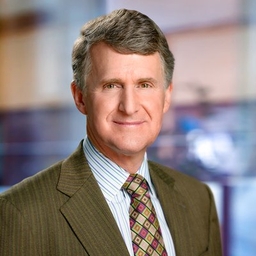
Rip Rapson
- President, The Kresge Foundation
Michigan
Leading @kresgefdn efforts to expand equity and opportunity for low-income people in cities across American through grantmaking and social investing.
Is this you? As a journalist, you can create a free Muck Rack account to customize your profile, list your contact preferences, and upload a portfolio of your best work.
Claim your profile
Articles by Rip Rapson
How Detroit’s neighborhoods are writing the city’s next chapter
Karen Knox helps spruce up the grounds at Eden Gardens on Detroit's east side, during Arise Detroit Neighborhoods Day.
When Federal Policy Retreats, Local Action Must Lead Rip Rapson President and CEO, The Kresge Foundation Shamar Bibbins Managing Director, Environment Program, The Kresge Foundation
When the Environmental Protection Agency (EPA) announced earlier this year that it was reversing the Endangerment Finding — the long-standing federal policy establishing that greenhouse gases pose a clear and present danger to public health — climate deniers declared it a “total victory.” The reality is, however, just the opposite: it was both a clarification of the enormous cost of the constricting impulses of scientific skepticism and a crystallization of the imperative of enhancing...
A Conversation With Valerie Jarrett
From the beginning of her career as a working mother in local Chicago politics up to being a critical part of former President Barack Obama’s administration and now being the Chief Executive Officer of his Foundation, Jarrett has had many successes working with and among all different business and community sectors.
Opinion: Three key strategies for localities to maximize a surge of federal investment
As we enter another presidential election year, policymakers, media and the public will increasingly focus on what the campaign and associated partisan jockeying in Washington indicate for the future of our economy and society. Importantly, Washington isn’t making most of the decisions about how exactly these dollars will be spent.
Three key strategies for localities to maximize a surge of federal investment
As we enter another presidential election year, policymakers, media and the public will increasingly focus on what the campaign and associated partisan jockeying in Washington indicate for the future of our economy and society. But the most consequential decisions affecting American lives and livelihoods this year will be made in America’s cities, counties, regions and states.
Mayor Mike Duggan’s tax plan would raze blight and hope for Detroit’s future.
Detroit Mayor Mike Duggan’s plan to modernize the city’s tax structure is critical to the progress of Michigan’s largest city. It would provide long overdue relief for overtaxed homeowners and make Detroit a magnet for investment and businesses seeking opportunities. Duggan’s recently announced , simply put, is the single most important reform proposal Detroit has seen in generations that can move our city forward.
A Conversation with Richard Florida and Anika Goss on How Michigan Can Harness the Power of Knowledge Transformation
Key Takeaways Michigan must take advantage of the opportunity to deepen its focus on economic development to retain, attract, and generate talent, according to “Michigan’s Great Inflection: A Strategy for the Age of Technology and Talent,” a new study authored by Richard Florida and Creative Class Group. Placemaking in Michigan is ripe for success due to the extreme uniqueness and diversity of cities, which makes the state so distinct compared to every other state.
7 urban asphalt transformations in 2022: photos
Nineteen European cities — a list that includes Brussels, Helsinki and Madrid, among others — will implement art in intersections, crosswalks and other pedestrian spaces in 2023 with help from $25,000 grants awarded by Bloomberg Philanthropies, which supports such projects through its Asphalt Art Initiative. The colorful transformations are more than a pretty sight.
Don't forget about the creative community in the rebuild of US infrastructure
Rip Rapson is The Kresge Foundation’s president and CEO and Regina Smith is managing director of its arts & culture program, which focuses on equitable, creative placemaking to position culture and creativity as drivers of more just communities.
How Philanthropy Can Ensure the Bipartisan Infrastructure Framework’s Success
The Detroit people mover.
How Philanthropy Can Ensure the Bipartisan Infrastructure Framework’s Success — Inside Philanthropy
The adjectives describing the $1.2 trillion infrastructure bill President Joe Biden signed into law are getting more super-charged by the day: “transformational” … “once-in-a-generation investment” … “unprecedented in American history” … even “FDR-like.” All true and fitting in terms of the law’s financial magnitude, with billions flowing to states and localities that have been on a starvation diet for the better part of the last several decades.
The Mayor’s Guide to Spending Federal Aid
Cookie List A cookie is a small piece of data (text file) that a website – when visited by a user – asks your browser to store on your device in order to remember information about you, such as your language preference or login information. Those cookies are set by us and called first-party cookies. We also use third-party cookies – which are cookies from a domain different than the domain of the website you are visiting – for our advertising and marketing efforts.
Detroit Showed What 'Build Back Better' Can Look Like
AP Photo/The Detroit News, Elizabeth Conley American cities stand at a precipice. Burdened by an overwhelming public health crisis, drained of resources by economic stagnation and torn apart by racial injustice and unrest, cities are confronting the reality that conventional formulas of municipal finance and practices of working cannot sustain our urban places.
Business leaders: Invest in racial equity to combat the climate crisis
By Rip Rapson 4 minute Read Two threads are woven into the fabric of each crisis facing our country today: deeply rooted racism and glaring income disparity. These twin crises—the social construct of racial discrimination and the socioeconomic categorizations that divide our country—are magnified further when viewed alongside the threat multiplier of climate change. All three burdens disproportionately impact communities of color.
More Mass Transit Minus Macomb County? Plus The Ford Mustang Mach-E on Apple Podcasts
|
16 min On today’s show for Tuesday, November 19, 2019: Two big stories. More mass transit may be moving ahead in Southeast Michigan - minus Macomb County. Shianne went to Royal Oak to learn more. And Greg Migliore of Autoblog joins me to talk about the brand new Mustang Mach-E from Ford. It’s an answer to Tesla and was even revealed next door to Tesla property.
By Jer Staes Verified, Greg Migliore Verified, Rip Rapson, Warren C. Evans, Dave Meador, Shianne Nocerini Verified
|
Apple Podcasts
How philanthropy, business, and government sparked Detroit’s resurgence
Having emerged from the largest municipal bankruptcy in American history, Detroit is now on surer financial footing and experiencing an economic resurgence. Due much in part to an unprecedented collaboration among philanthropy, business, and government, Detroit is benefiting from private and public sector investments downtown and across its neighborhoods.
Opinion: Grant Makers Need a New Approach to Reversing Inequities in America’s Cities
Many of America’s cities are enjoying a renaissance after decades of losing residents, jobs, and investments to the suburbs. Yet these places are also home to some of the nation’s greatest racial and economic inequities, where gaps between the...
Mission, Money & Markets: Strong community development finance system key to building urban opportunity, from newly designated ‘Zones’ and beyond
As Washington celebrated the overhaul of the tax system earlier this winter, those of us committed to under-resourced communities grew worried. Essential tools that American cities rely on to support and improve disinvested communities were nearly eliminated. Thankfully, these programs survived – although badly bruised.
High-stakes race for tax breaks that could help low-income communities
Maurice Jones is president and CEO of the Local Initiatives Support Corporation, or LISC, a national social enterprise that invests in creating inclusive communities across America. Rip Rapson is president and CEO of The Kresge Foundation, a private, national foundation dedicated to expanding opportunities in America's cities through grant-making and social investing. He also serves on the LISC board of directors. The opinions expressed in this commentary are solely those of the authors.
Arts and Culture in Dangerous Times
These remarks were presented by Rip Rapson, president, The Kresge Foundation, to the closing plenary of the 2017 GIA Conference in Detroit, Michigan, on October 31, 2017. Thank you, Eddie, for such a gracious introduction. What a pleasure it is to have you all in Detroit. I hope your time here has made clear how vitally central arts and culture have been to the re-setting of Detroit’s trajectory.
Statement: We stand with DREAMers
America, from its earliest days, has always been a nation of immigrants. We at The Kresge Foundation are proud of that heritage. That’s why we are alarmed and saddened by President Trump’s decision to end DACA (Deferred Action for Childhood Arrivals). This action pulls the rug out from under young people who, by all measures, are Americans.
Constancy and Thoughtful Realignment: The Next Era of Social Investing
Even through the fog of post-election ambiguity, it is clear that philanthropy and social investors will play a pivotal role in ensuring that capital finds its way to—and can productively be put to use in—communities where opportunity has been slow to take hold, and where too many people feel left out and left behind. The Kresge Foundation seeks to advance opportunity in American cities.
Philanthropy's role, after the presidential election
Now that this year's elections are over — with all their attendant divisiveness and political rancor — it’s important for leaders and actors across America's institutions, including the media, the business class, academia and think tankers, and civic organizations, to reflect deeply on how they will act and serve the public moving forward.
Roundtable: Cross-Sector Leadership in Detroit
Jennifer Bradley: In preparing for this conversation, I was reflecting on the concept of leadership and what it really means, particularly in the Detroit context. What I’ve noticed in my years in the field is the power of the hero narrative. People spend a lot of time looking and hoping for a single leader, whether it is the mayor, or the school superintendent, or the business leader who can turn around a city.
Artists forge way in confronting, healing social problems
I recently returned from a meeting with a number of national foundation leaders who invest in — among other things — arts and culture. The conversation pivoted almost immediately to how our institutions can play a meaningful, constructive role in helping communities navigate the divisive and difficult times our nation is experiencing — gun violence, racial inequity and the tragic events in Minnesota, Louisiana and Texas.
Environmental movement’s growth stunted by ‘green ceiling’
Groucho Marx is remembered for his quip that he would never join a club that would have him as a member. We’ve got a different problem when it comes to our nation’s environmental movement. Although many clamor to get in, people of color are not having much success shattering a “green ceiling” of the green insider’s club.
Rapson: Detroit's lesson on how to save a city
Detroit became the largest U.S. city to exit bankruptcy this week, with the effective approval of a plan to slash $7 billion in debt and reinvest $1.4 billion to improve city services. The move set in motion the "Grand Bargain," an $816 million deal that ensured the bankruptcy's timely and fair resolution, by helping to honor city retirees and preserve the Detroit Institute of Arts. Retired public employees and artwork -- two civic assets rarely thought of in the same breath.
Detroit, bankruptcy, and how to save a city (Opinion)
Editor's note: Rip Rapson is president and CEO of Kresge Foundation, which contributed $100 million to Detroit's "Grand Bargain." (CNN) -- Detroit became the largest U.S. city to exit bankruptcy this week, with the effective approval of a plan to slash $7 billion in debt and reinvest $1.4 billion to improve city services.
Rapson: Detroit is on track for a positive future
With U.S. Judge Steven Rhodes’ acceptance of the stakeholder-approved plan of adjustment, our community will be the subject of every manner of intellectual, legal, political, and social discussion over the coming weeks. And we should welcome that. We have spent a year in profound struggle. About the legitimacy of non-elected decision-making. About the relative rights of creditors of every conceivable stripe.
Show More
loading
Actions
Is this you?
As a journalist, you can create a free Muck Rack account to customize your profile, list your contact preferences, and upload a portfolio of your best work.Get in touch with Rip
Contact Rip, search articles and posts on X, monitor coverage, and track replies from one place.
Learn more about Muck Rack