
Ivory Ridge Custom Construction Logo The luxury builder explains its cold-weather approach to foundations, framing, and dry-in so fall and winter starts in El Paso County keep moving. COLORADO SPRINGS, CO, UNITED STATES, October 7, 2026 /EINPresswire.com/ -- Many homeowners assume custom home construction along the Front Range pauses once the first snow arrives.
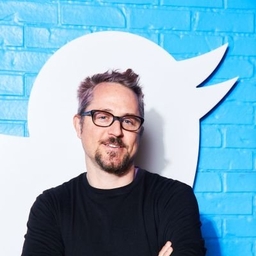
Sam Gregory
As seen in:
Memory Studies,
WIRED,
SAGE Publishing,
Substack,
The Hill,
EIN News,
The Quietus,
The Bakersfield Californian,
Witness News,
The Big Issue
and
AI, trust, deepfakes and epistemic resilience. 'Prepare, Don't Panic' initiative on media manipulation/generative AI. TED speaker deepfakes. Former ED WITNESS.
Articles by Sam Gregory
Ivory Ridge Converts Unfinished Basements into Functional Colorado Springs Living Space
Ivory Ridge Custom Construction Logo Colorado Springs contractor uses float framing, radon planning, and code-compliant egress for basement renovation projects. COLORADO SPRINGS, CO, UNITED STATES, September 24, 2026 /EINPresswire.com/ -- Colorado Springs and El Paso County continue to face housing demand and limited inventory. For homeowners already in the market, that demand can make additional usable space at home a practical consideration.
Ivory Ridge Addresses Expansive Clay Soil Challenges in El Paso County Projects
Ivory Ridge Custom Construction Logo Colorado Springs contractor applies foundation, framing, and material strategies for Front Range soil and climate conditions. COLORADO SPRINGS, CO, UNITED STATES, September 24, 2026 /EINPresswire.com/ -- Across the Colorado Springs area, soil conditions can shape how homes and commercial buildings are designed, built, and maintained. Expansive clay soils occur in parts of El Paso County and can affect foundations, walls, and concrete flatwork.
Google Earth AI Fiasco Underscores Why Tech Firms Must Listen to Outside Experts
Screenshot from a Google announcement. On Thursday, Google announced an update to Google Earth, giving users the ability to use its Nano Banana image generation capabilities to “transform” real world locations.
Colorado Springs-Based Ivory Ridge Custom Construction Brings Expert Craftsmanship to Custom Builds and Renovations
Ivory Ridge Custom Construction Logo Colorado Springs custom construction firm delivers on-time, on-budget results for residential and commercial clients across Colorado and beyond COLORADO SPRINGS, CO, UNITED STATES, July 28, 2026 / EINPresswire.com/ -- Ivory Ridge Custom Construction, a full-service construction and renovation company, is serving residential and commercial property owners across the Colorado Front Range and beyond with a comprehensive range of custom building, renovation,...
Ivory Ridge Custom Construction Delivers Colorado Springs Home Projects Through Single-Contract Design-Build Model
Ivory Ridge Custom Construction Logo Design-build projects complete 102% faster than traditional methods. The Colorado Springs contractor explains how its four-phase model eliminates costly delays. COLORADO SPRINGS, CO, UNITED STATES, July 25, 2026 / EINPresswire.com/ -- The traditional way to build a custom home involves hiring an architect to design the project, then hiring a separate general contractor to build it.
Houston visits New Orleans, aims to stop road slide
Prev Previous Previous Sacramento takes on Portland on 3-game slide Sacramento will try to break its three-game skid when the Kings play Portland. T… Next Next Up Next Up Charlotte hosts Atlanta following overtime win against Cleveland Atlanta Hawks (15-12, eighth in the Eastern Conference) vs. Charlotte Hornets (8… Facebook Twitter WhatsApp SMS Email Facebook Twitter WhatsApp SMS Email Print Save Houston Rockets (16-7, fifth in the Western Conference) vs.
Iran-Israel AI war propaganda is a warning to the world
Skip to content SPECIAL The risk for cyber or U.S. critical infrastructure attacks in Iran conflict | READ MORE → Powered by the McCrary Institute at Auburn University Get your cyber briefing Straight from our experts to your inbox
Transition is Inevitable, Justice is Not
In his 2006 film about Stalinism, Joebuilding, Jonathan Meades explains how the Soviet Union set out to bend the environment, as it did people, to its will. ‘[Stalin] was a greater force than nature, he created inland seas, his slave labourers died in their thousands digging bloated canals more ostentatious than utility demanded. . . their function was to prove the state’s might. Like many autocrats before him, Stalin determined to control the climate.
Key tools and approaches for using AI in OSINT and investigations
Geolocation can be labor intensive. You might view a video frame by frame to look for landmarks and other location clues, or extract dozens of screenshots to run through reverse image search engines, among many other steps. Unless you posses the memory and/or ability to travel the world like Rainbolt to learn about local highways, streetscapes, and landscapes, you probably can’t identify locations by sight alone.
When AI can fake reality, who can you trust?
By Sam Gregory Get a daily email featuring the latest talk, plus a quick mix of trending content. By subscribing, you understand and agree that we will store, process and manage your personal information according to our Privacy Policy
DISCOGRAPHY AUTOPSY: ROSALÍA’S FUSE OF FLAMENCO & HIP HOP
Rosalía has become one of today’s most listened to pop stars, but her music can’t quite be classified as pop. Genre-blending, the singer is known to incorporate elements of traditional Andalusian flamenco with 808 beats typical to hip hop and fun, playful sounds that can be best described as electro pop.
A simple guide on words to avoid in government
Sam Gregory is on a mission to root out jargon in government. He's here to explore the worst offenders and offer the best alternatives. As civil servants, our choice of terminology makes a huge difference to how the public understands our policies and our projects. Using certain words can even shape and change the policies themselves. For example, you might only realise the flaw in your policy when you have to explain it in plain English.
Shallowfakes are rampant: Tools to spot them must be equally accessible
Deepfakes had a moment this year: From a fairly obvious deepfake of Ukrainian President Volodymyr Zelensky on hacked media in Ukraine to more proficient video scams involving Elon Musk and potentially spurious claims of deepfakes obscuring the truth from Pakistan to mayors’ offices across Europe. Hundreds of articles have focused on these and hypothetical deepfake scenarios and what they mean for the future of video and trust.
A simple guide on words to avoid in government | Civil Service
Blog posted by: Sam Gregory, 16 August 2022 – Categories: A Modern Civil Service, A Skilled Civil Service, An Ambitious Civil Service, An Innovative Civil Service. Sam Gregory is on a mission to root out jargon in government. He's here to explore the worst offenders and offer the best alternatives. As civil servants, our choice of terminology makes a huge difference to how the public understands our policies and our projects. Using certain words can even shape and change the policies themselves.
To battle deepfakes, our technologies must track their transformations
In the video record of the Ukraine war, a clumsy attempt to “deepfake” Ukrainian President Volodymyr Zelensky coexists alongside critical on-the-ground video evidence of abuses, pervasive misinformation for grift and attention, and Russian false flag operations.
TikTok Must Not Fail Ukrainians
Vietnam was known as the first televised war. The Iran Green Movement and the Arab Spring were called the first Twitter Revolutions. And now the Russian invasion of Ukraine is being dubbed the first TikTok War. As The Atlantic and others have pointed out, it’s not, neither literally nor figuratively: TikTok is merely the latest social media platform to see its profitable expansion turn into a starring role in a crisis.
Deepfakes, misinformation and disinformation and authenticity infrastructure responses: Impacts on frontline witnessing, distant witnessing, and civic journalism - Sam Gregory, 2021
Abrahams, F, Murray, D (2020) Open source information: part of the puzzle. In: Dubberley, S, Koenig, A, Murray, D (eds), Digital Witness : Using Open Source Information for Human Rights Investigation, Documentation, and Accountability. Oxford, United Kingdom: Oxford University Press, pp. 317–330. Google Scholar Ajder, H, Glick, J (2021) JUST JOKING! Deepfakes, Satire and the Politics of Synthetic Media. Report, WITNESS and Co-Creation Studio at MIT Documentary Lab.
Deepfakes, misinformation and disinformation and authenticity infrastructure responses: Impacts on frontline witnessing, distant witnessing, and civic journalism - Sam Gregory, 2022
Deepfakes, shallowfakes, and witnessing For the past decade, WITNESS has engaged with the increasing volume of UGC and embodied witnessing shared on online platforms, beginning with projects like the “Hub” human rights user-generated content (UGC) site and the Human Rights Channel on YouTube, and subsequently with our “Video as Evidence” programs (WITNESS, n.d.) and work in the WITNESS Media Lab curating and sense-making around UGC video.
Pre-Empting a Crisis: Deepfake Detection Skills + Global Access to Media Forensics Tools
In a recent WIRED Op-ed I share the story of a recent deepfake panic in Myanmar. Spoiler: It probably wasn’t a deepfake… but it has important implications for how we think about access to deepfake detection technology and what skills, capacities and escalation options are needed. You can read more about the story here. “RECENTLY THE MILITARY coup government in Myanmar added serious allegations of corruption to a set of existing spurious cases against Burmese leader Aung San Suu Kyi.
Tangerine Doubles the Size of its Creative Team
"Investing in our creative team is helping us to take this work to another level. Im very excited to see where we can go from here." Sam Gregory, Joint MD of Tangerine Employee-owned creative comms agency, Tangerine Partnership, has more than doubled the size of its multi award-winning creative team from 7 to 16, with a flurry of new hires in the past year.
The World Needs Deepfake Experts to Stem This Chaos
Recently the military coup government in Myanmar added serious allegations of corruption to a set of existing spurious cases against Burmese leader Aung San Suu Kyi. These new charges build on the statements of a prominent detained politician that were first released in a March video that many in Myanmar suspected of being a deepfake. In the video, the political prisoner’s voice and face appear distorted and unnatural as he makes a detailed claim about providing gold and cash to Aung San Suu Kyi.
The wrongfulness of Nigeria’s ban on Twitter
Published on 11 June 2021 On June 4th when I saw the announcement on Twitter that the Nigerian government was placing a ban on Twitter’s operations in the country due to what they vaguely described as “activities capable of undermining Nigeria’s corporate existence” it was immediately clear that this was Nigeria’s retaliation against Twitter for deleting President Buhari’s tweet some two days prior.
Thread by @SamGregory on Thread Reader App
. @witnessorg submission to the Facebook Oversight Board on the suspension of Trump's accounts: witness.org/witness-facebo… . @witnessorg Oversight Board submission on Trump suspension notes 1) All comments in light of fact that power to push #Facebook on policy change, product/technical infrastructure change, global resourcing, response to extralegal political pressure globally not granted to Board 👇 .
Centering the “source” in open source investigation
Author: Libby McAvoy This article first appeared on¬ÝOpen Global Rights¬Ýin¬ÝEnglish,¬ÝSpanish, and Arabic¬Ýon¬ÝJanuary 21, 2021.¬Ý When a viral video of shocking violence crops up online‚Äîsuch as videos of security forces in Iraq firing ‚Äúhead-splitting tear gas grenades‚Äù at protestors‚Äîopen source investigators comb through the footage with techniques like sophisticated social media research and geolocation to verify allegations.
Truth, lies and social media accountability in 2021
In 2021, critical issues at the intersection of social media, accountability, and human rights are finally at the center of global public discussion. It took the attempted insurrection at the US Capitol to lead to social media platforms finally suspending former President Donald Trump’s accounts and forcing a discussion about online content, hate and violence.
Introducing { Latent Space } – a technology newsletter from WITNESS - WITNESS Blog
—August 2020 Technology touches all of our lives, so it touches all of the work we do at WITNESS. But there are some areas of technology more than others that are focal points for our Emerging Threats and Opportunities and Tech + Advocacy programs. We’re in the vanguard of conversations on artificial intelligence and synthetic media (deepfakes), content moderation, and mis- and disinformation, and we wanted to create a channel for discussing these issues in more depth.
The Adobe Content Authenticity Initiative approach to authenticity infrastructure against media manipulation
Launch of the Content Authenticity Initiative White Paper Today the Content Authenticity Initiative (CAI) spearheaded by Adobe, Twitter and the New York Times publishes its White Paper. WITNESS is a co-author on the paper and has been part of the Working Group developing the standards alongside other groups including TruePic, Microsoft, the BBC, CBC and the Stanford Center for Blockchain Research.
Police Violence, Video, and Truth Telling at WITNESS
It’s been 55 years since police violence sparked the Watts rebellion. It’s been 28 years since the Rodney King arrest, beating, filming, and subsequent uprising in South Los Angeles. Today, the systems and patterns of police abuse are as rampant as ever. What has changed is our collective ability to document these moments. “The violence is not new,” says writer Ta-Nehisi Coates.
4 new resources to help activists use video during COVID19
Filming and sharing documentation for human rights can expose injustices, put a spotlight on stories rarely heard, and create movements that hold perpetrators and decision-makers accountable. But if advocating for accountability is dangerous on a normal day, even more so during a global pandemic.
Tracing trust: Why we must build authenticity infrastructure that works for all
May 2020 TLDR: Coronavirus has dramatically increased the stakes for how we deal with issues of manipulated, fake and deceptive video and audio online, with governments, companies and publics responding to the need to discern truth from falsehood. One solution to misinformation and disinformation is to better track what is authentic, what is manipulated and how.
What's needed in deepfakes detection?
April 2020 Misinformation and disinformation are a critical problem for societies worldwide. In response, WITNESS’s work addressing new forms of media manipulation such as deepfakes and synthetic media is focused on preparing better, and advancina a more global, human rights-lead approach to these emerging threats. Learning from previous and current mis/disinformation challenges, where critical impacted voices and necessary changes have been neglected till after the fact, we can do better.
The Right to Record for human rights during COVID-19
When WITNESS says the Right to Record, we are referring to the ability to pick up a camera or cell phone and film the police or military without retaliation. We are also talking about the initiative, commitment, attitude, and courage that it takes to exercise that right, and the organizing communities do to make this possible.
Making Your Metadata Matter
We’re pleased to welcome guest bloggers Wendy Betts and Raquel Vazquez Llorente here to share their insights on documentation apps and metadata for legal purposes. Wendy Betts is the Director of eyeWitness to Atrocities, an organization that combines legal and technological expertise to aid investigations and promote accountability for international crimes. Raquel Vazquez Llorente is the Senior Legal Advisor.
Coronavirus and human rights: Preparing WITNESS's response
COVID-19 (Coronavirus) is creating rapid and dangerous human rights implications globally, directly impacting people’s lives, livelihoods, security, health, ability to work and freedom of movement and assembly, as well as leading to implications for digital rights and increasing online surveillance.
As content moderators go home, content could go down
Updated with further information from Facebook that was published 19 March 2020 at 19:22 Pacific Time, after this post was already published. Most of us are spending a lot of time on social media right now. Social media has been instrumental in spreading misinformation about COVID-19, but it has also provided lifelines for people across the globe, in the form of fundraisers and offers of help for at-risk groups who can’t go grocery shopping or pick up medicine for themselves.
Human rights defenders are not terrorists, and their content is not propaganda
Counter-terrorism is not a field that is known for its respect of human rights. The word terrorism, though it does not have any commonly agreed upon legal or societal definition, has often led to the implementation of repressive measures, not only in authoritarian regimes, but also in countries recognized as democracies.
The Pros and Cons of Facebook's New Deepfakes Policy
Yesterday Facebook released its policy on enforcing against manipulated media, detailing how the company would respond to deepfakes, and to a lesser extent shallowfakes. On Wednesday 8 January 2020 the US Congress will hold another hearing on digital manipulation, following on from the first congressional hearing on deepfakes in June 2019.
To Fight Deepfakes Build Media Literacy, Say African Activists
—December 23, 2019 In late November 2019, WITNESS led a workshop on deepfakes at the University of Pretoria, South Africa. Building on the success of a workshop in Brazil in July, and with another workshop in Malaysia scheduled for 2020, the event series has been a unique effort to engage academics, journalists, researchers and human rights activists from the Global South in the process of responding to deepfakes.
The Tech of Citizen Witnessing in 2015
In the Tech News Digest, we normally look back over the previous month at the new developments in technology that affect our work (and maybe yours). But this early in the year it’s also worth looking ahead to the rest of 2015 at what we hope to see happen. So here are a few new items from the past month, with a look into how they fit into three of our main tech and advocacy goals for the coming year.
Collectives From All Regions of Brazil Gather in Rio
35 activists from 6 cities met to discuss strategies on how to use video for change. The convening “#R2R – For the Right to Record” featured representatives from Belém, Santarém, Fortaleza, Recife, São Paulo, Rio de Janeiro, Brasîlia and Porto Alegre. These representatives consisted of video activists, human rights lawyers, archivists, and community media collectives.
OSINT Digital Forensics - WITNESS Media Lab
In February 2019 WITNESS in association with George Washington University brought together a group of leading researchers in media forensics and detection of deepfakes and other media manipulation with leading experts in social newsgathering, UGC and opens-source intelligence (OSINT) verification and fact-checking.
Deepfakes will challenge public trust in what's real. Here's how to defuse them.
By Sam Gregory The panic around the threat of ‘deepfakes’ began in earnest in 2018. The ability to impersonate the voice or face of a person strikes fear into the heart of Senators, as well as the vulnerable human rights activists and journalists with whom I work at the human rights organization, WITNESS. So far, deepfakes have been used in a few instances to attack the credibility of journalists.
This Week in Human Rights Video: Despite Internet Shutdown, Citizen Video Emerges from Sudan
This week we are focused on Sudan, where videos by protesters and bystanders are documenting violent clashes with the police. Because of press censorship and disputed statements from the government regarding the deaths of protesters, these videos may help provide additional information about the clashes themselves. Also new on the channel this week: a rare activist video taken in Cuba and environmental protests in Romania.
How An Eyewitness Mode Helps Activists (and Others) Be Trusted
Would today’s George Holliday, the documenter of the beating of Rodney King, have a human rights app? Metadata for good? This year at RightsCon WITNESS and the Guardian Project are leading a roundtable called “Metadata for Good?” at which we’ll talk about the power and value of metadata to an individual and to collective projects of social good for human rights. Among the ideas we’ll raise is our push for opt-in ‘eyewitness’ and ‘proof’ functionalities in mainstream tools and platforms.
WITNESS at SXSW 2014: Talking Media, Mobile, Technology and Human Rights
Today marks the start of #SXSWInteractive, one of the world’s largest conferences focused on interactive technologies and online innovation. And WITNESS will be there. Fresh from this week’s events at RightsCon, we’ll be continuing our focus on the challenges and opportunities of citizen witnessing for human rights. My colleague Madeleine Bair, curator of our Human Rights Channel, and I will be at SXSW.
The Right to Record Recognized at the United Nations
When WITNESS talks about the “Right to Record,” we are referring to the right to take out a camera or cell phone and film the military and law enforcement without fear of arrest, violence, or other retaliation. [1] Although the Right to Record is foundational to the use of video for human rights and is upheld by law or judicial decisions in some countries, other countries’ laws and practices explicitly violate this right.
Deepfakes and Synthetic Media: What should we fear? What can we do?
For updated information on WITNESS work in this area please visit wit.to/Synthetic-Media-Deepfakes This is the first in a series of blogs on a new area of focus at WITNESS around the emerging and potential malicious uses of so-called “deepfakes” and other forms of AI-generated “synthetic media” and how we push back to defend evidence, the truth and freedom of expression.
Deepfakes and Synthetic Media: Survey of Solutions against Malicious Usages
This is the second in a series of blogs on a new area of focus at WITNESS around the emerging and potential malicious uses of so-called “deepfakes” and other forms of AI-generated “synthetic media” and how we push back to defend evidence, the truth and freedom of expression. The first in the blog series can be accessed here. This work kicked-off with an expert summit – the report on that is available here.
“What Nut Does The Human Finger Most Taste Like?”: A Party After The End Of The World
With the piss prez reneging on the Iran nuclear deal, the title of Forest Sound Theatre's new two-night production sounds less like a fantasy and more like an imminent prospect, one which will see millennials rubbing smashed avocado into their gums inside the bombed-out remnants of a Westfield centre. Bearing in mind The Current State We're In, is the title a joke in poor taste, nihilistic laughter in the faces of the egotists and the zealots intent on steering us over the atomic cliff edge?
Show More
loading
Actions
Is this you?
As a journalist, you can create a free Muck Rack account to customize your profile, list your contact preferences, and upload a portfolio of your best work.Get in touch with Sam
Contact Sam, search articles and posts on X, monitor coverage, and track replies from one place.
Learn more about Muck Rack