
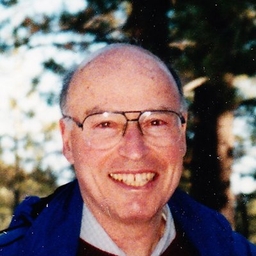
Studying the psychology of risk since 1959. Currently researching failure to intervene in genocide and other mass threats to humans and the environment.
Is this you? As a journalist, you can create a free Muck Rack account to customize your profile, list your contact preferences, and upload a portfolio of your best work.
Claim your profile
Articles by Paul Slovic
AI Doesn’t Need ‘Superintelligence’ or Evil Intent to Start a Nuclear War
Neither extraordinary machine intelligence nor malicious intent is required for catastrophe to result.
AI doesn’t need ‘superintelligence’ or evil intent to start a nuclear war
AI doesn’t need ‘superintelligence’ or evil intent to start a nuclear war By Paul Slovic, Herbert Lin | Analysis | October 2, 2026, https://thebulletin.org/2026/10/ai-doesnt-need-superintelligence-or-evil-intent-to-start-a-nuclear-war/?utm_source=ActiveCampaign&utm_medium=email&utm_content=AI%20doesn%20t%20need%20%20superintelligence%20%20to%20start%20a%20nuclear%20war&utm_campaign=20261001%20Thursday%20Newsletter%20%28Copy%29 When AI researcher Jacob Coxon announced his resignation from...
Virtuous Violence and the Psychology of Nuclear Escalation
DANIEL R. POST: We see every nuclear state modernizing its nuclear weapons, expanding their ideas of potential use cases for nuclear weapons, right? So it's actually–all of the sort of trend is going the opposite direction, that these tools may be more usable and relied upon more for military purposes or security purposes, than even in the past. RYAN VEST: Welcome to Horns of a Dilemma, the podcast of the Texas National Security Review.
Decisions on major projects often ignore cultural and social losses
In public debates over pipelines, mines, dams and other major infrastructure projects, governments often make assurances that any communities or other parties adversely affected by the development will be “compensated” for losses. The language sounds fair and rational: Impacts to lands and people that remain after mitigation will be measured, damages calculated, and payments provided to those who experience negative impacts.
When Our Minds Go Nuclear: Rethinking Nuclear Strategy Through the Psychology of Risk and Decision-Making
Since the dawn of the nuclear age, military and political strategists have relied heavily on the assumption that rational actors, with clear information and stable preferences, will be dissuaded from launching a nuclear attack if they understand the costs to outweigh the benefits.1 However, decades of psychological research on human judgment and decision-making, rooted in Herbert Simon’s theory of bounded rationality,2 cast doubt on this assumption.
Why Congress and senior officials must deny Trump a ‘nuclear escape’ in Iran
Why Congress and senior officials must deny Trump a ‘nuclear escape’ in Iran Bulletin, By Paul Slovic, Rose McDermott | Analysis | May 26, 2026 The most frightening possibility in the ongoing Iran war is not simply that the United States could deepen its involvement. It is that a US president whose own decisions helped create the crisis could come to see nuclear escalation as the clearest path out of humiliation, stalemate, and existential loss. That risk should not be dismissed as fanciful.
Risk as Feeling: New Perspectives on Risk Perception
Thursday 11 November 2010 | 1 hour 14 minutes 6 seconds Dr. Slovic will describe the laboratory experiments that led to the concept of risk as feelings and illustrate some insights gleaned from this perspective for behaviours as diverse as cigarette smoking and apathy toward large scale natural and human caused disasters. Dr. Slovic studies judgment and decision processes with an emphasis on decision making under conditions of risk.
A Tireless Risk Taker Who Brightened the World
Howard’s visionary approach to risk assessment made connections across disciplines from public health to climate change. I first met Howard in 1970 at a meeting on natural hazards that was held in Boulder, Colorado, and organized by famed geographer Gilbert White. As the meeting approached, the room buzzed with excitement about the imminent arrival of some guy named Howard.
Anticipating Canada's crisis response decisions can save critical time in future wildfire seasons
This article was originally published on The Conversation, an independent and nonprofit source of news, analysis and commentary from academic experts. Disclosure information is available on the original site. ___ Authors: Robin Gregory, Adjunct Professor, Institute for Resources, Environment and Sustainability, University of British Columbia; Paul Slovic, Professor of Psychology, University of Oregon and Ralph L.
Anticipating Canada's crisis response decisions can save critical time in future wildfire seasons
On June 30, 2021, the town of Lytton in British Columbia was destroyed by an out-of-control wildfire. The aftermath saw a lot of anger and finger pointing, with all levels of government roundly criticized.
Anticipating Canada's crisis response decisions can save critical time in future wildfire seasons Original
On June 30, 2021, the town of Lytton in British Columbia was destroyed by an out-of-control wildfire. The aftermath saw a lot of anger and finger pointing, with all levels of government roundly criticized. Three months later, Michael Mehta, lead author of a Thompson Rivers University study examining B.C.‘s communications practices during the 2017 and 2018 wildfire seasons, said: Sadly, little has been done in the interim to remedy this.
5 Explorers Versus 500 Migrants: Why Compassion Doesn’t Scale
Last week, the world watched a search-and-rescue effort for a missing deep-sea submersible that had descended to view the wreckage of the Titanic. Many observers criticized the level of media attention and resources dedicated to the five-person expedition, given that just days prior, a ship carrying 750 migrants headed for Greece capsized but drew far less attention. We now know both sea voyages ended in tragedy.
Putin and the Psychology of Nuclear Brinkmanship
Sign in and save to read later Print this article Share on Twitter Share on Facebook Share on LinkedIn Get a link Page url Request Reprint Permissions Shortly after the West rebuked Russia for its 2022 invasion of Ukraine and imposed financial sanctions of unprecedented scope, Russian President Vladimir Putin announced that he was putting his country’s nuclear forces on high alert. The Kremlin has issued many more nuclear threats, some oblique and some explicit, since then.
Putin and the Psychology of Nuclear Brinksmanship
Shortly after the West rebuked Russia for its 2022 invasion of Ukraine and imposed financial sanctions of unprecedented scope, Russian President Vladimir Putin announced that he was putting his country’s nuclear forces on high alert. The Kremlin has issued many more nuclear threats, some oblique and some explicit, since then. The mere possibility that Putin might make good on these threats raises great concern.
Putin and the Psychology of Nuclear Brinksmanship
Sign in and save to read later Print this article Share on Twitter Share on Facebook Share on LinkedIn Get a link Page url Request Reprint Permissions Shortly after the West rebuked Russia for its 2022 invasion of Ukraine and imposed financial sanctions of unprecedented scope, Russian President Vladimir Putin announced that he was putting his country’s nuclear forces on high alert. The Kremlin has issued many more nuclear threats, some oblique and some explicit, since then.
Risk Communication, Risk Statistics, and Risk Comparisons: A Manual for Plant Managers
Purposes for Providing Risk Comparisons Assume that as part of your risk communication strategy, you have decided to explain a particular risk number. And assume that as part of that explanation, you want to compare the number to some other number. The first step is to be clear about why you want to make such a comparison. Risk comparisons help put risks into perspective.
Why Being Good At Math Is Important To Your Everyday Life
Even college-educated adults can still struggle with numbers. Prostock-Studio/iStock via Getty Images People who are bad with numbers are more likely to experience financial difficulties than people who are good with numbers. That’s according to our analyses of the Lloyd’s Register Foundation World Risk Poll. In this World Risk Poll, people from 141 countries were asked if 10% was bigger than, smaller than or the same as 1 out of 10.
People who are bad with numbers often find it harder to make ends meet
When we say that they found it harder to make ends meet, we mean that they reported on the poll that they found it difficult or very difficult to live on their current income, as opposed to living comfortably or getting by on their current income. Our analyses also indicate that staying in school longer is related to better number ability. People with a high school degree tend to be better with numbers than people without a high school degree. And college graduates do even better.
People who are bad with numbers often find it harder to make ends meet - even if they are not poor
(The Conversation is an independent and nonprofit source of news, analysis and commentary from academic experts.) Wändi Bruine de Bruin, USC Dornsife College of Letters, Arts and Sciences and Paul Slovic, University of Oregon kAmW%wt r~}'t#$p%x~}X %96 k2 9C67lQ9EEADi^^E964@?G6CD2E:@?]4@>^FD^E@A:4D^C6D62C49\3C:67\gbab`Qm#6D62C49 qC:67k^2m :D 2 D9@CE E2<6 23@FE :?E6C6DE:?8 24256>:4 H@C<]k^Am kAmk6>m%96 3:8 :562k^6>mk^Am kAm!6@A=6 H9@ 2C6 325 H:E9 ?F>36CD 2C6 >@C6 =:<6=J E@ 6IA6C:6?46 7:?2?4:2=...
People who are bad with numbers often find it harder to make ends meet - even if they are not poor Original
The Research Brief is a short take about interesting academic work. The big idea People who are bad with numbers are more likely to experience financial difficulties than people who are good with numbers. That’s according to our analyses of the Lloyd’s Register Foundation World Risk Poll. In this World Risk Poll, people from 141 countries were asked if 10% was bigger than, smaller than or the same as 1 out of 10.
People who are bad with numbers often find it harder to make ends meet - even if they are not poor
The Research Brief is a short take about interesting academic work. The big idea People who are bad with numbers are more likely to experience financial difficulties than people who are good with numbers. That’s according to our analyses of the Lloyd’s Register Foundation World Risk Poll. In this World Risk Poll, people from 141 countries were asked if 10% was bigger than, smaller than or the same as 1 out of 10.
Low numeracy is associated with poor financial well-being around the world
Loading metrics Open Access Peer-reviewed Research Article Wändi Bruine de Bruin , Paul Slovic Wändi Bruine de Bruin, Paul Slovic Published: November 22, 2021 https://doi.org/10.1371/journal.pone.0260378 Figures Abstract Numeracy refers to the ability to use numbers, including converting percentages (e.g., 10%) into absolute frequencies (e.g., 1 in 10). Studies have suggested that numeracy is correlated to financial outcomes, suggesting its relevance to financial decisions.
The More Who Die, the Less We Care: Psychic Numbing and Genocide
A defining element of catastrophes is the magnitude of their harmful consequences. To help society prevent or mitigate damage from catastrophes, immense effort and technological sophistication are often employed to assess and communicate the size and scope of potential or actual losses. This effort assumes that people can understand the resulting numbers and act on them appropriately. However, recent behavioral research casts doubt on this fundamental assumption.
Reopening schools and restarting the economy, done wrong, will be a disaster | Opinion
COVID-19 poses unprecedented challenges to a divided nation led by a President who said about our lack of COVID testing: “I don’t take responsibility at all.” Pennsylvania and Philadelphia, like states and communities nationwide, have agonized over whether to open schools given the tradeoff between the health of students and teachers, and the educational and social benefits of in person classes.
The More Who Die, the Less We Care: Evidence from Natural Language Analysis of Online News Articles and Social Media Posts
Original Research Article Sudeep Bhatia Corresponding Author bhatiasu@sas.upenn.edu Department of Psychology, University of Pennsylvania, PA, USA Address correspondence to Sudeep Bhatia, Department of Psychology, Solomon Labs, 3720 Walnut St. Philadelphia, PA 19104, USA; bhatiasu@sas.upenn.edu.
Virtuous violence from the war room to death row
Virtuous violence from the war room to death row Paul Slovic, C. K. Mertz, David M. Markowitz, Andrew Quist, Daniel Västfjäll Proceedings of the National Academy of Sciences Aug 2020, 202001583; DOI: 10.1073/pnas.2001583117
Amazon.co.jp: Risk, Media and Stigma: Understanding Public Challenges to Modern Science and Technology (Earthscan Risk in Society) (English Edition) 電子書籍: Slovic, Paul, Flynn, James, Kunreuther, Howard: Kindleストア
レビュー 'An invaluable collection of articles for those who are seeking an in-depth analysis of risk perceptions.' Food, Nutrition and Agriculture 'An interesting study of how the media handles risk and attaches stigma - justified or otherwise.' ASLIB Book Guide 著者について James Flynn is a Senior Research Associate at Decision Research in Eugene, Oregon. Paul Slovic is President of Decision Research and Professor of Psychology at the University of Oregon.
Social, psychological, and demographic characteristics of dehumanization toward immigrants
Recent research raises the prospect that such activity should be taken into account in order to better tailor therapies.
What the Coronavirus Curve Teaches Us About Climate Change
What the Coronavirus Curve Teaches Us About Climate Change Humans don’t easily grasp the concept of exponential growth, but it’s exactly why coronavirus has gotten so hard to manage—and why climate change could too. POLITICO Illustration; iStock Howard Kunreuther is co-director of the Wharton Risk Management and Decision Processes Center at the University of Pennsylvania. He is co-author, with Robert Meyer, of The Ostrich Paradox: Why We Underprepare for Disasters.
Communicating Imperatives Requires Psychological Closeness But Creates Psychological Distance
Austin, J. L. (1975). How to do things with words. Harvard University Press. Google Scholar | Crossref Bäck, E. A., Bäck, H., Sendén, M. G., Sikström, S. (2018). From I to we: Group formation and linguistic adaption in an online xenophobic forum. Journal of Social and Political Psychology, 6(1), 76-91. https://doi.org/10.5964/jspp.v6i1.741 Google Scholar Bauer-Wolf, J. (2019). Young people support free college.
5/31/23 National Security News and Commentary
Informal Institute for National Security Thinkers and Practitioners Quotes of the Day: 1. Russian Offensive Campaign Assessment, May 30, 2023 2. Ukraine-Russia ‘demilitarised zone’ floated for peace deal 3. Ukraine peace plan is only way to end Russia's war, says Zelenskiy aide 4. Putin and the Psychology of Nuclear Brinksmanship 5. China Is Flirting With AI Catastrophe 6. Japan, China to Resume Military Exchanges in July After 4 Years 7. Estonia Will Ask For a Clearer Path for Ukraine to Join NATO 8.
Much ado about nothing: The zero effect in life‐saving decisions
Abstract Zero is a special value in our daily lives, and previous research on how zero values affect decision making leaves many questions to be explored. The present research examined the zero effect in life‐saving decisions and found that people expressed strong preferences for options offering a possibility that no one will die, even when the expected loss was relatively high.
How Much Power Can One Image Actually Have?
Posted by Greg Scoblete on Tuesday July 9, 2019 | Media, Photos In The News Left: The bodies of Salvadoran migrant Oscar Alberto Martínez Ramírez and his daughter lie on the bank of the Rio Grande in Matamoros, Mexico. AP Photo/Julia Le Duc. Right: Oscar Alberto Martínez Ramírez and his daughter in a family photo.
The psychological traps of gut instinct decisions on military action
Why did U.S. President Donald Trump recently call off a retaliatory strike against Iran? The answer was proportionality: Trump said the American response to Iran’s downing of an American drone should be on a similar scale. That decision, Trump said, came from his “gut.” Because the drone was unmanned, Trump said it would be disproportionate for a U.S. strike to result in approximately 150 Iranian deaths, the estimated number of likely casualties.
Gut Check: A Good Guide to the Use of Military Force?
Paul Slovic, Amichai Cohen Security, Middle East Here's what American voters think. Gut Check: A Good Guide to the Use of Military Force? As expected, the decision to support the strike felt much more difficult when one or more Americans had died. Why did U.S. President Donald Trump recently call off a retaliatory strike against Iran? The answer was proportionality: Trump said the American response to Iran’s downing of an American drone should be on a similar scale.
Op-ed: The danger of trusting gut instincts to decide whether a military action is proportional
Why did U.S. President Donald Trump recently call off a retaliatory strike against Iran? The answer was proportionality: Trump said the American response to Iran’s downing of an American drone should be on a similar scale. That decision, Trump said, came from his “gut.” Because the drone was unmanned, Trump said it would be disproportionate for a U.S. strike to result in approximately 150 Iranian deaths, the estimated number of likely casualties.
Trusting gut instincts to decide whether a military action is proportional opens a leader to psychological traps
Why did U.S. President Donald Trump recently call off a retaliatory strike against Iran? The answer was proportionality: Trump said the American response to Iran’s downing of an American drone should be on a similar scale. That decision, Trump said, came from his “gut.” Because the drone was unmanned, Trump said it would be disproportionate for a U.S. strike to result in approximately 150 Iranian deaths, the estimated number of likely casualties.
How much power can one image actually have?
A mural of Alan Kurdi | Frank C. Müller, Frankfurt am Main/Commons Text Size: When the Associated Press published Julia Le Duc’s photograph of a drowned Salvadoran man, Óscar Alberto Martínez Ramírez, and his 23-month old daughter Valeria, it sparked outrage on social media. According to Le Duc, Ramírez had attempted to cross the Rio Grande after realizing he couldn’t present himself to U.S. authorities to request asylum.
How much power can one image actually have?
(The Conversation is an independent and nonprofit source of news, analysis and commentary from academic experts.) Nicole Smith Dahmen, University of Oregon and Paul Slovic, University of Oregon (THE CONVERSATION) When the Associated Press published Julia Le Duc’s photograph of a drowned Salvadoran man, Óscar Alberto Martínez Ramírez, and his 23-month old daughter Valeria, it sparked outrage on social media.
The photo of a drowned asylum seeker and his 23-month-old-daughter says everything about our 'immigration debate.'
When the Associated Press published Julia Le Duc's photograph of a drowned Salvadoran man, Óscar Alberto Martínez Ramírez, and his 23-month old daughter Valeria, it sparked outrage on social media. According to Le Duc, Ramírez had attempted to cross the Rio Grande after realizing he couldn't present himself to U.S. authorities to request asylum.
Can viral photos of terrible human suffering end conflicts?
When the Associated Press published Julia Le Duc’s photograph of a drowned Salvadoran man, Óscar Alberto Martínez Ramírez, and his 23-month-old daughter Valeria, it sparked outrage on social media. According to Le Duc, Ramírez had attempted to cross the Rio Grande after realising he couldn’t present himself to US authorities to request asylum.
Oscar Ramirez and his daughter Valeria: How much power does that powerful image have? | Opinion
By Nicole Smith Dahmen and Paul Slovic When the Associated Press published Julia Le Duc’s photograph of a drowned Salvadoran man, Óscar Alberto Martínez Ramírez, and his 23-month old daughter Valeria, it sparked outrage on social media. According to Le Duc, Ramírez had attempted to cross the Rio Grande after realizing he couldn’t present himself to U.S. authorities to request asylum.
How much power can one image actually have?
When the Associated Press published Julia Le Duc’s photograph of a drowned Salvadoran man, Óscar Alberto Martínez Ramírez, and his 23-month old daughter Valeria, it sparked outrage on social media. According to Le Duc, Ramírez had attempted to cross the Rio Grande after realizing he couldn’t present himself to U.S. authorities to request asylum.
How much power can an image actually wield?
Royalty-free stock photo ID: 1225705096 From Sunday, November 5, Mexico City installed a shelter for the migrant caravan of Central Americans heading to the United States. This Friday there is still a large group of migrants in the hostel.
How much power can an image actually wield?
(The Conversation is an independent and nonprofit source of news, analysis and commentary from academic experts.) Nicole Smith Dahmen, University of Oregon and Paul Slovic, University of Oregon (THE CONVERSATION) When the Associated Press published Julia Le Duc’s photograph of a drowned Salvadoran man, Óscar Alberto Martínez Ramírez, and his 23-month old daughter Valeria, it sparked outrage on social media.
How much power can an image actually wield?
(The Conversation is an independent and nonprofit source of news, analysis and commentary from academic experts.) Nicole Smith Dahmen, University of Oregon and Paul Slovic, University of Oregon (THE CONVERSATION) When the Associated Press published Julia Le Duc’s photograph of a drowned Salvadoran man, Óscar Alberto Martínez Ramírez, and his 23-month old daughter Valeria, it sparked outrage on social media.
How much power can an image actually wield?
When the Associated Press published Julia Le Duc’s photograph of a drowned Salvadoran man, Óscar Alberto Martínez Ramírez, and his 23-month old daughter Valeria, it sparked outrage on social media. According to Le Duc, Ramírez had attempted to cross the Rio Grande after realizing he couldn’t present himself to U.S. authorities to request asylum.
I Am More Than My Face
Ariel as a little girl. All photographs courtesy of Ariel Henley. I have never known a life free of harassment. I cannot run errands or meet friends without at least one stranger staring at me or commenting on my appearance. I cannot escape the perception that I am subhuman — that the abuse and harassment I receive is deserved. One afternoon in 2012, during a trip to Germany with friends, I was approached by a man who’d been staring at me in the cafe where we had stopped for lunch.
Trust, Emotion, Sex, Politics, and Science: Surveying the Risk‐Assessment Battlefield
Abstract Risk management has become increasingly politicized and contentious. Polarized views, controversy, and conflict have become pervasive. Research has begun to provide a new perspective on this problem by demonstrating the complexity of the concept “risk” and the inadequacies of the traditionalview of risk assessment as a purely scientific enterprise. This paper argues that danger is real, but risk is socially constructed.
Why Congress Suddenly Cares About Yemen
“One death is a tragedy; a million deaths is a statistic.” This oft-cited quote, usually attributed to Joseph Stalin, conveys a harsh insight into what psychologists have described as a flawed “arithmetic of compassion”: When we assess the importance of large-scale humanitarian crises, the more people who die, the less we care.
Show More
loading
Actions
Is this you?
As a journalist, you can create a free Muck Rack account to customize your profile, list your contact preferences, and upload a portfolio of your best work.Get in touch with Paul
Contact Paul, search articles and posts on X, monitor coverage, and track replies from one place.
Learn more about Muck Rack